How to Preserve Water Using Tools and Types of Agricultural Systems
Water preservation is one of the most critical challenges in modern agriculture. Since irrigation water systems are a fundamental part of today’s farming practices, a wide range of irrigation frameworks are available to ensure crops receive adequate water. With proper planning and installation, large areas of land can remain fertile and productive even when they are far from natural water bodies or when monsoon rainfall is insufficient.
Choosing the right irrigation water system requires careful evaluation of land conditions, crop requirements, and water availability. Working with an experienced irrigation system supplier is often the best approach to ensure efficiency, cost savings, and long-term sustainability.
Role of Modern Irrigation in Water Conservation
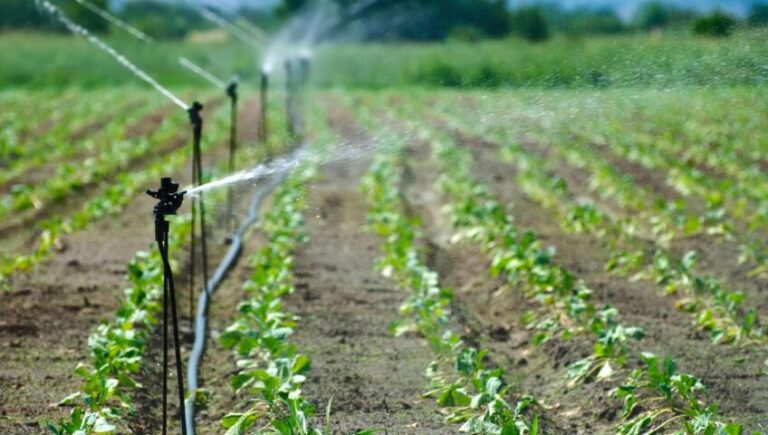
Farmers commonly use sprinkler irrigation systems with perforated foldable poly tubing connected to water pumps and timers. These systems help deliver water between crop rows exactly when needed. However, several important questions must be answered for effective irrigation: How much water does the crop require? How long should irrigation run? Is water reaching plant roots or simply running off the surface?
Advanced irrigation setups are designed to answer these questions accurately. Such systems help farmers reduce water usage, save time, and lower input costs while maintaining or even increasing crop yields. The primary goal of modern irrigation technology is to make sprinkler systems as efficient as possible while conserving water and reducing operational expenses.
Pipe Planner Mobile Application
The Pipe Planner mobile web-based application is one of the first tools farmers use when implementing advanced irrigation technology. It is designed to achieve more uniform water application across fields by optimizing the layout of foldable poly tubing.
Pipe Planner improves irrigation efficiency by adjusting water distribution based on the volume of water exiting each hole relative to the size and spacing of the punched openings in the tubing. If water volume is too high and head pressure exceeds safe limits, the poly tubing can burst. Pipe Planner helps determine the correct pipe size and layout to control water flow safely and efficiently.
While Pipe Planner manages water flow across fields, its true effectiveness is realized when combined with soil moisture sensors. Together, they provide farmers with precise data on how much water crops actually need.
Soil Moisture Sensors for Efficient Water Use
Soil moisture sensors play a vital role in modern irrigation systems by providing insights into underground soil conditions that are not visible to the naked eye. These sensors measure moisture levels at different depths, helping farmers determine when irrigation is necessary and when it can be avoided.
By using soil moisture sensors, farmers can significantly reduce the number of irrigation cycles required. This leads to savings in fuel, electricity, labor, and overall water usage. Without these sensors, the risk of overwatering is high, which can damage crops, waste water, and increase costs.
The sensors also help ensure that water penetrates the soil to the root zone, promoting healthy root development and improving crop resilience.
Surge Valves for Clay Soils
Surge valves are another important tool in irrigation management, especially for farms with clay-heavy soils. Clay soils absorb water more slowly compared to sandy soils, increasing the risk of runoff and uneven water distribution.
Surge valves regulate the flow of water by delivering it in controlled intervals rather than a continuous stream. This allows water to infiltrate the soil profile more effectively, ensuring that moisture reaches plant roots instead of flowing away. By slowing down water movement, surge valves help improve irrigation efficiency and reduce water waste.
Classifications of Agricultural Irrigation Systems
There are several types of irrigation water systems currently in use across agriculture. These systems can be broadly classified into four main categories: micro irrigation, drip irrigation, sprinkler irrigation, and flood irrigation. Each system has its own advantages and is suitable for specific crops, soil types, and field conditions.
Flood Irrigation Systems
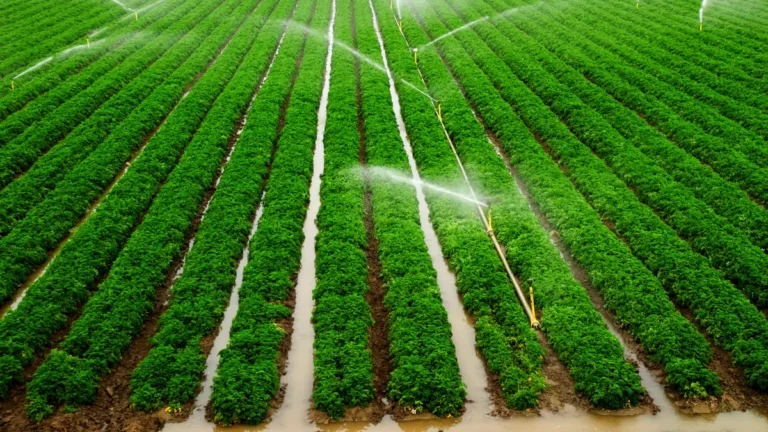
Flood irrigation is one of the oldest irrigation methods and is still widely used today. It involves distributing water across fields by gravity. Organizations supplying irrigation systems commonly offer flood irrigation through the following methods:
- Furrow Irrigation: Water is directed down furrows that follow a specific slope for optimal distribution. Water is supplied through above-ground PVC or poly pipes with adjustable gates that control water flow to each furrow.
- Graded Border Irrigation: Water flows down narrow field sections separated by raised earth borders. The slope of the border is carefully graded to ensure even water application. Water is usually delivered from underground pipelines with valves and risers.
Sprinkler Irrigation Systems
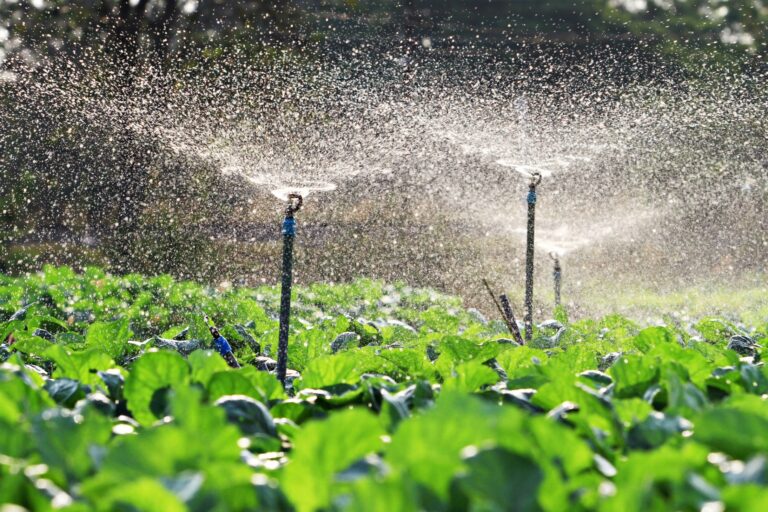
Sprinkler irrigation systems are highly versatile and can be used on fields of various shapes, sizes, and slopes. These systems distribute water through pressurized pipes and spray it over crops, simulating rainfall.
Common types of sprinkler irrigation systems include:
- Hand Move Pipe Systems: Sprinklers are attached to PVC or aluminum pipes that are manually moved across the field. Pipes are typically spaced about forty feet apart.
- Solid Set Systems: Permanent underground PVC pipes with risers and sprinklers are installed throughout the field. Sprinkler spacing varies depending on sprinkler size and type.
- Center Pivot and Mechanical Move Systems: Sprinklers are mounted on rotating machines that move across the field, delivering uniform irrigation. These systems are commonly used for large-scale farming.
- Traveling Gun or Hose Reel Systems: A large sprinkler is mounted on a wheeled cart connected to a hose reel. Water pressure pulls the cart across the field as the hose rewinds.
Drip Irrigation Systems
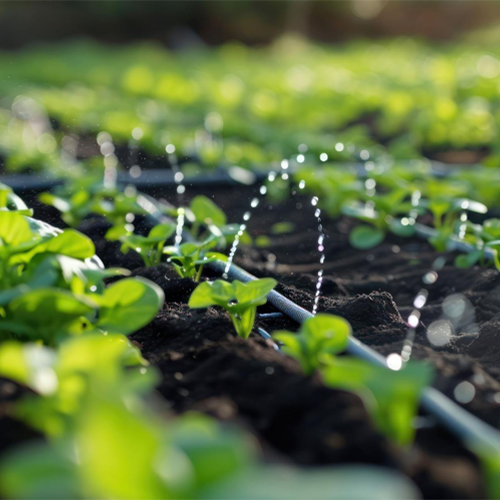
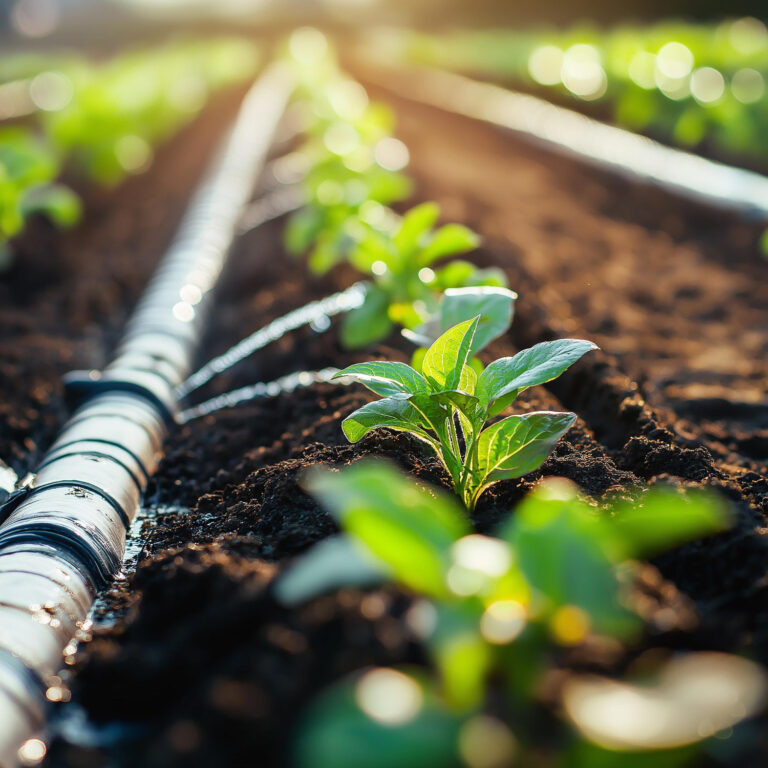
Drip irrigation systems use small-diameter polyethylene tubing fitted with emitters to deliver water directly to the root zone of crops. This method applies water slowly and precisely, minimizing evaporation and runoff.
Emitters can be manually installed into tubing to irrigate individual plants or trees. Emitter tubing, which comes with pre-installed emitters at fixed spacing, reduces installation time and cost. Drip systems can be installed on the soil surface or buried underground to protect tubing from damage.
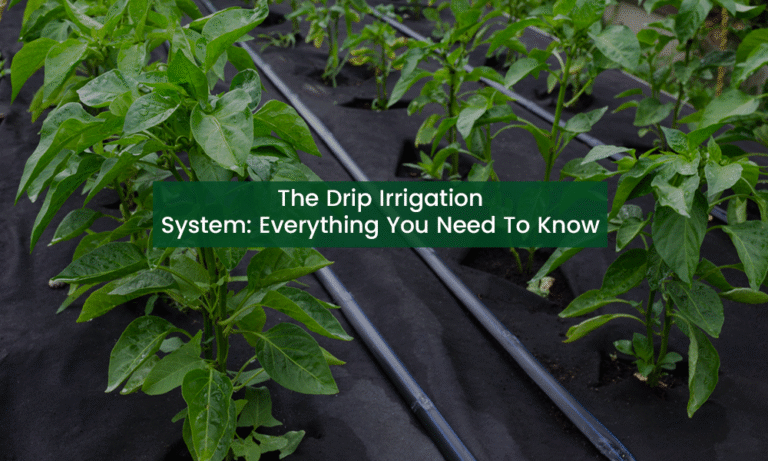
Drip tape is a specialized form of drip irrigation tubing with very thin walls and closely spaced emitters, typically 6 to 12 inches apart. It is commonly used for vegetables, gardens, and row crops such as corn and cotton.
Conclusion
Selecting the right irrigation system for a farm requires careful consideration of crop type, soil conditions, water availability, budget, and field layout. Each irrigation system offers unique benefits, and the most effective solution often combines multiple tools and technologies.
Working with a reliable irrigation system supplier that provides quality equipment and repair services can make a significant difference in system performance and longevity. By adopting modern irrigation tools and efficient irrigation methods, farmers can conserve water, reduce costs, and ensure sustainable agricultural productivity for the future.