
Foot Valve in Irrigation System – Working, Importance and Benefits
Introduction: The Hidden Hero of Water Suction
Have you ever wondered what happens when a water pump is switched off? Why does the suction water not flow back into the lake, pond, or well due to gravity? How is the suction pressure maintained, and what controls the direction of water flow? These common yet important questions all lead to one essential component in irrigation and pumping systems—the foot valve.
In irrigation systems, foot valves play a critical role in ensuring smooth, efficient, and uninterrupted water supply. Though small in size, their function is vital to agriculture, water management, and pumping efficiency. Let us explore in detail what a foot valve is, how it works, why it is important, and how it supports modern irrigation systems.
What Is a Foot Valve?
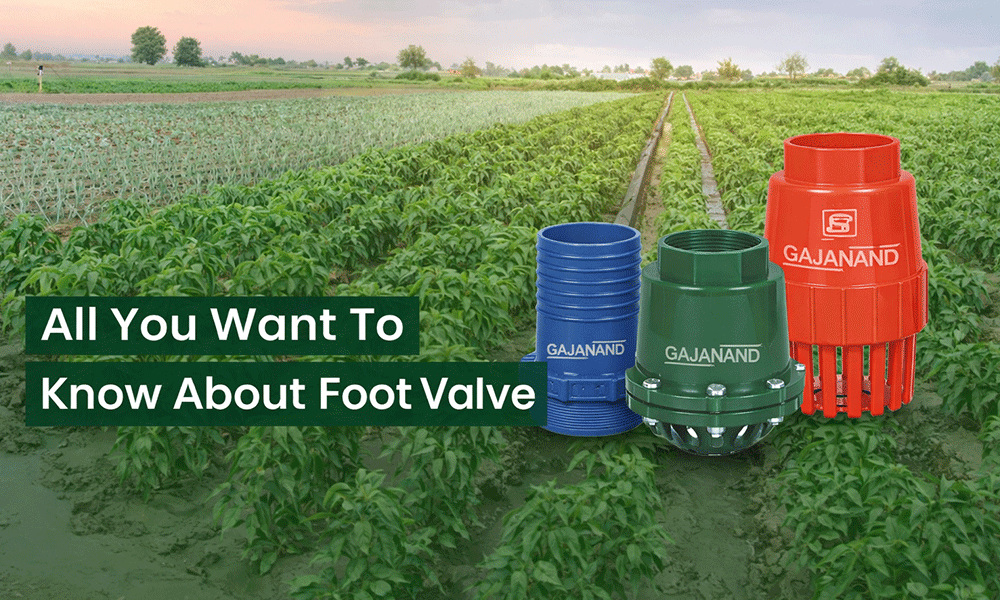
A foot valve is a type of check valve that allows water to flow in only one direction. It is typically installed at the end of a pump’s suction pipe, usually submerged in the water source such as a well, pond, lake, or reservoir. Its primary function is to prevent water from flowing backward when the pump is turned off.
Foot valves are generally spring-loaded or gravity-operated. When the pump is running, suction pressure forces the valve open, allowing water to enter the pipe. Once the pump is switched off, the valve automatically closes, preventing water from returning to the source. This ensures that the suction pipe remains full of water, maintaining pump prime.
Why Does Water Not Flow Back When the Pump Is Turned Off?
The simple answer lies in the design of the foot valve. When water is drawn upward through suction, it creates pressure that opens the valve disc or ball inside the valve body. As soon as the pump stops, the pressure drops, causing the valve to close instantly. Gravity and spring tension work together to seal the valve tightly.
Without a foot valve, water would drain back into the source due to gravity, introducing air into the suction pipe. This would require re-priming the pump every time it is restarted, leading to wasted time, energy, and potential pump damage.
How Does a Foot Valve Work?
The working principle of a foot valve is straightforward but highly effective. It consists of a valve body, disc or ball, sealing ring, bushing, and a protective screen. When the pump starts, suction pressure lifts the disc, allowing water to flow upward. When the pump stops, the disc falls back into place, sealing the valve opening.
The screen or strainer attached to the foot valve prevents debris, sand, leaves, and other particles from entering the suction line. This protects the pump from clogging and wear, ensuring longer equipment life and consistent performance.
Types of Valves Used in Irrigation Systems
Foot valves belong to a broader family of industrial and irrigation valves. In mechanical and irrigation systems, several valve types are used to regulate flow, pressure, and direction of fluids. Common valve types include globe valves, gate valves, needle valves, plug valves, butterfly valves, poppet valves, and spool valves.
Among these, foot valves are specifically designed for suction applications. They are most commonly used with centrifugal pumps due to their efficiency and low cost. Modern irrigation systems also rely heavily on plastic-based valves, which offer corrosion resistance and lightweight handling.
Materials Used in Foot Valves
Foot valves are manufactured using a variety of materials to suit different applications and environments. Common materials include cast iron, bronze, stainless steel, plastic, polypropylene, and PVC. In irrigation systems, PVC and polypropylene foot valves are widely preferred due to their resistance to rust, chemicals, and prolonged water exposure.
Heavy-duty foot valves made from cast iron or bronze are typically used in high-pressure or industrial applications. Plastic and PVC foot valves are ideal for agricultural and drip irrigation systems, offering durability with cost-effectiveness.
Importance of Foot Valves in Irrigation Systems
The foot valve plays a crucial role in maintaining efficient irrigation operations. It ensures that pumps remain primed, reduces startup time, and prevents dry running, which can severely damage pump components. Dry running occurs when a pump operates without water, causing overheating and mechanical failure.
By preventing backflow, foot valves also help conserve energy. The pump does not need to work extra hard to refill empty pipes, resulting in reduced electricity consumption and operational costs. This makes foot valves an economical and environmentally friendly solution for farmers.
Advantages of Using Foot Valves
Foot valves offer numerous benefits, especially in agricultural and irrigation systems. They protect pumps from damage caused by reverse flow and dry running. They minimize water wastage and improve system efficiency. Additionally, most foot valves are designed with self-tapping male and female threads, making installation quick and simple.
Compared to other priming solutions, foot valves are more affordable and easier to maintain. High-quality foot valves significantly extend the life of water pumps, reducing maintenance expenses and downtime. Their lightweight design also makes handling and replacement convenient.
Applications of Foot Valves
Foot valves are widely used in irrigation systems, agricultural pumping, water supply systems, industrial fluid handling, swimming pools, and drainage applications. They are especially important in irrigation setups where water is drawn from underground wells, canals, rivers, or lakes.
In drip irrigation systems, foot valves ensure consistent water delivery by maintaining steady suction pressure. This reliability is essential for uniform crop watering and healthy plant growth.
Maintenance and Cleaning of Foot Valves
Although foot valves are durable, regular inspection and cleaning are necessary, especially in muddy or debris-filled water sources. Over time, screens may become clogged, reducing water flow and pump efficiency. Periodic cleaning ensures optimal performance and prolongs valve life.
One advantage of modern PVC foot valves is that they can be fully dismantled for easy cleaning and maintenance. This feature makes them particularly suitable for agricultural environments.
Conclusion: A Small Valve with a Big Impact
The foot valve may appear to be a small and simple component, but its impact on irrigation and water management is immense. It controls water flow direction, maintains suction pressure, protects pumps, and ensures efficient irrigation operations. Without a foot valve, modern irrigation systems would be inefficient, costly, and prone to frequent failures.
For farmers and irrigation professionals, understanding the role of the foot valve is essential. It is not just a mechanical part—it is the foundation of reliable water supply for agriculture. By ensuring smooth water flow, foot valves contribute directly to healthy crops, sustainable farming, and improved agricultural productivity.