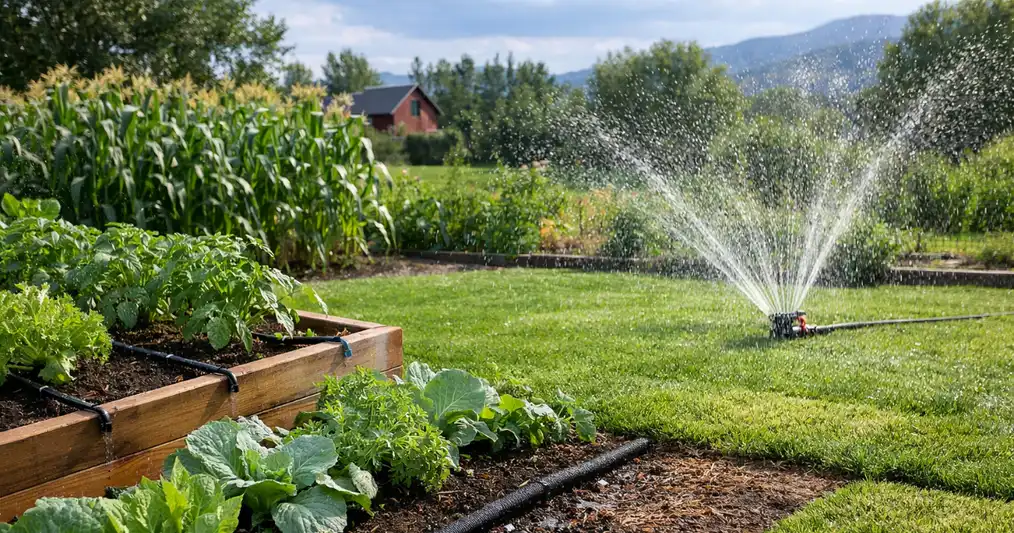
What Is Drip Irrigation and Why Is It Necessary?
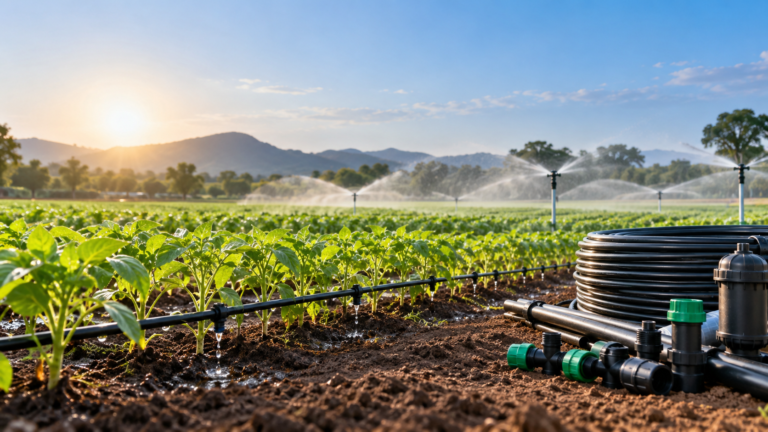
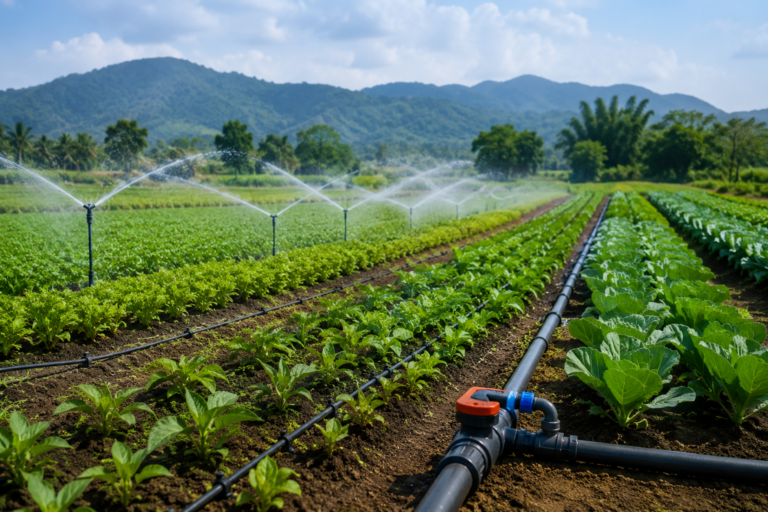
What is drip irrigation and why is it necessary? Drip irrigation is a modern irrigation method that delivers water slowly and directly to the root zone of plants through pipes, tubes and emitters. This micro irrigation system helps farmers control the amount, timing and location of water application. Unlike traditional irrigation methods, it focuses water around the crop root zone, making it an important technology for efficient water management and modern agriculture.
Water is one of the most important resources in farming. Crops require water for germination, root development, vegetative growth, flowering and fruit production. However, applying more water does not necessarily mean better crop growth.
The goal of modern irrigation is to provide the right amount of water at the right time and in the right place.
This is why drip irrigation has become an important agricultural technology.
According to the Food and Agriculture Organization (FAO), localized irrigation distributes water through a low-pressure pipe network and applies small quantities of water close to individual plants. Drip irrigation is one of the main forms of localized irrigation.
FAO – Localized Irrigation Information
Modern irrigation systems are especially useful where farmers need better control over limited water resources. The USDA Natural Resources Conservation Service also identifies micro-irrigation as a method for delivering controlled amounts of water to plant root zones.
USDA NRCS – Micro-Irrigation Guidance
Why Is Drip Irrigation Important in Modern Agriculture?
Agriculture depends heavily on reliable water supplies. However, rainfall is not always predictable, and many agricultural regions experience seasonal water shortages.
Farmers may also face:
- Irregular rainfall
- Drought conditions
- Groundwater pressure
- Increasing irrigation costs
- High crop-water requirements
- Soil moisture problems
- Rising demand for agricultural production
A well-designed drip system can help address some of these challenges by delivering water directly to the crop root zone.
The USDA NRCS explains that micro-irrigation systems are designed for frequent, controlled application of water and require appropriate system design and monitoring.
The Indian Council of Agricultural Research (ICAR) also conducts research and training related to micro-irrigation and water-use efficiency in India.
ICAR – Water Use Efficiency and Micro-Irrigation
Therefore, the importance of drip irrigation is not simply about using less water. It is about using irrigation water more precisely and efficiently.
How Does a Drip Irrigation System Work?
A drip irrigation system works by transporting water from a source through a controlled network of pipes.
The basic process is:
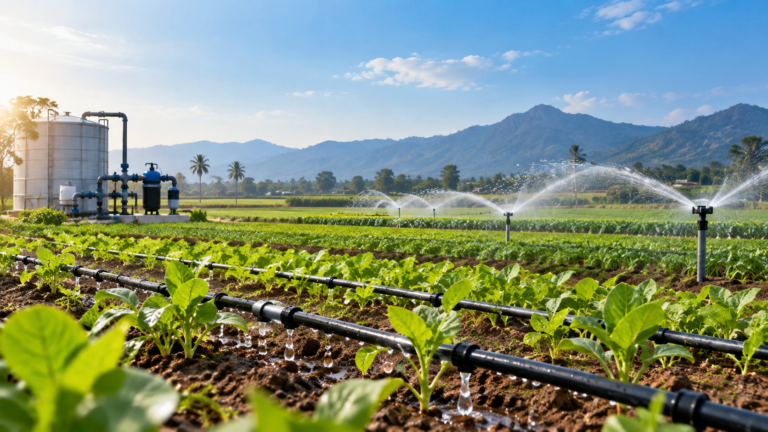
Water Source → Pump → Filter → Mainline → Sub-Main → Lateral → Emitter → Plant Root Zone
Each component performs a specific function.
1. Water Source
The water source may be:
- Borewell
- Open well
- Farm pond
- Canal
- Reservoir
- Water tank
- Rainwater storage
Water quality should be considered before designing the system because suspended particles and other materials can affect emitter performance.
2. Pump
A pump may be required to provide adequate pressure.
The required pump capacity depends on:
- Farm size
- Number of irrigation zones
- Pipe length
- Elevation
- Emitter discharge
- System pressure
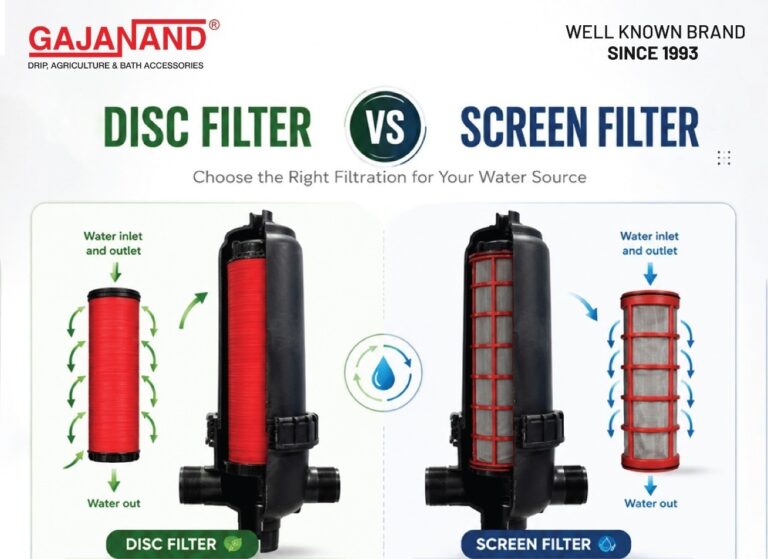
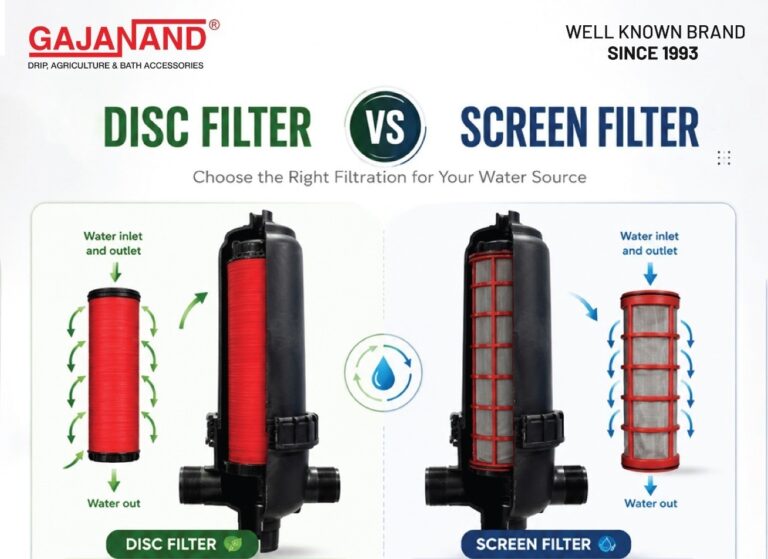
3. Filtration
Filtration is essential for many drip systems.
Water may contain:
- Sand
- Silt
- Algae
- Organic matter
- Mineral particles
These materials can block emitters.
USDA NRCS notes that filtration is important for maintaining the performance of controlled emitters and preventing clogging.
4. Mainline
The mainline transports water from the source toward the agricultural field.
5. Sub-Main
The sub-main distributes water to different irrigation sections.
6. Laterals
Laterals are smaller tubes installed along crop rows.
7. Emitters
Emitters, also called drippers, release water at a controlled rate.
8. Root-Zone Application
Water eventually enters the soil close to the plant roots.
This is the main principle behind this irrigation technology.
FAO describes drip irrigation as applying water through small outlets close to plants so that the root-zone area receives the water.
Main Components of a Drip Irrigation System
A complete agricultural irrigation system can contain several components.
Water Source
Provides the water required for the crop.
Pumping System
Provides the pressure required to move water through the network.
Filtration Unit
Removes particles that could cause clogging.
Pressure Regulator
Helps control pressure within the system.
Mainline
Carries water from the source to the field.
Sub-Main
Distributes water to irrigation zones.
Control Valves
Allow individual sections to be turned on or off.
Fertilizer Injector
Allows suitable fertilizers to be introduced into irrigation water.
Drip Laterals
Carry water alongside the crop rows.
Emitters
Release controlled amounts of water near plants.
End Caps and Flush Points
Help with line flushing and maintenance.
What Is an Emitter in Drip Irrigation?
An emitter or dripper is a small device that releases water from a drip lateral at a controlled rate.
Emitters are critical because they determine how water reaches the soil.
Emitter selection depends on:
- Crop
- Plant spacing
- Soil type
- Operating pressure
- Irrigation frequency
- Required discharge
There are different types of emitters, including pressure-compensating and non-pressure-compensating designs.
USDA NRCS notes that pressure-compensating emitters can help maintain relatively consistent flow when pressure varies within suitable operating conditions.
Types of Drip Irrigation Systems
There are several types of systems used in agriculture.
Surface Drip Irrigation
Surface drip irrigation places the lateral tubing on or close to the soil surface.
The lines are generally installed along crop rows.
This method can be used for:
- Vegetables
- Fruits
- Flowers
- Row crops
- Orchards
USDA NRCS describes surface drip as applying water through emitters at the soil surface.
Subsurface Drip Irrigation
Subsurface drip irrigation places the irrigation tubing below the soil surface.
Water is released below ground close to the crop root zone.
The installation depth and spacing depend on crop and soil conditions.
This system can be useful for:
- Row crops
- Vegetables
- Orchards
- High-value crops
- Certain large-scale agricultural systems
USDA NRCS notes that subsurface systems generally require more attention during installation and maintenance and can work well with high-frequency irrigation and fertigation.
ICAR-IARI has also demonstrated subsurface drip fertigation and highlighted its importance for improving water and nutrient management in Indian agriculture.
ICAR-IARI – Sub-Surface Drip Fertigation System
Drip Tape Irrigation
Drip tape is a thin irrigation tube containing built-in outlets.
It is commonly used for:
- Vegetables
- Row crops
- Seasonal crops
- Closely spaced plants
Drip tape can be selected according to the crop cycle, spacing and required durability.
Online Drip Irrigation
Online emitters are installed into the lateral pipe according to the required plant spacing.
This gives farmers flexibility when plants are spaced differently.
It is commonly considered for:
- Orchards
- Fruit plants
- Nurseries
- Plantation crops
Benefits of Drip Irrigation
The benefits of drip irrigation depend on system design, crop type, soil, climate and management. A properly designed system can provide several important advantages.
Better Water Management
One of the main advantages is precise water application.
Instead of wetting the entire field, water can be concentrated near the crop root zone.
This can make irrigation easier to control.
Potential Water Savings
A properly managed drip system can reduce unnecessary water application and improve field-level irrigation efficiency.
However, it is incorrect to claim that every farm will save a fixed percentage of water.
Water savings depend on:
- Previous irrigation method
- Crop
- Soil
- Weather
- System design
- Irrigation schedule
- Maintenance
FAO explains that field-level irrigation efficiency should not automatically be considered the same as basin-level or “real” water savings because water flows and return flows can behave differently.
Better Root-Zone Moisture Management
The system delivers water close to plant roots.
This allows farmers to manage soil moisture more precisely.
USDA NRCS describes micro-irrigation as a method that applies water directly to the plant root zone and maintains soil moisture according to crop requirements.
Reduced Runoff
Slow and controlled water application can reduce runoff under appropriate soil and operating conditions.
The actual result depends on:
- Application rate
- Soil infiltration
- Field slope
- Irrigation duration
- System design
Reduced Wetting of Unnecessary Areas
A drip system generally wets a smaller portion of the field than many surface irrigation methods.
This can help focus water around crop rows.
Reduced Weed Pressure
Because water is concentrated around crop plants, spaces between rows may receive less moisture.
This can reduce conditions favorable to some weeds.
It does not eliminate weeds completely.
Less Foliage Wetting
Drip irrigation normally delivers water to the soil instead of spraying water over the crop canopy.
This can reduce leaf wetting compared with overhead irrigation.
USDA NRCS lists reduced disease pressure associated with keeping foliage dry as one potential advantage of drip systems.
Fertigation Capability
One of the important benefits is the ability to combine irrigation and fertilizer application.
This process is called fertigation.
Suitable fertilizers can be introduced into the irrigation water and delivered through the distribution network.
Potential Labour Savings
A properly designed system can reduce some manual irrigation work.
Automation can further reduce the need for frequent manual operation.
Automation
Modern systems can be combined with:
- Timers
- Soil-moisture sensors
- Flow meters
- Pressure sensors
- Automatic valves
- Controllers
- IoT technology
USDA NRCS identifies automation as one potential advantage of micro-irrigation systems.
Suitable for Different Field Shapes
Drip systems can be designed for many field layouts.
USDA NRCS notes that drip irrigation can be adaptable to irregular-shaped fields and certain uneven topographies when appropriately designed.
Drip Irrigation for Different Crops
This technology can be used with many agricultural crops.
Drip Irrigation for Vegetables
Vegetable crops that may be grown with drip systems include:
- Tomato
- Chilli
- Capsicum
- Cucumber
- Brinjal
- Okra
- Onion
- Potato
- Cabbage
- Cauliflower
- Melons
The system should be designed according to plant spacing and crop water requirements.
Drip Irrigation for Fruit Crops
Drip systems are commonly suitable for many fruit crops.
Examples include:
- Mango
- Pomegranate
- Banana
- Papaya
- Guava
- Citrus
- Grapes
- Strawberry
Emitter placement may need to change as plants mature.
Drip Irrigation for Orchards
Orchards are particularly suitable for localized water application.
Emitters can be positioned around individual trees to create an appropriate wetting pattern.
The number of emitters may be increased as the tree canopy and root system develop.
Drip Irrigation and Fertigation
What Is Drip Fertigation?
Drip fertigation is the application of suitable fertilizers through an irrigation system.
The basic process is:
Water → Filter → Fertilizer Injector → Mainline → Laterals → Emitters → Root Zone
This approach can help farmers manage water and nutrients together.
Potential benefits include:
- Precise nutrient application
- Better timing
- Reduced manual work
- Improved nutrient-use management
- Root-zone nutrient delivery
ICAR-IARI has specifically highlighted subsurface drip fertigation as a technology for improving water and nutrient-use efficiency.
Drip Irrigation vs Flood Irrigation
| Feature | Drip Irrigation | Flood Irrigation |
|---|---|---|
| Water application | Near root zone | Across field |
| Control | High | Lower |
| Initial investment | Higher | Generally lower |
| Fertigation | Easier to integrate | More difficult |
| Automation | Easier | More limited |
| Maintenance | Requires filtration and monitoring | Different maintenance requirements |
| Weed wetting | Generally lower | Generally higher |
| Water-use efficiency potential | High | Generally lower |
The most suitable method depends on the farm, crop, soil, water availability and economic conditions.
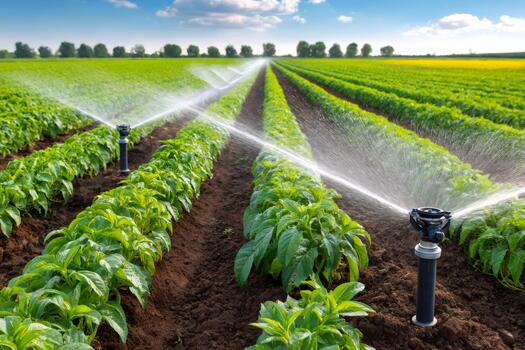
Drip Irrigation vs Sprinkler Irrigation
Drip and sprinkler systems work differently.
Drip irrigation
Water is delivered close to the soil and root zone.
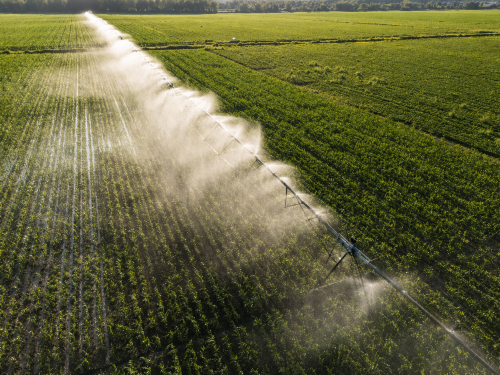
Sprinkler irrigation
Water is distributed through the air over a larger area.
Drip irrigation may be preferred for many orchards and row crops where precise root-zone application is useful.
Sprinklers can be useful where broader surface coverage or other functions are required.
The choice should be based on the crop and field conditions.
Disadvantages of Drip Irrigation
Although the system offers many benefits, it also has some limitations.
Higher Initial Investment
The system requires pipes, filters, valves, emitters and installation.
Therefore, initial costs may be higher than basic surface irrigation.
Emitter Clogging
Clogging is one of the most important maintenance concerns.
Potential causes include:
- Sand
- Silt
- Algae
- Organic matter
- Mineral deposits
- Poorly managed fertilizer injection
Proper filtration and flushing are important.
Regular Maintenance
Farmers need to monitor:
- Filters
- Pressure
- Emitters
- Pipes
- Valves
- Leaks
USDA NRCS identifies filtration, pressure regulation and maintenance as important management requirements for drip irrigation.
Physical Damage
Surface tubing can be damaged by:
- Farm machinery
- Animals
- Rodents
- Farm tools
- Improper handling
Requires Good System Design
Poor design can cause:
- Uneven water distribution
- Pressure differences
- Clogged sections
- Dry areas
- Excess water in other areas
Professional or technically appropriate design is therefore important.
How to Maintain a Drip Irrigation System
Regular maintenance helps maintain system performance.
Clean the Filter
Inspect and clean filters according to water quality and manufacturer recommendations.
Flush the Laterals
Flushing can help remove accumulated particles.
Check Emitters
Inspect for blocked, damaged or irregularly discharging emitters.
Check Pressure
Pressure should be monitored at suitable locations.
Check for Leakage
Repair damaged pipes and connections.
Inspect Fertigation Equipment
If fertigation is being used, inspect the injector and associated equipment regularly.
How to Install a Drip Irrigation System
A basic installation process includes several stages.
Step 1: Survey the Field
Determine:
- Farm area
- Field shape
- Crop rows
- Elevation
- Water source
Step 2: Test the Water
Water quality helps determine filtration requirements.
Step 3: Determine Crop Spacing
Plant and row spacing affect lateral and emitter selection.
Step 4: Design the Pipeline
Determine:
- Mainline size
- Sub-main size
- Lateral length
- Number of zones
- Pump requirements
Step 5: Install Filtration
Install an appropriate filtration system.
Step 6: Install Laterals
Place laterals along the crop rows.
Step 7: Install Valves and Connections
Connect each irrigation zone properly.
Step 8: Test the System
Check:
- Pressure
- Flow
- Leakage
- Emitter discharge
- Uniformity
Step 9: Start Irrigation Scheduling
Use crop, soil and weather conditions to establish an appropriate irrigation schedule.
How Often Should Drip Irrigation Be Used?
There is no universal schedule for every crop.
Irrigation frequency depends on:
- Crop type
- Crop growth stage
- Soil type
- Temperature
- Humidity
- Rainfall
- Wind
- Root depth
- Emitter discharge
- Plant spacing
For this reason, farmers should avoid blindly copying another farm’s irrigation schedule.
Soil-moisture monitoring can help improve irrigation decisions.
ICAR has reported sensor-based irrigation technologies designed to improve irrigation scheduling and water management in specific agricultural applications.
Does Drip Irrigation Save Water?
Yes, drip irrigation can improve water-use efficiency, but the amount of water saved varies from farm to farm.
There is no single water-saving percentage that applies to every crop and location.
Results depend on:
- Existing irrigation method
- Soil
- Crop
- Climate
- Irrigation schedule
- System design
- Maintenance
For example, ICAR reports specific research applications where sensor-based micro-irrigation improved water management, but these results are technology- and crop-specific.
Therefore, farmers should not assume that a particular percentage of water savings is guaranteed.
Does Drip Irrigation Increase Crop Yield?
A properly managed system can support crop productivity by providing suitable moisture conditions.
However, irrigation is only one factor affecting yield.
Other factors include:
- Seed quality
- Crop variety
- Fertilizer
- Soil fertility
- Pest management
- Disease control
- Weather
- Plant population
- Farm management
ICAR research includes examples where drip and sensor-based irrigation improved yield and water productivity under specific crop conditions.
Therefore, drip irrigation can support higher productivity, but it does not guarantee a particular yield increase.
Drip Irrigation in India
Drip irrigation is an important part of India’s micro-irrigation sector.
India has diverse agricultural conditions, from irrigated plains to semi-arid and drought-prone regions.
Efficient water management is therefore an important agricultural objective.
ICAR has conducted research, training and technology development related to micro-irrigation and water-use efficiency. In a 2024 ICAR programme, researchers discussed advancing micro-irrigation systems under limited-water conditions and reported the use of micro-irrigation scheduling across multiple crops.
ICAR – Technologies and Knowledge Resources
ICAR-IARI has also demonstrated subsurface drip fertigation and discussed its potential for improving irrigation-water and nutrient-use efficiency.
Drip Irrigation for Indian Farmers
The technology can be considered for many Indian agricultural applications, including:
- Vegetable cultivation
- Fruit production
- Orchards
- Horticulture
- Floriculture
- Vineyards
- Plantation crops
- Selected field crops
- Protected cultivation
The exact design should be based on local conditions.
Smart Drip Irrigation and Modern Farming
Agriculture is increasingly moving toward data-driven irrigation.
Smart systems can use:
- Soil-moisture sensors
- Weather information
- Flow meters
- Pressure sensors
- Automated valves
- Controllers
- Mobile monitoring
- IoT technology
The basic concept is:
Sensor → Controller → Valve → Irrigation System → Crop
Instead of following a fixed schedule throughout the season, farmers can use field information to make better irrigation decisions.
ICAR reports examples of sensor-enabled irrigation scheduling and micro-irrigation technologies aimed at improving water management.
Role of Drip Irrigation in Sustainable Agriculture
Sustainable agriculture requires efficient use of natural resources.
A properly managed irrigation system can contribute to:
- Better water management
- Efficient nutrient application
- Reduced unnecessary runoff
- Potential labour savings
- Better crop management
- Improved resource-use efficiency
ICAR’s work on advanced technologies and subsurface drip fertigation also connects micro-irrigation with resource-use efficiency and climate-resilient agriculture.
ICAR – Advanced Technologies for Resource-Use Efficiency
However, sustainability depends on the complete farming system, not on irrigation technology alone.
Common Drip Irrigation Problems and Solutions
Clogged Emitters
Cause: Poor filtration or sediment.
Solution: Clean filters, flush lines and inspect emitters.
Uneven Water Distribution
Cause: Pressure variation or poor system design.
Solution: Check pressure and system layout.
Leakage
Cause: Damaged pipes or connections.
Solution: Repair or replace damaged components.
Low Pressure
Cause: Pump problems, clogged filters or excessive flow demand.
Solution: Check the pump, filters, valves and irrigation zones.
Excessive Irrigation
Cause: Incorrect scheduling.
Solution: Adjust irrigation according to crop and soil conditions.
How to Choose the Right Drip Irrigation System
Before installing a system, consider the following factors.
Crop Type
Different crops have different water requirements and plant spacing.
Soil Type
Water movement differs between sandy, loamy and clay soils.
Water Quality
Water quality determines filtration and maintenance requirements.
Farm Size
Larger farms may need multiple irrigation zones.
Plant Spacing
Emitter spacing should match crop requirements.
Water Availability
The system should be designed around the available water supply.
Budget
Consider both installation and long-term operating costs.
Automation Requirements
Determine whether timers, sensors or automatic valves are needed.
Is Drip Irrigation Worth the Investment?
For many farms, the answer can be yes when the system is properly designed and maintained.
The investment should be evaluated using both costs and potential benefits.
Costs may include:
- Pipes
- Emitters
- Filters
- Pump
- Valves
- Installation
- Maintenance
- Replacement components
- Energy
Potential benefits may include:
- Better irrigation control
- Potential water savings
- Labour savings
- Fertigation
- Improved crop management
- Potential productivity benefits
A farmer should evaluate these factors for the specific crop and farm rather than relying on a general cost estimate.
Frequently Asked Questions About Drip Irrigation
What is drip irrigation?
Drip irrigation is a localized irrigation method that delivers water slowly through emitters near individual plants or their root zones.
Why is drip irrigation necessary?
It is necessary because precise irrigation can help farmers manage water more effectively, especially where water availability is limited.
How does a drip irrigation system work?
Water passes through a filtration and pipe network before reaching laterals and emitters. The emitters release controlled amounts of water near the plant root zone.
What are the main benefits of drip irrigation?
The main benefits include precise water application, better root-zone moisture management, potential water savings, fertigation capability, automation and reduced unnecessary wetting.
What are the main components of a drip irrigation system?
Common components include a water source, pump, filter, pressure regulator, mainline, sub-main, valves, laterals and emitters.
What is drip fertigation?
Drip fertigation is the application of suitable fertilizers through irrigation water.
What is subsurface drip irrigation?
It is an irrigation method in which drip lines are installed below the soil surface to deliver water close to the crop root zone.
Which crops are suitable for drip irrigation?
Many vegetables, fruits, orchard crops, flowers and selected field crops can use drip systems when the system is designed appropriately.
Does drip irrigation save water?
It can improve water-use efficiency and reduce unnecessary water application, but actual savings depend on the crop, soil, climate, previous irrigation method and management.
Does drip irrigation increase crop yield?
It can support improved productivity under suitable conditions, but yield also depends on soil fertility, crop variety, nutrition, pest management, weather and other factors.
Is drip irrigation suitable for India?
Yes. Micro-irrigation is used across India, and ICAR continues to research and promote water-use efficiency and micro-irrigation technologies.
What is the biggest disadvantage of drip irrigation?
Emitter clogging and the need for regular filtration and maintenance are important challenges. Initial installation costs can also be higher than some conventional irrigation methods.
Can drip irrigation be automated?
Yes. Timers, sensors, controllers, flow meters and automated valves can be integrated into suitable systems.
Quick Answer: Why Is Drip Irrigation Necessary?
Drip irrigation is necessary because it allows farmers to deliver controlled amounts of water close to crop roots. This can improve irrigation management, support efficient water use and help farmers produce crops under conditions where water resources need to be carefully managed.
Quick Answer: What Are the Benefits of Drip Irrigation?
The main benefits include:
- Precise water application
- Root-zone moisture management
- Potential water savings
- Reduced runoff
- Reduced unnecessary soil wetting
- Fertigation
- Automation
- Potential labour savings
- Suitable application for many crops
Quick Answer: What Is the Difference Between Drip and Flood Irrigation?
Drip irrigation delivers controlled amounts of water close to crop roots, while flood irrigation distributes water across a larger area of the field. Drip systems generally provide greater control over where water is applied, but they require filtration, maintenance and a higher initial investment.
Conclusion
Drip irrigation is a modern approach to agricultural water management that focuses on precision rather than simply increasing the amount of water applied.
The system transports water through pipes and laterals and releases it through emitters near the plant root zone.
Its main purpose is to provide crops with controlled irrigation while improving the management of available water.
A properly designed system can provide several advantages, including:
- Better water control
- Root-zone irrigation
- Potential water savings
- Fertigation
- Automation
- Reduced unnecessary wetting
- Potential labour savings
- Better resource management
At the same time, farmers must understand that drip irrigation is not automatically successful simply because the equipment has been installed.
Proper system design, filtration, pressure management, irrigation scheduling and maintenance are essential.
The future of agriculture is moving toward smarter resource management. Sensors, automation, soil-moisture monitoring and fertigation can make irrigation systems even more precise.
For India, this technology has particular importance because ICAR and other agricultural institutions continue to work on micro-irrigation, water-use efficiency and subsurface drip fertigation.