Why Choosing the Right Irrigation System Matters
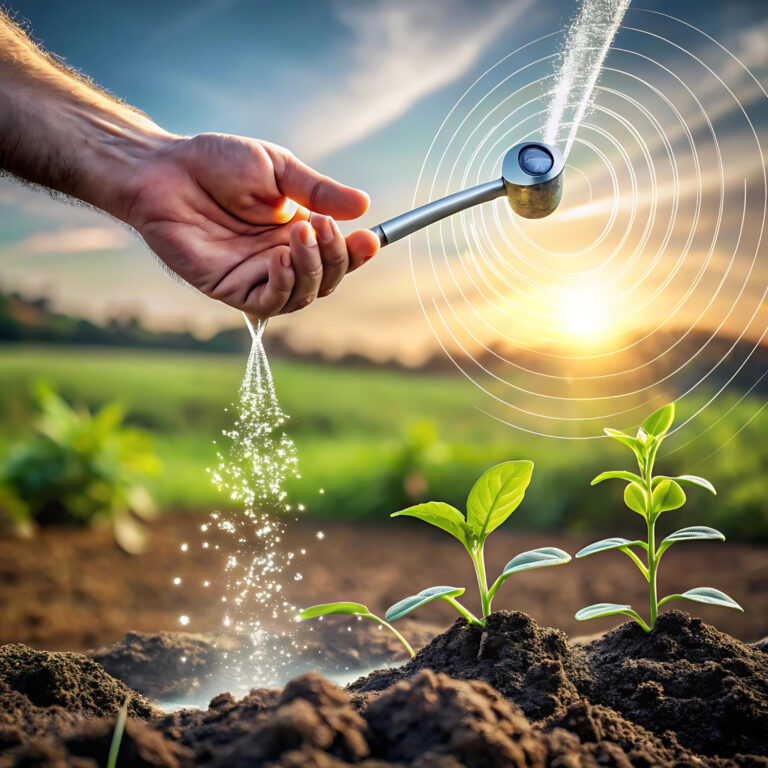
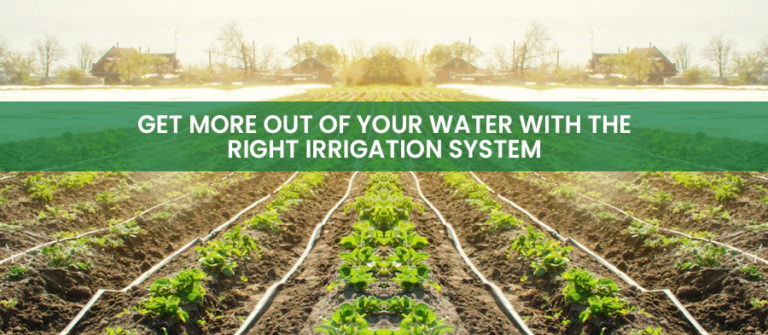
Water is one of the most critical inputs in agriculture. Traditional flood irrigation often leads to water wastage through evaporation, runoff, and deep percolation. Modern irrigation systems distribute water more efficiently, ensuring crops receive the required moisture while reducing losses.
The benefits include:
- Higher crop yields
- Better water management
- Reduced fertilizer wastage
- Lower labor requirements
- Uniform crop growth
- Improved soil health
- Reduced weed growth
- Better return on investment
- Sustainable farming practices
Types of Irrigation Systems
1. Drip Irrigation
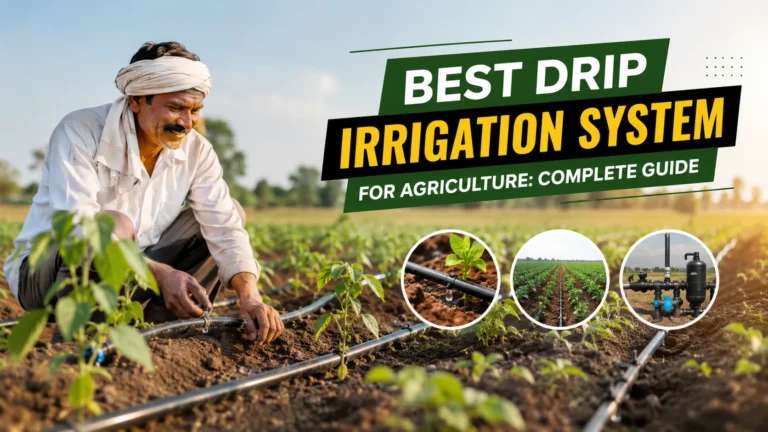
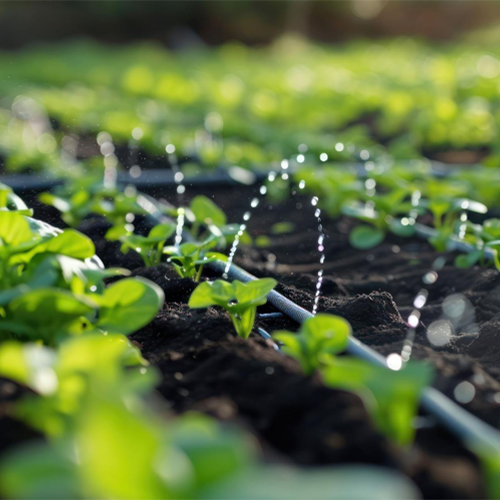
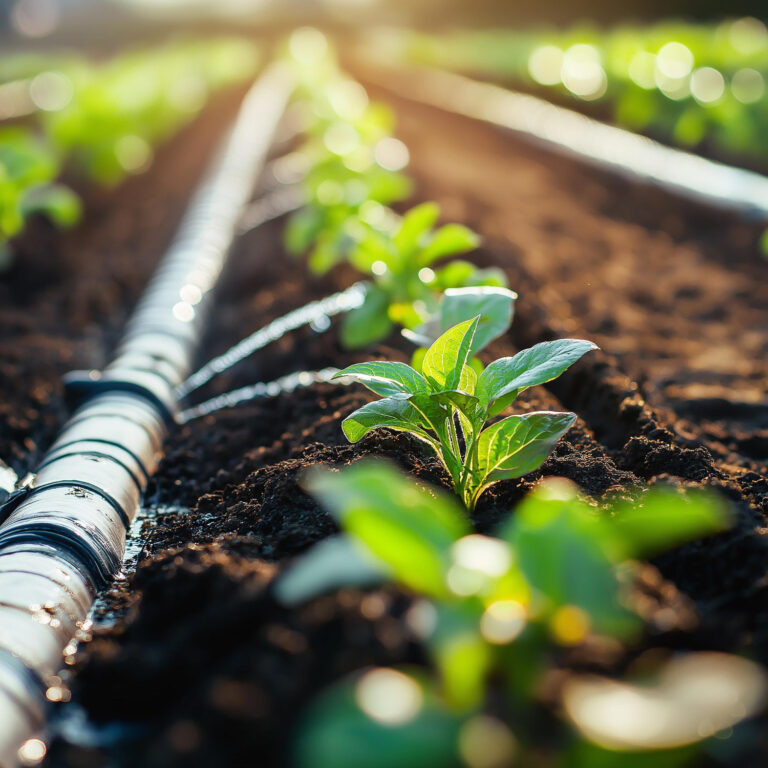
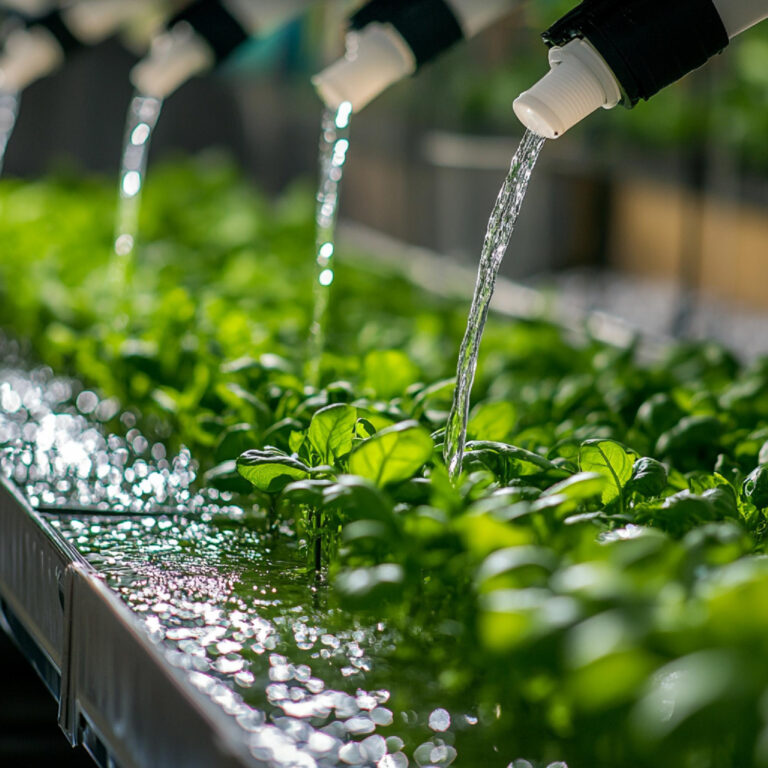
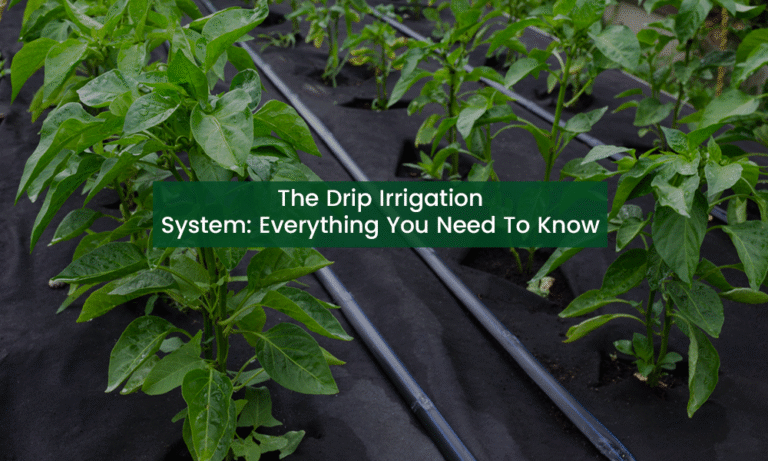
Drip irrigation delivers water directly to the root zone through emitters installed along pipes. It is widely recognized as one of the most water-efficient irrigation methods and is ideal for fruits, vegetables, plantation crops, vineyards, and orchards. It generally saves more water than sprinkler irrigation while improving nutrient efficiency. [1] [3]
Best for:
- Grapes
- Pomegranate
- Banana
- Mango
- Cotton
- Sugarcane
- Tomato
- Chilli
- Onion
- Greenhouse crops
Advantages
- Maximum water savings
- Precise irrigation
- Reduced weed growth
- Better fertilizer efficiency
- Higher crop quality
- Lower disease risk
2. Sprinkler Irrigation
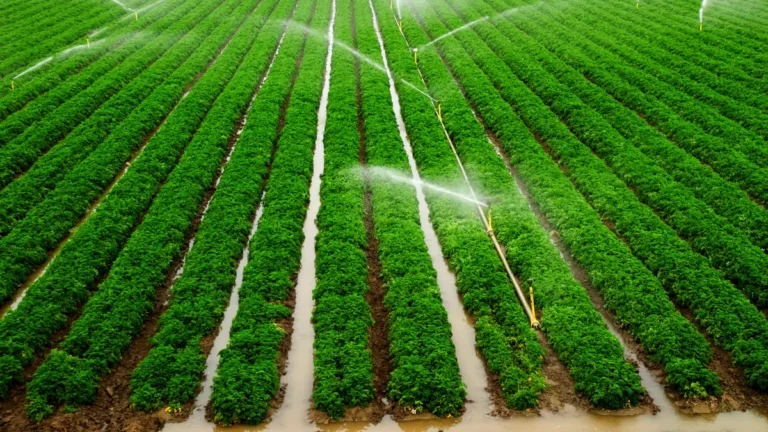
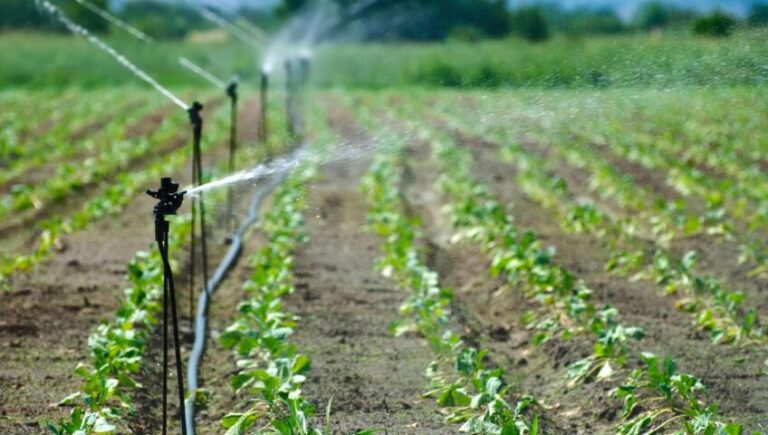
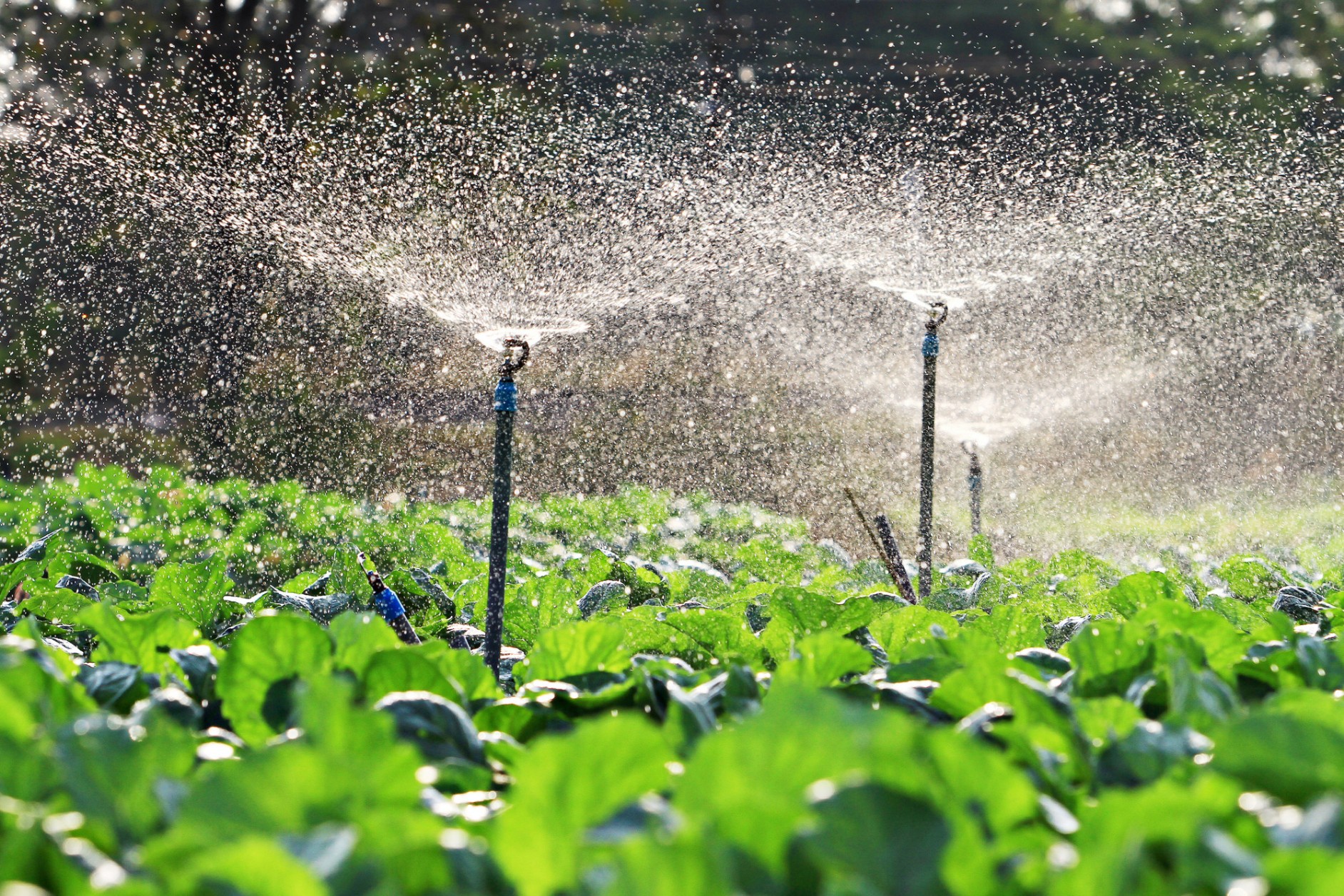
Sprinkler irrigation sprays water over crops through rotating nozzles, making it suitable for large fields, lawns, and fodder crops. It performs well on uneven or sloping land where surface irrigation is less practical. [2] [1]
Best for:
- Wheat
- Maize
- Groundnut
- Fodder
- Lawns
- Landscapes
Advantages
- Uniform water application
- Covers large areas
- Easier installation for some field crops
- Suitable for sandy soils
3. Surface Irrigation
Surface irrigation allows water to flow across the field through gravity. Although inexpensive to install, it is less efficient and typically results in higher water losses.
Suitable for
- Traditional farming
- Water-abundant regions
Factors to Consider Before Choosing an Irrigation System
1. Crop Type
Different crops have different water requirements.
Fruit crops such as mango, grapes, and pomegranate perform exceptionally well with drip irrigation. Large cereal fields may benefit from sprinkler systems depending on the terrain.
2. Water Availability
Assess:
- Borewell capacity
- Canal water availability
- Farm ponds
- River water
- Rainwater harvesting
Where water is limited, drip irrigation is generally the preferred solution because of its superior water-use efficiency. [3]
3. Soil Type
Sandy Soil
Requires frequent irrigation with smaller quantities of water.
Clay Soil
Retains moisture longer but drains slowly.
Loamy Soil
Ideal for most irrigation systems because of balanced drainage and water retention.
4. Farm Size
Small farms often benefit from drip irrigation due to precision water delivery.
Large farms may use a combination of drip and sprinkler systems based on crop diversity.
5. Land Topography
Sloping or uneven fields are better suited to sprinkler or drip irrigation because they require minimal land leveling compared with surface irrigation. [2]
6. Initial Budget
Consider:
- Installation cost
- Pump requirements
- Filters
- Pipes
- Maintenance
- Future expansion
Although drip irrigation may involve a higher initial investment than sprinklers in some cases, it often delivers greater long-term savings through reduced water and fertilizer use. [4]
Drip Irrigation vs. Sprinkler Irrigation
| Feature | Drip Irrigation | Sprinkler Irrigation |
|---|---|---|
| Water Saving | Excellent | Good |
| Water Delivery | Root Zone | Overhead |
| Fertigation | Excellent | Limited |
| Weed Growth | Low | Moderate |
| Crop Suitability | Fruits & Vegetables | Field Crops |
| Disease Risk | Lower | Higher due to wet foliage |
| Initial Cost | Higher | Often Lower |
| Long-Term Efficiency | Excellent | Good |
Essential Components of a Modern Irrigation System
A complete irrigation system may include:
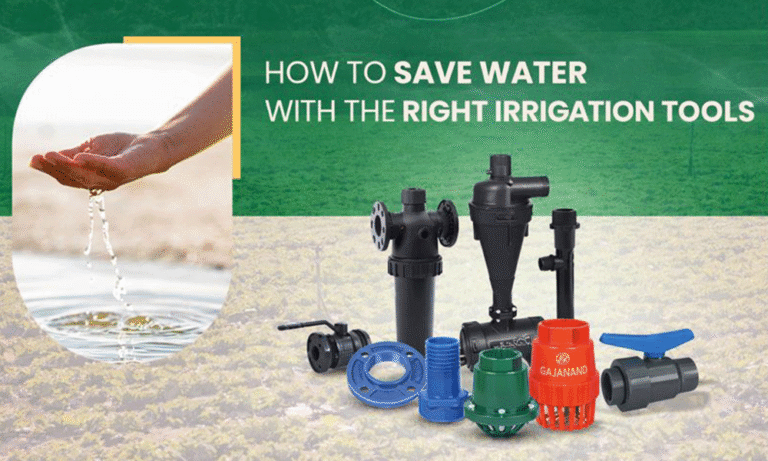
- Mainline pipes
- Sub-main pipes
- Laterals
- Drippers
- Sprinklers
- Disc filters
- Screen filters
- Sand filters
- Valves
- Pressure regulators
- Fertilizer tank
- Venturi injector
- Pipe fittings
- End caps
- Connectors
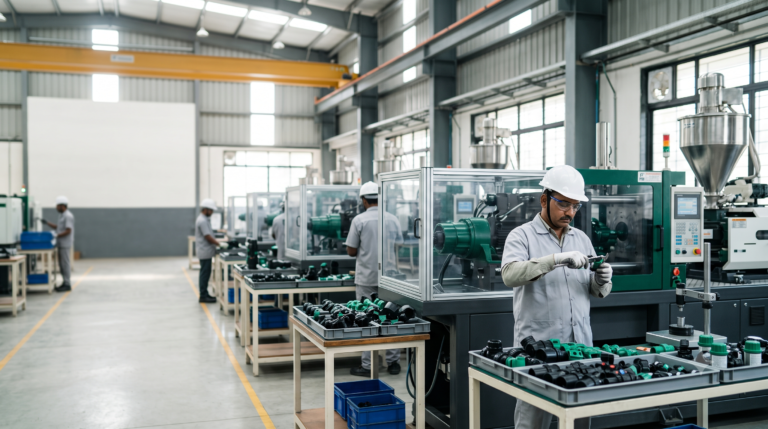
Selecting high-quality components helps ensure consistent performance and a longer service life.
Maintenance Tips
Proper maintenance keeps the system operating efficiently.
- Clean filters regularly.
- Flush pipelines periodically.
- Inspect emitters and sprinklers for clogging.
- Repair leaks immediately.
- Monitor operating pressure.
- Replace damaged fittings when required.
- Schedule seasonal inspections.
Government Support in Maharashtra
The Government of Maharashtra promotes micro-irrigation through subsidy schemes that encourage farmers to adopt water-saving technologies. Eligible farmers should check with their local agriculture department for current subsidy guidelines and application procedures.
Common Mistakes to Avoid
- Choosing the wrong irrigation system for the crop
- Ignoring water quality
- Using undersized pipes
- Skipping filtration
- Delaying maintenance
- Buying low-quality components
- Improper installation
- Not planning for future expansion
Avoiding these mistakes helps maximize system efficiency and return on investment.
Future of Irrigation in Maharashtra
Modern agriculture is moving toward precision farming technologies such as:
- Smart irrigation controllers
- Soil moisture sensors
- Automated fertigation
- Solar-powered pumping systems
- Mobile-based monitoring
- IoT-enabled irrigation management
- Data-driven water scheduling
These technologies enable farmers to optimize water use while improving productivity and sustainability.
Conclusion
Choosing the best irrigation system depends on your crop type, water availability, soil conditions, land topography, and budget. For farms with limited water resources, drip irrigation is generally the most efficient option because it delivers water directly to the roots and minimizes losses. Sprinkler irrigation remains an excellent choice for many field crops and uneven terrain.
By investing in a well-designed irrigation system and maintaining it properly, farmers in Maharashtra can conserve water, improve crop quality, increase yields, and build a more sustainable farming operation