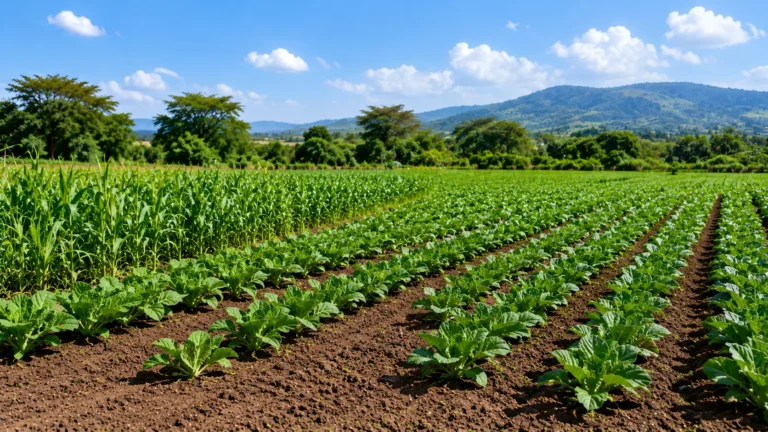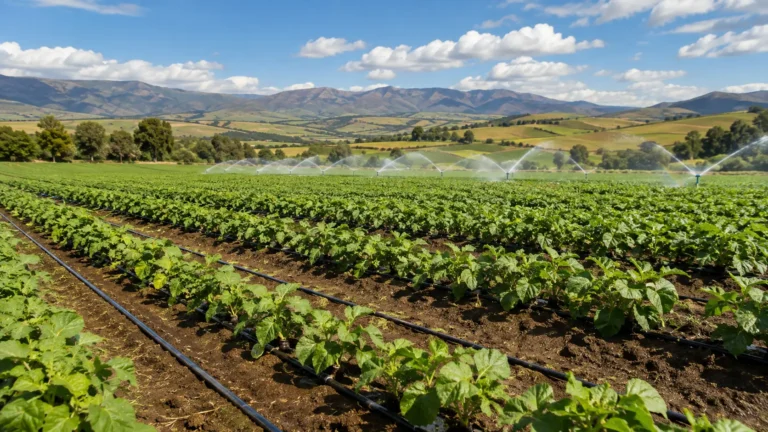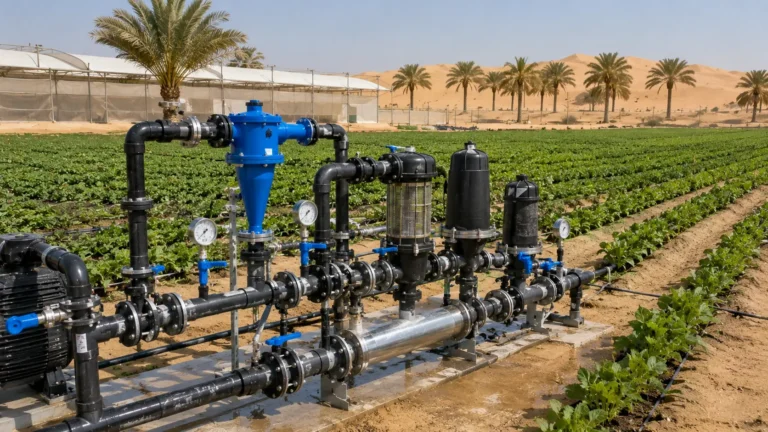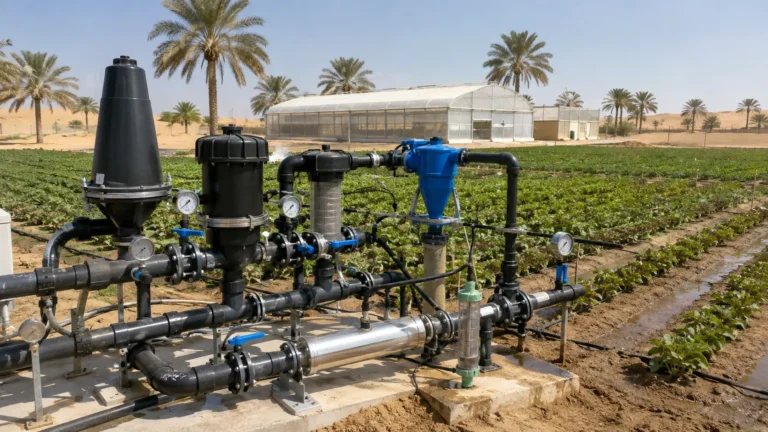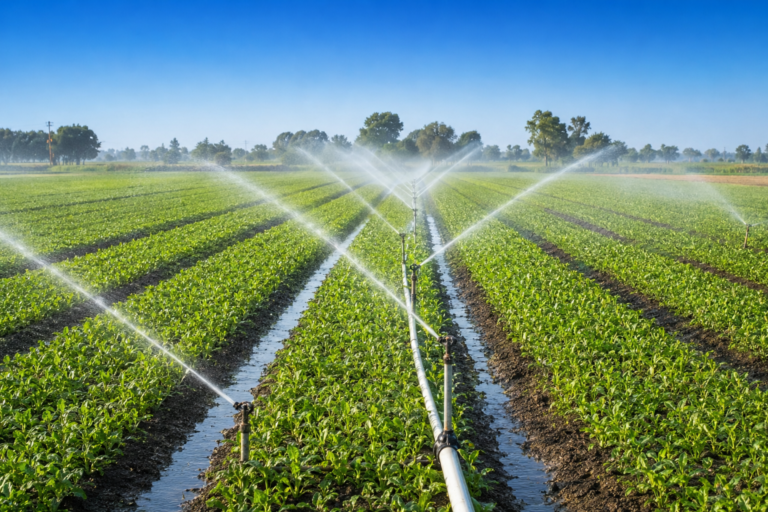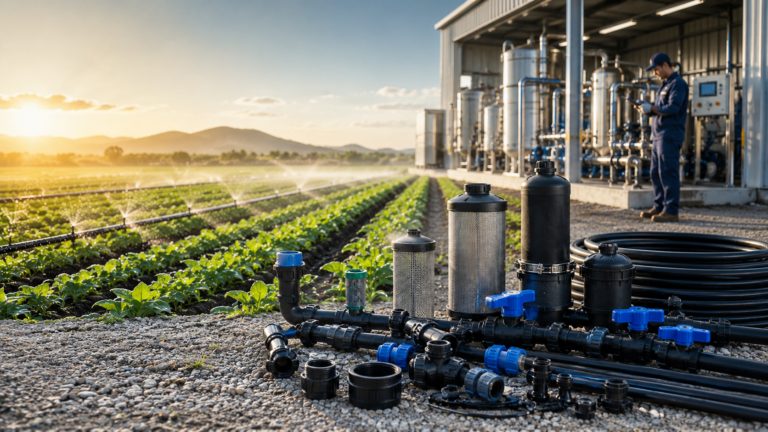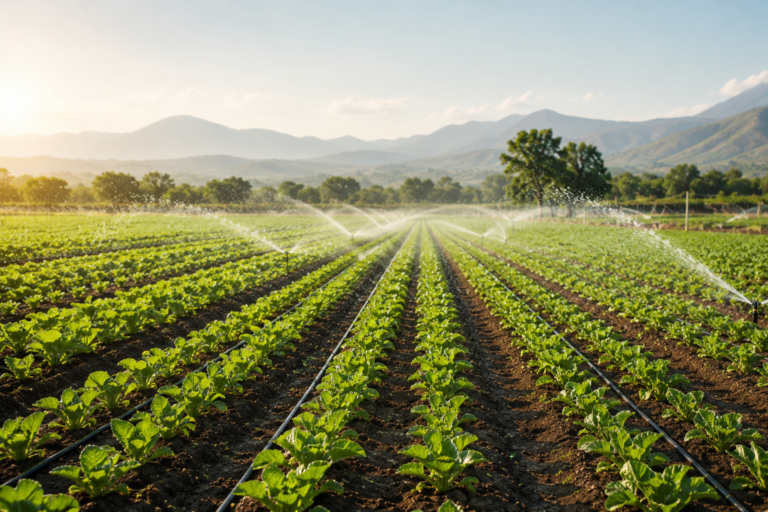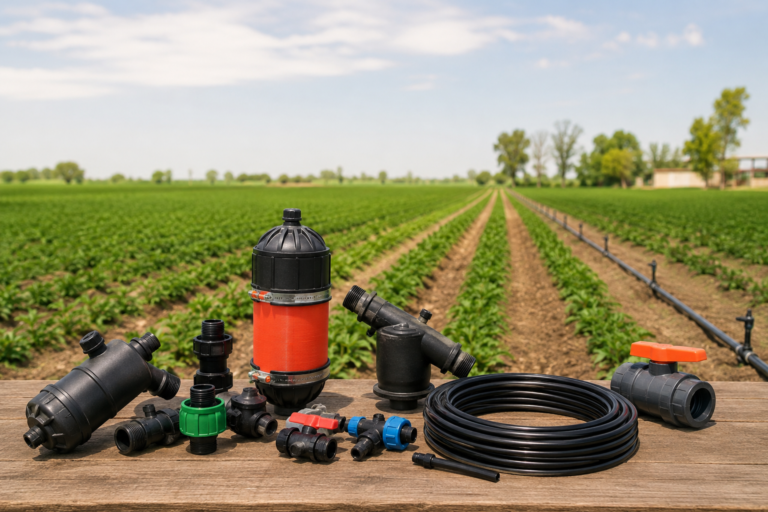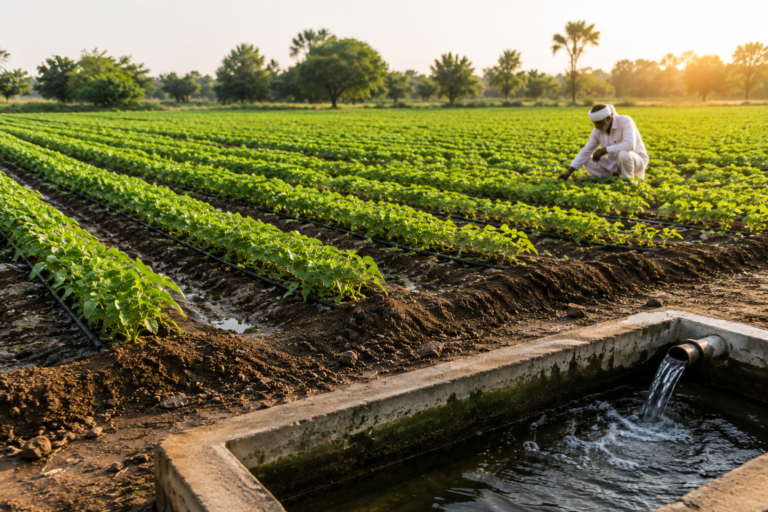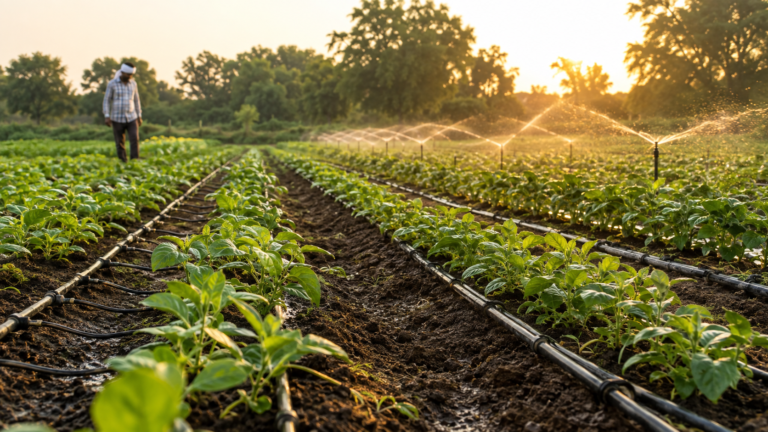
Efficient water management is essential for modern agriculture in Nepal. Whether farmers use drip irrigation, sprinkler irrigation, greenhouse irrigation, or other micro-irrigation systems, clean irrigation water is important for maintaining consistent water flow and protecting irrigation equipment. Choosing the right filtration system can help reduce clogging, improve irrigation performance, and support better water distribution across agricultural fields.
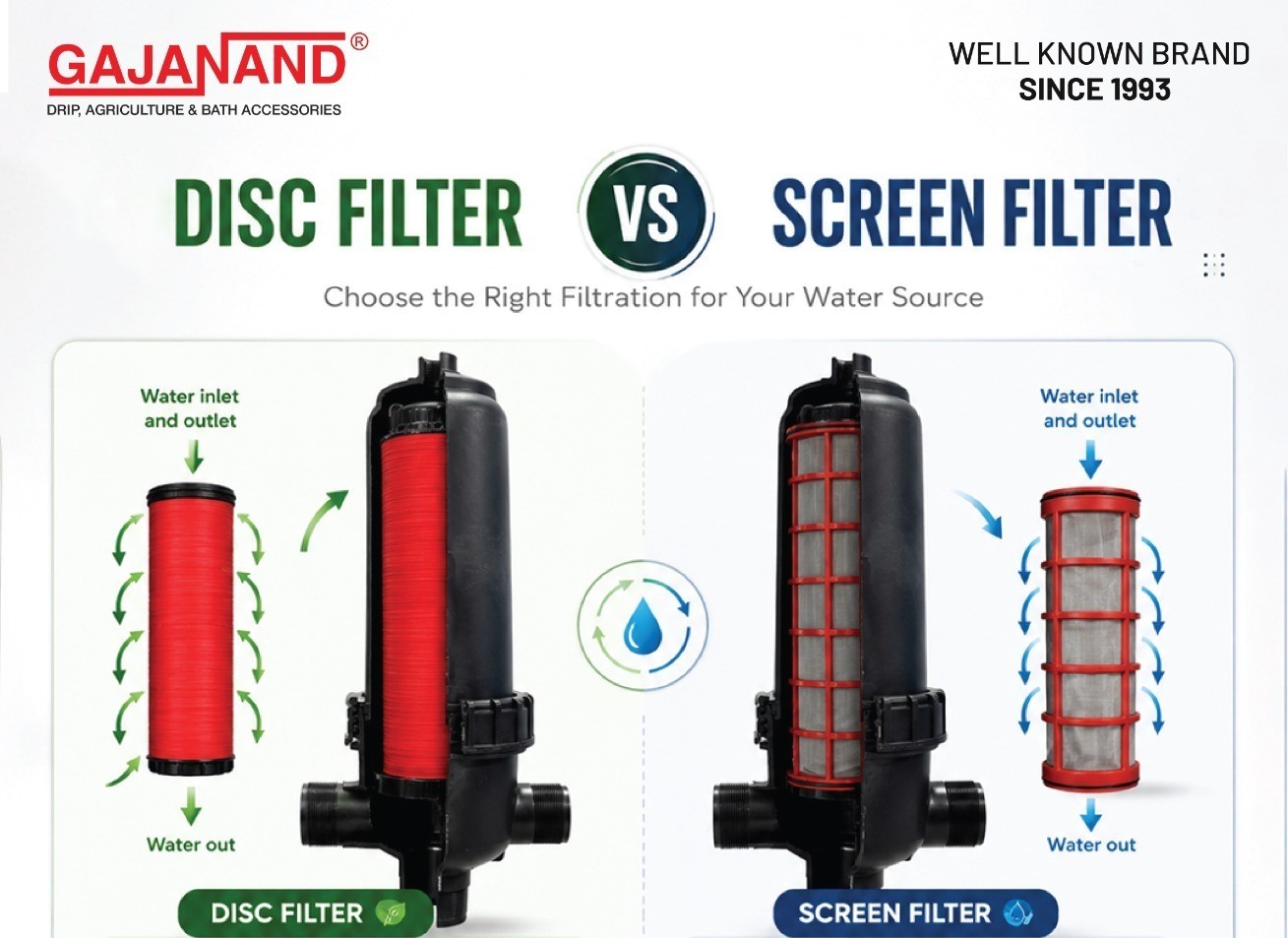
Two commonly used irrigation filtration solutions are disc filters and screen filters. Although both are designed to remove unwanted particles from irrigation water, they differ in filtration structure, cleaning requirements, performance, and suitability for different water sources.
For farmers in Nepal, understanding the difference between a disc filter vs screen filter can make it easier to select the right irrigation water filter for farms, nurseries, orchards, vegetable cultivation, and protected agriculture.
What Is an Irrigation Water Filter?
An irrigation water filter is a filtration device installed in an irrigation system to remove suspended particles and other contaminants from water before the water reaches pipes, drip emitters, sprinklers, or other irrigation components.
Irrigation water may contain:
- Sand
- Silt
- Soil particles
- Small organic matter
- Algae
- Rust particles
- Debris
- Other suspended solids
If these particles enter a micro-irrigation system, they can accumulate inside pipes and clog small passages and emitters. A suitable filtration system helps protect irrigation components and maintain more uniform water distribution.
For agricultural applications in Nepal, the appropriate filter depends on the water source, level of contamination, irrigation method, required filtration level, and farm size.
What Is a Disc Filter?
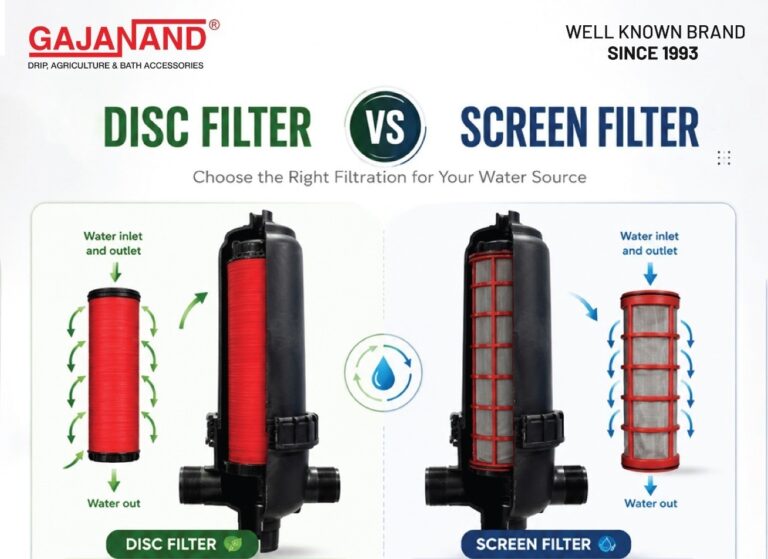
A disc filter uses a stack of specially designed discs placed inside a filter housing. Each disc contains fine grooves or filtration patterns. When the discs are compressed together, they create a three-dimensional filtration structure that traps suspended particles as water passes through the filter.
Disc filters are widely used in agricultural irrigation systems where water contains a combination of fine and larger suspended particles.
Key Benefits of Disc Filters
Disc filters can offer several advantages for agricultural irrigation:
- Effective filtration of suspended particles
- Large filtration surface area
- Compact filtration design
- Suitable for drip irrigation
- Useful for water containing mixed particle sizes
- Easy maintenance when properly installed
- Available in different filtration grades
- Can be used for agricultural and horticultural applications
Because of their filtration structure, disc filters can be particularly useful when irrigation water contains fine particles that may cause problems in drip irrigation systems.
What Is a Screen Filter?
A screen filter uses a cylindrical mesh screen installed inside a filter housing. Water passes through the mesh while suspended particles larger than the screen openings are retained.
Screen filters are commonly used for relatively clean water sources and applications where the primary contaminants are larger suspended particles.
Key Benefits of Screen Filters
Screen filters can provide:
- Simple filtration
- Easy inspection
- Straightforward cleaning
- Effective removal of larger particles
- Compact installation
- Suitable filtration for many irrigation applications
- Cost-effective filtration for suitable water sources
Screen filters can be a practical choice when irrigation water contains relatively low levels of suspended solids and larger particles.
Disc Filter vs Screen Filter: Main Differences
The most important difference between these two filtration technologies is their filtration mechanism.
A screen filter relies on a mesh screen, while a disc filter uses a stack of grooved discs to capture suspended particles.
| Feature | Disc Filter | Screen Filter |
|---|---|---|
| Filtration element | Grooved discs | Mesh screen |
| Filtration principle | Three-dimensional disc filtration | Mesh filtration |
| Suitable for | Fine and mixed suspended particles | Mainly larger suspended particles |
| Cleaning | Manual or automated depending on model | Manual or automated depending on model |
| Maintenance | Requires disc cleaning | Requires screen cleaning |
| Drip irrigation suitability | Excellent for many applications | Good for suitable water sources |
| Organic contamination | Can handle certain mixed contaminants depending on design | May require more frequent cleaning |
| Installation | Available in different sizes | Available in different sizes |
| Best selection factor | Water quality and particle characteristics | Water quality and particle size |
The table provides a general comparison. Actual performance depends on the filter model, filtration rating, water quality, flow rate, and irrigation system design.
Which Is Better for Agriculture in Nepal?
There is no single filter that is best for every farm in Nepal. The right choice depends primarily on the quality of the irrigation water.
For example, farmers using water from a relatively clean source with mainly larger suspended particles may find a screen filter suitable. On the other hand, farms dealing with fine particles or mixed suspended solids may benefit from a disc filtration system.
A disc filter can be a strong choice for drip irrigation systems where reliable filtration is important and the water contains fine or mixed particles.
A screen filter can be a practical option for comparatively cleaner water sources where larger particles are the primary filtration concern.
Before purchasing an irrigation filter, farmers should consider:
- Water source
- Water contamination level
- Particle size
- Required filtration grade
- Irrigation system type
- Required flow rate
- Filter pressure requirements
- Cleaning frequency
- Availability of spare parts
- Installation and maintenance requirements
Best Irrigation Water Filter for Different Water Sources
1. River Water
River water can contain sand, silt, organic matter, and other suspended particles. Filtration requirements can therefore be more demanding.
For such applications, farmers should evaluate water quality carefully and may require pre-filtration combined with disc or screen filtration.
2. Pond or Reservoir Water
Pond and reservoir water can contain algae, organic matter, soil particles, and other suspended materials. A suitable filtration system should be selected based on the actual water condition.
Disc filtration may be considered where fine and mixed suspended particles are present.
3. Borewell or Groundwater
Groundwater can often have lower levels of suspended solids than surface water, although this varies significantly by location and well conditions.
A screen filter may be sufficient in some applications, while disc filtration may be preferable where finer particles are present.
4. Canal Water
Canal water can contain silt, sand, and organic debris. Farmers should assess the seasonal variation in water quality before selecting a filtration system.
In some cases, a multi-stage filtration setup can provide better protection for drip irrigation.
Why Filtration Is Important for Drip Irrigation in Nepal
Drip irrigation delivers water through relatively small passages and emitters. These components require suitable filtration because suspended particles can accumulate and restrict water flow.
A properly selected irrigation filter can help:
- Reduce emitter clogging
- Maintain more consistent water distribution
- Protect irrigation components
- Reduce maintenance problems
- Improve system reliability
- Support efficient water application
This is particularly important for crops such as vegetables, fruits, flowers, nursery plants, and other high-value agricultural crops.
Disc Filter vs Screen Filter for Drip Irrigation
When comparing disc filter vs screen filter for drip irrigation, farmers should focus on water quality rather than choosing a filter only because it is cheaper or more popular.
A disc filter can be advantageous when the water contains fine or mixed suspended particles. Its disc structure provides a larger filtration surface and can be suitable for demanding irrigation applications.
A screen filter can work effectively when the water contains larger particles and the filtration requirement is comparatively straightforward.
For both technologies, the correct filtration rating and filter capacity are essential.
How to Choose the Right Irrigation Filter
Choosing the best irrigation water filter starts with understanding the water source.
Step 1: Test the Water
Determine the amount and type of suspended solids in the water. Water testing can help identify whether the primary problem is sand, silt, organic matter, or another contaminant.
Step 2: Calculate Required Flow Rate
The filter should be capable of handling the irrigation system’s required flow rate without creating excessive pressure loss.
Step 3: Select the Appropriate Filtration Level
The required filtration level should be matched to the irrigation equipment, particularly the smallest passage or emitter used in the system.
Step 4: Consider Cleaning Requirements
Farmers should select a filtration system that can be cleaned and maintained conveniently. Filters that are difficult to clean may lead to poor maintenance and reduced irrigation performance.
Step 5: Consider Local Service and Spare Parts
For farmers in Nepal, availability of replacement components, technical support, and maintenance services can be important factors when selecting an irrigation filtration system.
How to Maintain an Irrigation Filter
Regular maintenance is essential for maintaining filtration performance.
Farmers should:
- Inspect the filter regularly
- Monitor pressure differences
- Clean the filtration element when required
- Remove accumulated sediment
- Check seals and connections
- Inspect the filter housing
- Follow the manufacturer’s cleaning instructions
- Replace damaged filtration components when necessary
The cleaning frequency depends on water quality and irrigation usage. Water containing high levels of suspended solids generally requires more frequent maintenance.
Frequently Asked Questions
Is a disc filter better than a screen filter?
Neither is universally better. A disc filter can be advantageous for water containing fine or mixed suspended particles, while a screen filter can be effective for suitable water sources containing mainly larger particles. The best choice depends on water quality and irrigation requirements.
Which filter is best for drip irrigation in Nepal?
The best filter depends on the irrigation water source and contamination level. Disc filters are often suitable for drip irrigation where fine or mixed suspended particles are present, while screen filters can work well with comparatively cleaner water.
Can a disc filter remove sand from irrigation water?
A disc filter can capture suspended sand and other particles when the filter is correctly selected and rated for the application. However, very high sand loads may require additional filtration or separation equipment.
Can a screen filter be used for drip irrigation?
Yes. Screen filters can be used with drip irrigation when the water quality and filtration requirements are appropriate for the selected screen.
How often should irrigation filters be cleaned?
There is no universal cleaning interval. Cleaning frequency depends on water quality, flow rate, filter size, and the amount of suspended material. Farmers should monitor the filter and clean it according to pressure differential and manufacturer recommendations.
What should farmers consider before buying an irrigation filter?
Farmers should consider water source, particle type, filtration level, flow rate, irrigation method, filter material, maintenance requirements, spare-part availability, and overall system compatibility.
Conclusion
Choosing between a disc filter vs screen filter for agriculture in Nepal depends on the characteristics of the irrigation water and the requirements of the irrigation system.
Disc filters can be a strong option for applications involving fine or mixed suspended particles, particularly in drip irrigation systems. Screen filters can provide a simple and effective solution for suitable water sources where larger particles are the primary concern.
For Nepalese farmers, the best approach is to evaluate the water source, understand the filtration requirement, calculate the required flow rate, and select a reliable filter that can be maintained easily.
A properly selected irrigation water filter can help protect drip and sprinkler systems, reduce clogging, support uniform water distribution, and contribute to more efficient agricultural water management.