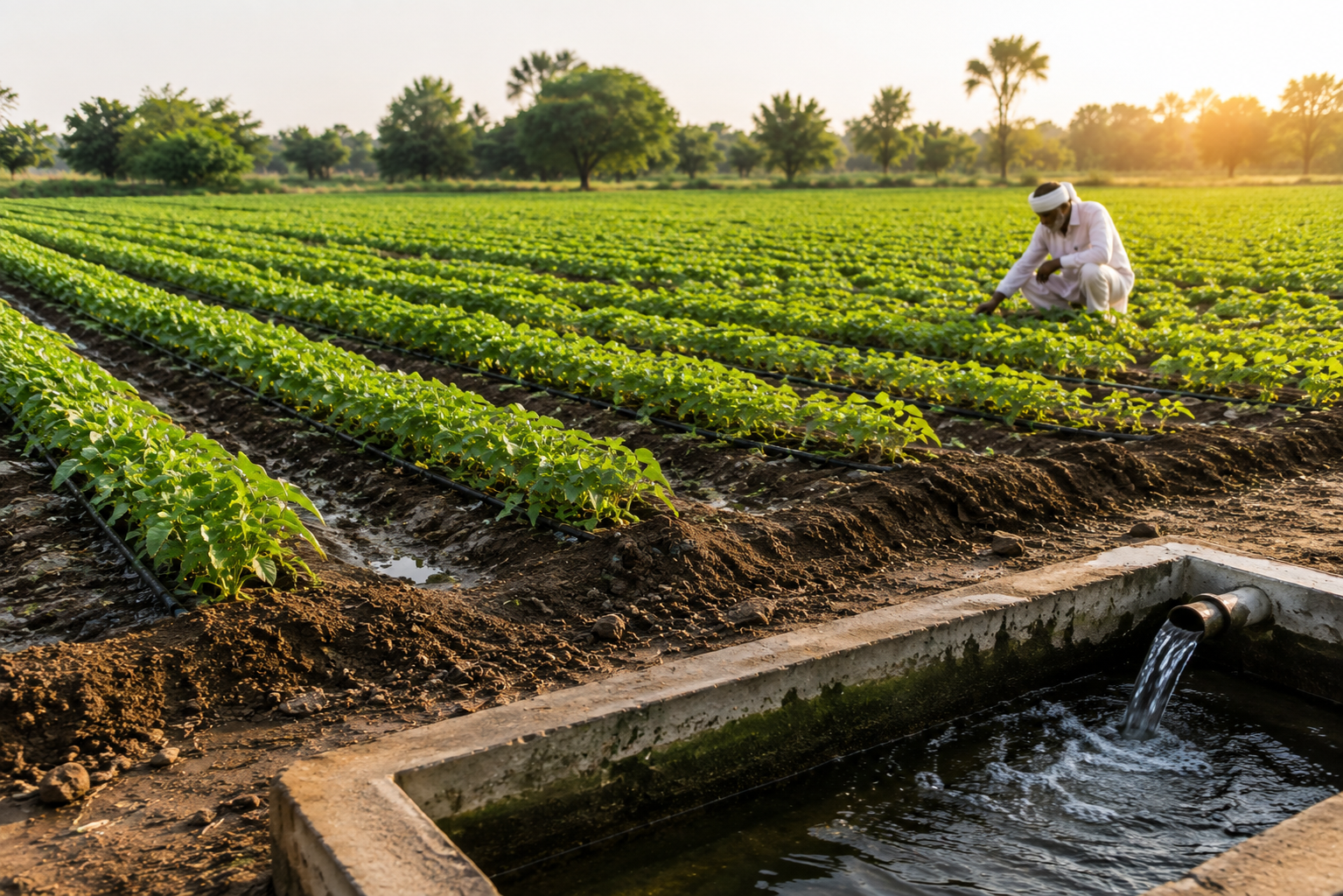
Modern agriculture depends on efficient water management, especially in areas where water quality and availability can directly affect crop productivity. A reliable agricultural water filtration system is an essential part of modern drip and micro-irrigation systems because it helps remove unwanted particles and impurities before water reaches irrigation components.
Gajanand Irrigation provides a range of irrigation products and filtration solutions designed to support efficient agricultural water management. Among the most commonly used filtration technologies are screen filters, disc filters, and hydrocyclone filters. Each type is designed for different water conditions and filtration requirements.
Choosing the right irrigation water filter can help reduce clogging, protect drip irrigation components, improve water distribution, and support better irrigation system performance.
What Is an Agricultural Water Filtration System?
An agricultural water filtration system is a filtration arrangement used to remove suspended particles, sand, dirt, debris, and other physical impurities from irrigation water. It is particularly important for drip irrigation because small emitters and narrow water passages can become blocked when unfiltered water enters the system.
Water used for farming may come from sources such as:
- Borewells
- Open wells
- Rivers
- Canals
- Farm ponds
- Reservoirs
- Surface water sources
The type and quantity of impurities can vary depending on the water source. Therefore, farmers need to select filtration equipment according to their water quality and irrigation requirements.
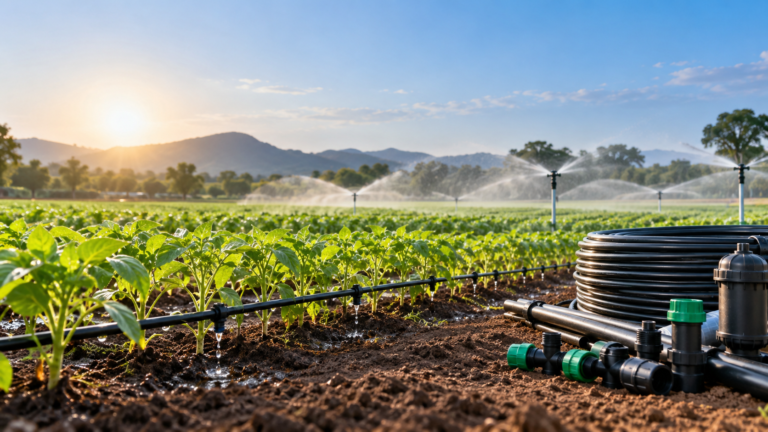
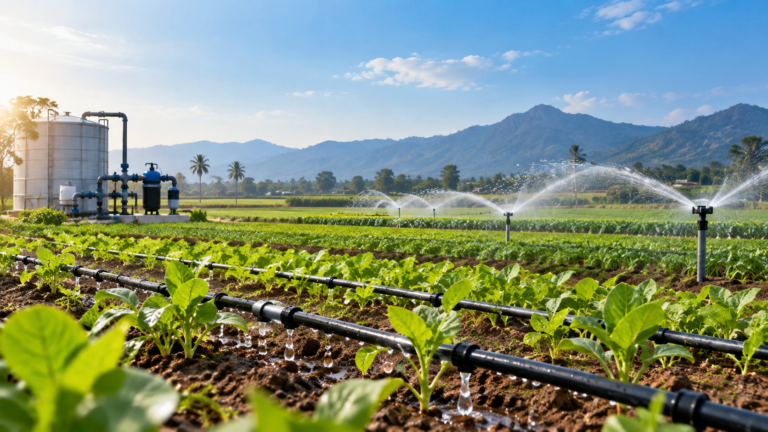
A properly designed agricultural water filtration system can be installed before the main irrigation network to protect pipes, valves, drippers, sprinklers, fertigation equipment, and other components.
Why Water Filtration Is Important for Drip Irrigation
Drip irrigation is designed to deliver water directly and efficiently to the crop root zone. However, drip emitters have small water passages that can be affected by suspended particles.
Without suitable filtration, impurities can accumulate inside pipes and emitters, potentially affecting water flow and irrigation uniformity.
An effective drip irrigation filtration system can provide several benefits:
1. Helps Prevent Dripper Clogging
One of the biggest concerns in drip irrigation is emitter clogging. Screen and disc filtration systems can help remove suspended particles before they enter the laterals and drippers.
2. Protects Irrigation Components
Clean irrigation water helps protect important components such as:
- Drip emitters
- Irrigation pipes
- Valves
- Fertigation equipment
- Sprinklers
- Pressure regulators
- Connectors and fittings
3. Supports Uniform Water Distribution
When irrigation lines remain relatively clean, water can flow more consistently throughout the system. This can support more uniform irrigation across the agricultural field.
4. Reduces Maintenance Problems
Regular filtration and appropriate filter maintenance can reduce the accumulation of dirt and particles in irrigation equipment.
5. Improves Irrigation Efficiency
A well-designed filtration system works as an important part of an efficient agricultural irrigation setup by helping deliver cleaner water to the distribution network.
Types of Agricultural Water Filters
Different water sources require different filtration technologies. The three important filtration solutions commonly used in agricultural irrigation are screen filters, disc filters, and hydrocyclone filters.
1. Screen Filter for Agricultural Irrigation
A screen filter uses a mesh screen to separate suspended particles from irrigation water. Water passes through the screen while larger particles and debris are retained.
Screen filters are commonly used for irrigation applications where water contains suspended particles that can be captured by the selected mesh size.
Benefits of Screen Filters
- Effective removal of suspended particles
- Suitable for drip and sprinkler irrigation
- Available in different filtration grades
- Easy to inspect and maintain
- Helps protect downstream irrigation components
- Useful for agricultural water filtration systems
Screen filters can be particularly useful when the irrigation water contains relatively clean suspended material and the required filtration level can be achieved using an appropriate screen mesh.
2. Disc Filter for Drip Irrigation
A disc filter consists of a stack of grooved discs that are compressed together inside a filtration unit. The grooves create filtration pathways that trap suspended particles as water passes through the filter.
Disc filters are widely considered for agricultural applications where reliable filtration is required for drip irrigation systems.
Benefits of Disc Filters
- Efficient filtration of suspended particles
- Suitable for drip irrigation applications
- Compact filtration design
- Can be cleaned and maintained
- Helps protect small irrigation passages
- Suitable for different agricultural water management applications
A disc filter can be selected according to the water quality, irrigation system design, flow requirement, and filtration specification.
3. Hydrocyclone Filter for Sand Removal
A hydrocyclone filter, also called a hydrocyclone sand separator, is designed primarily to separate heavier particles such as sand from irrigation water.
It works using centrifugal action. As water enters the hydrocyclone, the internal flow pattern causes heavier particles to move toward the collection area while cleaner water continues toward the irrigation system.
Hydrocyclone filters can be especially useful for agricultural water sources containing significant amounts of sand.
Benefits of Hydrocyclone Filters
- Helps separate sand and heavier particles
- Suitable for borewell and groundwater applications with sand
- Helps reduce the particle load reaching downstream filters
- Can be used as part of a multi-stage filtration system
- Helps protect irrigation equipment from abrasive particles
For water containing considerable sand, a hydrocyclone can be used before a finer filtration stage such as a screen or disc filter.
Screen Filter vs Disc Filter vs Hydrocyclone Filter
Choosing the right filter depends mainly on the type of impurities present in the water.
| Filter Type | Main Purpose | Common Application |
|---|---|---|
| Screen Filter | Removes suspended particles | Drip & sprinkler irrigation |
| Disc Filter | Fine filtration of suspended particles | Drip irrigation & micro-irrigation |
| Hydrocyclone Filter | Separates sand and heavier particles | Borewell & groundwater irrigation |
In some agricultural projects, combining filtration technologies can provide a more suitable solution than depending on a single filter.
For example, a hydrocyclone + disc filter combination may be considered when irrigation water contains sand as well as finer suspended particles. The hydrocyclone can handle heavier sand particles, while the downstream disc filter can provide additional filtration.
How to Choose the Right Agricultural Water Filtration System
Farmers and irrigation professionals should consider several factors before selecting an agricultural water filtration system.
Water Source
First, identify whether water is coming from a borewell, canal, pond, river, reservoir, or another source. Different sources may contain different types of impurities.
Type of Contamination
Check whether the water contains:
- Sand
- Silt
- Clay
- Organic debris
- Suspended particles
- Algae
- Other physical impurities
Understanding the contamination helps determine which filtration technology is appropriate.
Irrigation Method
Drip irrigation generally requires effective filtration because emitters have small flow passages. Sprinkler and other irrigation systems may have different filtration requirements.
Flow Rate
Filter selection should also consider the required flow rate of the irrigation system. A properly sized filter should be capable of handling the system’s water flow without creating unnecessary pressure loss.
Filtration Level
The required filtration level depends on the irrigation equipment and water quality. Farmers should select the filtration specification according to the manufacturer’s recommendations and irrigation system requirements.
Maintenance Requirements
Every filtration system requires appropriate maintenance. Regular inspection, cleaning, and flushing can help maintain filtration performance.
Importance of Proper Filter Maintenance
Installing an irrigation filter is only the first step. Regular maintenance is essential for long-term performance.
Farmers should inspect filters periodically and clean them when required. Filter pressure differences can also be monitored where suitable pressure gauges are installed.
Maintenance may include:
- Cleaning screen elements
- Cleaning disc stacks
- Removing collected sand from hydrocyclone units
- Checking filter connections
- Inspecting seals and fittings
- Checking pressure conditions
- Flushing the irrigation system when required
Following the manufacturer’s maintenance recommendations can help improve the operating life and performance of the filtration equipment.
Agricultural Water Filtration Solutions by Gajanand Irrigation
Gajanand Irrigation is an irrigation product manufacturer offering products for agricultural water management and irrigation applications. Its product range includes filtration solutions and other irrigation components designed for modern farming requirements.
For farmers, agricultural businesses, irrigation contractors, and distributors, selecting suitable filtration equipment is an important step toward building a dependable irrigation system.
Whether the requirement is a screen filter, disc filter, hydrocyclone filter, irrigation fittings, valves, or other irrigation components, the correct product should be selected according to water quality, flow rate, crop requirements, and system design.
Conclusion
A reliable agricultural water filtration system plays an important role in modern drip and micro-irrigation. Proper filtration can help reduce the entry of sand, dirt, debris, and suspended particles into irrigation networks while protecting sensitive irrigation components.
Screen filters, disc filters, and hydrocyclone filters each have different functions. Screen filters are useful for removing suspended particles, disc filters provide effective filtration for many drip irrigation applications, and hydrocyclone filters are particularly useful for separating sand and heavier particles.
The best filtration setup depends on the water source, contamination level, irrigation method, flow rate, and filtration requirements. For challenging water conditions, a combination of filtration technologies may provide a more effective solution.
For modern farmers looking to improve irrigation water management, investing in the right agricultural water filtration system can be an important step toward maintaining reliable irrigation performance and protecting valuable irrigation equipment.
Gajanand Irrigation offers agricultural irrigation and filtration products for modern farming applications. Choose the appropriate filtration solution based on your water quality and irrigation system requirements for efficient and dependable water management.