Modern irrigation systems play an important role in agriculture, horticulture, landscaping, and water management. As farmers and businesses look for reliable ways to distribute water, the quality and accuracy of irrigation components have become increasingly important. Every component must perform its intended function and work correctly with the other parts of the system.
This is where precision engineering makes a difference. Precision Engineered Irrigation Products are designed and manufactured with attention to dimensions, tolerances, material properties, and functional requirements. These factors help manufacturers produce components that fit correctly, operate consistently, and meet defined quality standards.
Precision engineering involves more than producing a component with accurate dimensions. It also considers product design, material selection, manufacturing methods, quality inspection, and performance testing. When manufacturers control these factors effectively, they can improve product consistency and reduce the risk of avoidable defects.
For agricultural businesses, irrigation contractors, equipment suppliers, and distributors, understanding the value of precision engineering helps them make better purchasing decisions.
In this blog, we explore how precision engineering improves irrigation product quality, supports dependable system performance, and contributes to efficient installation and maintenance.
1. What Is Precision Engineering in Irrigation Manufacturing?
Precision engineering is an approach to designing and manufacturing components according to clearly defined technical specifications. It focuses on dimensional accuracy, repeatability, material suitability, and the reliable performance of individual parts.
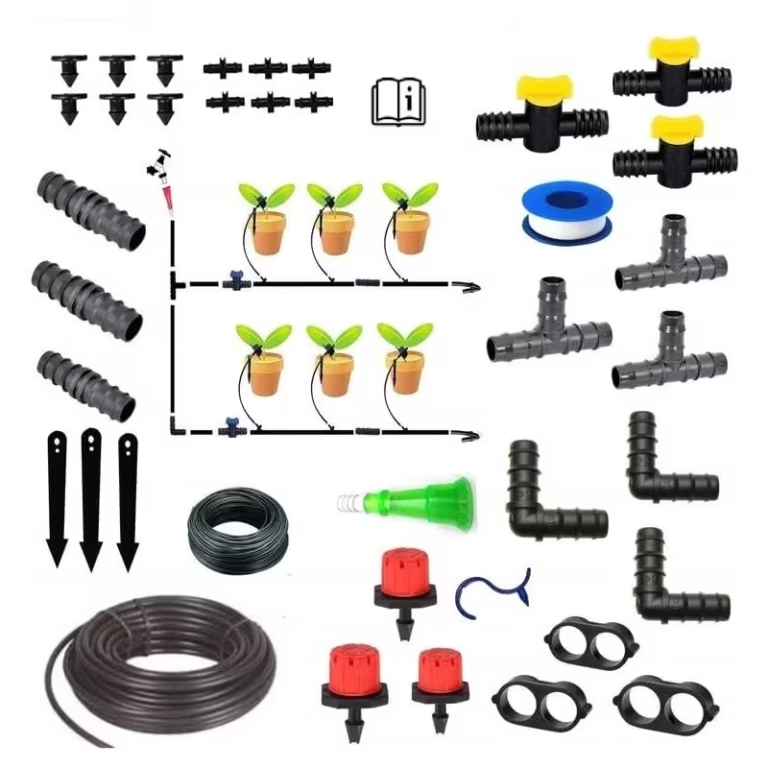
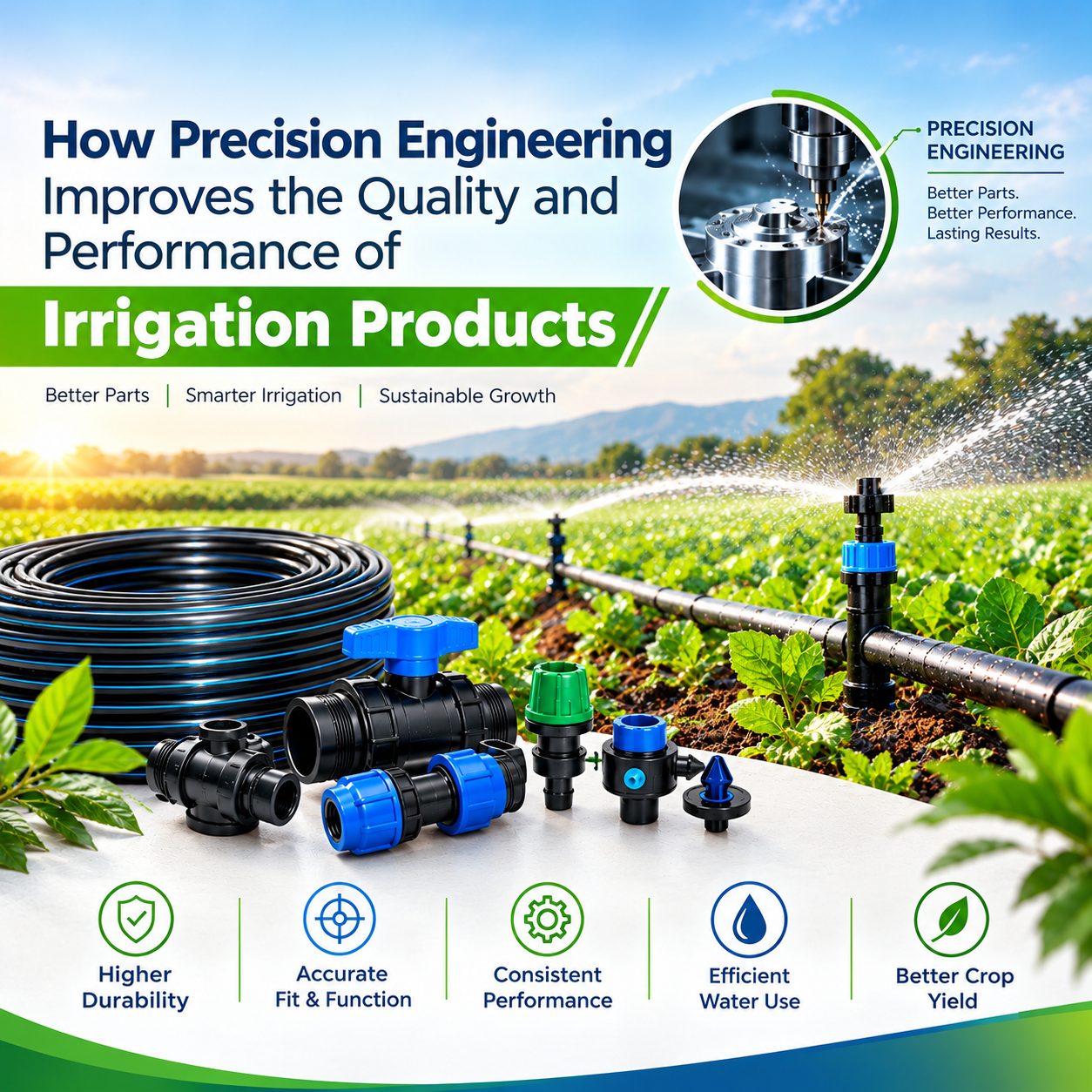
In irrigation manufacturing, precision engineering may apply to pipes, fittings, connectors, valves, filter housings, adapters, and other water distribution components.
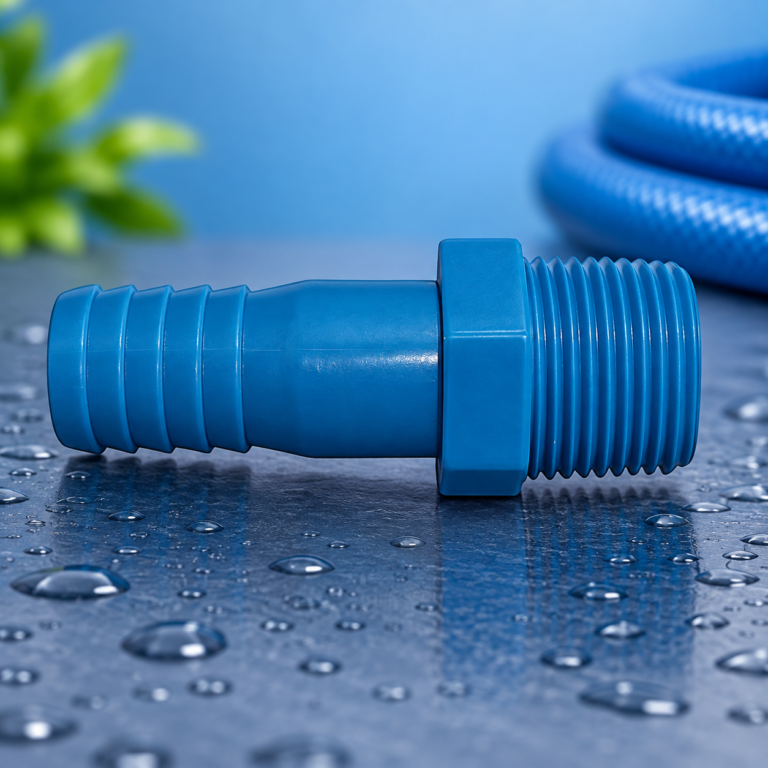
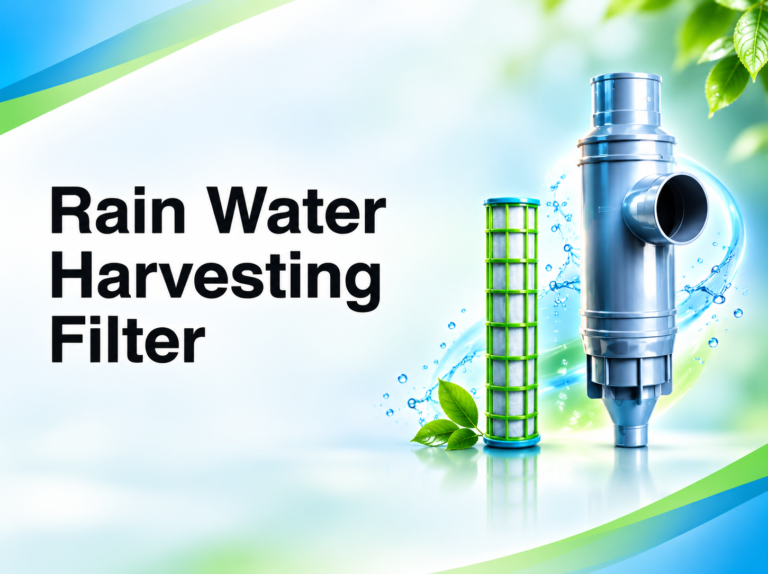
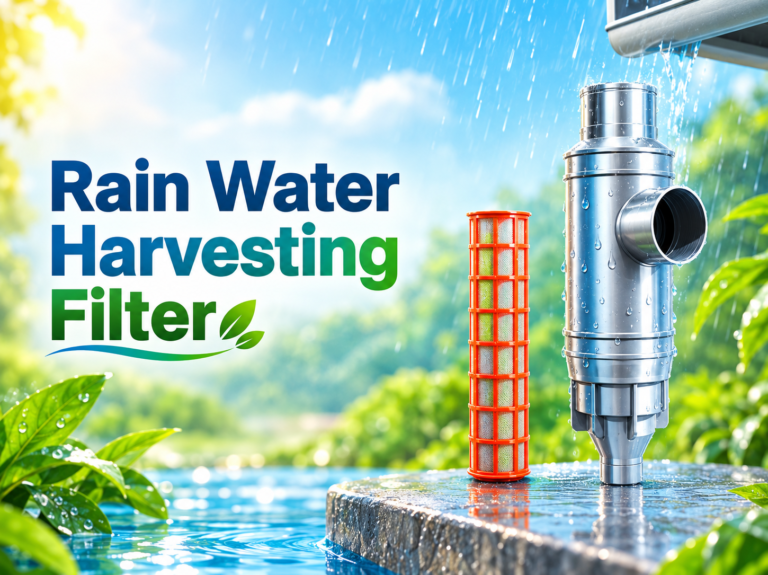
For example, a fitting must match the required connection dimensions to work correctly with its intended pipe. A valve may require accurately manufactured sealing surfaces to control water flow as designed. A filter housing must meet specified dimensions to accommodate the intended filtration assembly.
Manufacturers may use engineering drawings, computer-aided design (CAD), suitable tooling, controlled production methods, and inspection equipment to achieve the required accuracy.
The objective is to produce components that meet their approved specifications and perform their intended functions under the specified operating conditions.
Not every irrigation product requires the same level of precision. Manufacturers determine the appropriate tolerances and inspection requirements according to the component’s design, application, and applicable standards.
2. Improved Dimensional Accuracy and Product Consistency
Dimensional accuracy is one of the main benefits of precision engineering. Irrigation components often connect directly to pipes, hoses, valves, and other fittings. Small dimensional differences can affect how these parts fit together.
If a component does not meet its specified dimensions, installation may become difficult. Poor fit can also contribute to leakage, connection problems, or additional adjustments.
Precision engineering helps manufacturers establish defined dimensions and tolerances for critical product features. Depending on the component, these may include diameter, wall thickness, length, thread dimensions, connection geometry, and sealing surfaces.
Manufacturers can use appropriate measuring instruments, gauges, and inspection procedures to verify these characteristics.
Consistent dimensions are particularly important when buyers order large quantities or purchase replacement components over time. Maintaining repeatable specifications helps ensure that products from different production batches remain suitable for their intended applications.
For distributors and irrigation contractors, dimensional consistency can simplify inventory management and reduce avoidable installation difficulties.
3. Better Material Selection and Product Durability
Material selection directly affects the performance and service life of irrigation products. Components may face moisture, sunlight, soil contact, changing temperatures, fertilizers, and varying water pressures.
Precision engineering considers these conditions during product design and material selection.
Depending on the product and application, manufacturers may use suitable plastics, rubber, metals, or other engineering materials. Each material offers different properties, so manufacturers must evaluate its suitability for the intended operating environment.
Important considerations may include:
- Mechanical strength and dimensional stability
- Resistance to corrosion or chemical exposure
- Temperature suitability
- Environmental durability
- Wear resistance
- Compatibility with the intended application
For example, a component intended for outdoor use may require material properties appropriate for its expected exposure to sunlight and weather. A component used in a pressurized system must meet the applicable design and pressure requirements.
Precision engineering helps align the product design, material specifications, and manufacturing process. This can support dependable performance when the component is correctly installed and operated within its specified limits.
4. Improved Water Flow and Distribution
Effective water distribution is essential for irrigation systems. Poorly designed or incorrectly manufactured components can interfere with the intended flow path and affect system operation.
Precision engineering helps manufacturers control the dimensions and geometry of components that influence water movement. These features may include internal passages, openings, connection points, valve elements, and other flow-related surfaces.
For example, a valve must be manufactured according to its intended design to regulate water flow correctly. Similarly, a fitting should provide a suitable connection without creating unintended restrictions or installation problems.
The actual effect on flow depends on the complete component design, operating pressure, water characteristics, and system configuration.
Precision manufacturing alone does not guarantee water savings or uniform irrigation. The overall system must also be designed correctly, installed properly, and maintained according to its requirements.
However, accurately manufactured components help the system operate closer to its intended design performance and support predictable water distribution.
5. Reduced Leakage and Better Connection Reliability
Leakage can waste water, increase operating costs, and affect irrigation performance. Connection problems may arise when components have incorrect dimensions, unsuitable threads, damaged sealing surfaces, or incompatible materials.
Precision engineering helps address these risks by focusing on the accuracy of connection features and the quality of manufacturing.
Depending on the product, manufacturers may inspect thread dimensions, mating surfaces, seal locations, joint geometry, and other critical features.
Some components may also require leakage or pressure testing according to their specifications and intended applications.
Correct product selection remains essential. Even a precisely manufactured component may leak if the installer uses an incompatible fitting, an incorrect seal, or an unsuitable installation method.
Buyers should therefore confirm dimensions, connection types, material compatibility, and operating pressure before purchasing irrigation components.
When accurate manufacturing and correct installation work together, they can help reduce avoidable connection issues and support more reliable irrigation systems.
6. Greater Manufacturing Efficiency and Less Material Waste
Precision engineering can also improve the manufacturing process itself. When manufacturers define production parameters and monitor critical dimensions, they can identify deviations before those issues affect large quantities of products.
This helps manufacturers investigate problems associated with tooling, machine settings, raw materials, or production methods.
Suitable process controls may reduce defective products, unnecessary rework, rejected batches, and material waste. They can also help manufacturers improve production repeatability.
For example, a manufacturer producing plastic fittings may monitor moulding conditions and inspect important dimensions to maintain consistent output. A manufacturer machining metal components may verify critical measurements during production to reduce the risk of parts falling outside specified tolerances.
The benefits depend on the manufacturing method, process controls, and quality management practices.
For buyers, consistent manufacturing can support more predictable product quality and reduce the likelihood of receiving components that require replacement or modification before installation.
7. Improved Compatibility With Irrigation Systems
Modern irrigation installations may contain components from different product ranges, suppliers, or equipment manufacturers. Compatibility is therefore an important purchasing consideration.
Precision engineering helps manufacturers produce components according to defined connection standards, drawings, dimensions, and tolerances.
This can make it easier for buyers to verify whether a product suits the intended pipe, valve, filter, or irrigation assembly.
For example, a connector may need a specific diameter or thread configuration. A replacement component may need to match the dimensions of an existing installation. In each case, accurate specifications help buyers evaluate compatibility before placing an order.
Manufacturers can support this process by providing clear technical drawings, product dimensions, part numbers, material information, and relevant installation requirements.
However, buyers should never assume that two components are compatible simply because they look similar. They should confirm the actual specifications and any applicable manufacturer requirements.
Better compatibility helps simplify installation planning and can reduce delays caused by incorrect product selection.
8. Support for Different Irrigation Applications
Different irrigation applications have different technical requirements. Agricultural fields, greenhouses, nurseries, gardens, landscaping projects, and commercial water distribution systems may require different component designs.
Precision engineering allows manufacturers to develop or produce components according to defined application requirements.
For example, a component used in a particular irrigation layout may require specific connection dimensions. A valve may need to operate within a defined pressure range, while a filter housing may need to accommodate a particular filtration arrangement.
Depending on their capabilities, manufacturers may also produce customized components based on approved drawings or technical specifications.
Customization may involve dimensions, connection arrangements, materials, or other design features. Before production begins, buyers and manufacturers should confirm the final specifications, acceptable tolerances, inspection criteria, and testing requirements.
This approach helps ensure that the finished product meets the intended design rather than relying on assumptions.
9. Easier Inspection, Maintenance, and Replacement
Accurate product specifications can make irrigation system maintenance more straightforward. When components have identifiable part numbers, consistent dimensions, and clear technical documentation, maintenance teams can more easily identify the correct replacement products.
Precision engineering supports this process by establishing measurable product characteristics that can be checked during manufacturing and inspection.
For example, a technician replacing a fitting may need to verify its diameter, connection type, and material. A replacement valve may need to match the specified dimensions and operating requirements of the existing system.
Clear documentation helps reduce the risk of selecting an unsuitable replacement.
Product quality also affects maintenance requirements. Components manufactured to their intended specifications may help reduce certain avoidable problems, although service life still depends on water quality, installation, operating conditions, and maintenance practices.
For agricultural businesses and irrigation contractors, easier identification and replacement can help improve maintenance planning and reduce unnecessary downtime.
10. Quality Control and Performance Testing
Precision engineering depends on effective quality control. Manufacturers need appropriate methods to verify that components meet their defined specifications.
Quality assurance may begin with raw material checks and continue through production monitoring, dimensional inspection, and final product verification.
Depending on the component, manufacturers may evaluate:
- Critical dimensions and tolerances
- Surface finish and visible defects
- Connection accuracy
- Material specifications
- Leakage resistance
- Pressure performance
- Functional operation
Not every test applies to every product. Manufacturers should select inspection and testing methods according to the component’s design, applicable standards, and intended use.
For products requiring specific performance verification, the manufacturer should define the test conditions and acceptance criteria. Any claim about compliance with a particular standard should be supported by relevant documentation.
Buyers can request available technical specifications, inspection records, test reports, and applicable certifications when evaluating a supplier.
Effective quality control helps establish confidence that the product meets its intended requirements and supports consistency across production batches.
11. Long-Term Value for Buyers and Manufacturers
Precision engineered irrigation products can provide practical value when their accuracy and quality match the needs of the application.
For buyers, accurately manufactured components may reduce installation adjustments, improve connection fit, and support predictable system operation. For manufacturers, consistent production can reduce waste, rework, and quality-related interruptions.
These benefits can influence the overall cost of using irrigation components.
However, purchasing decisions should consider more than precision alone. Buyers should also evaluate material suitability, product specifications, operating limits, supplier reliability, pricing, delivery timelines, and technical support.
The lowest-priced component may not offer the best overall value if it does not meet the required specifications. Similarly, a precision-manufactured product may not be suitable if the buyer selects the wrong dimensions or uses it outside its intended operating conditions.
A balanced evaluation helps businesses choose components that meet their technical and commercial requirements.
12. How to Choose a Supplier of Precision Engineered Irrigation Products
Choosing the right supplier is an important step in maintaining irrigation system quality. Buyers should verify that the manufacturer can produce the required components and provide clear information about their specifications.
Consider these factors before placing an order:
Manufacturing capabilities: Review the manufacturer’s available production methods, equipment, and experience with similar components.
Dimensional accuracy: Ask how the manufacturer verifies critical dimensions and maintains production consistency.
Material information: Confirm material grades or specifications where relevant to the application.
Quality assurance: Review applicable inspection procedures, test reports, and certifications.
Product compatibility: Verify dimensions, thread types, connection arrangements, and pressure ratings where applicable.
Customization support: If your project requires a special design, confirm whether the manufacturer can meet the approved specifications.
Delivery and communication: Check order quantities, production lead times, packaging arrangements, and customer support.
By reviewing these factors, agricultural businesses, distributors, contractors, and equipment suppliers can make more informed purchasing decisions.
Conclusion
Precision engineering plays an important role in improving the quality and performance of irrigation products. Accurate dimensions, suitable materials, controlled manufacturing methods, and effective quality inspections help manufacturers produce components that meet defined technical requirements.
Precision Engineered Irrigation Products can support better component fit, consistent manufacturing quality, reliable connections, and predictable system operation when buyers select the correct products and install them properly.
For businesses purchasing irrigation components, the key is to evaluate both product precision and overall suitability. Verify the specifications, material requirements, testing information, and compatibility before making a purchasing decision.
Working with a capable manufacturer that follows appropriate engineering and quality control practices can help businesses source dependable irrigation components and support the long-term operation of their irrigation systems.
Frequently Asked Questions (FAQs)
1. What are precision engineered irrigation products?
Precision engineered irrigation products are components designed and manufactured to meet defined dimensions, tolerances, material requirements, and functional specifications for irrigation applications.
2. How does precision engineering improve irrigation product quality?
Precision engineering helps manufacturers control dimensions, select suitable materials, maintain consistent production, and verify critical product characteristics through inspection and testing.
3. Why is dimensional accuracy important in irrigation components?
Dimensional accuracy helps components fit correctly, maintain compatible connections, simplify installation, and reduce problems caused by mismatched parts.
4. Can precision engineered irrigation products help reduce water leakage?
Accurate connections and suitable sealing features can help reduce leakage risks. Actual results also depend on product compatibility, correct installation, operating conditions, and maintenance.
5. Which materials are used in precision engineered irrigation products?
Depending on the component and application, manufacturers may use suitable plastics, rubber, metals, and other engineering materials selected according to required performance properties.
6. How do manufacturers check the quality of precision irrigation components?
Manufacturers may use dimensional inspection, material verification, visual checks, leakage testing, pressure testing, or functional testing according to the product’s specifications.
7. Can precision engineered irrigation products be customized?
Some manufacturers can produce customized irrigation components based on approved drawings, dimensions, material requirements, and manufacturing capabilities.
8. Which irrigation applications use precision engineered components?
These components may be used in agriculture, horticulture, greenhouses, landscaping, nurseries, and other water distribution systems, depending on the product’s specifications.
9. How should buyers select precision engineered irrigation products?
Buyers should check product dimensions, material suitability, operating pressure, compatibility, quality documentation, manufacturing capabilities, and delivery requirements.
10. Do precision engineered irrigation products reduce maintenance costs?
Accurately manufactured and suitable components may reduce certain installation and quality-related problems. Actual maintenance costs depend on product selection, operating conditions, installation, water quality, and maintenance practices.