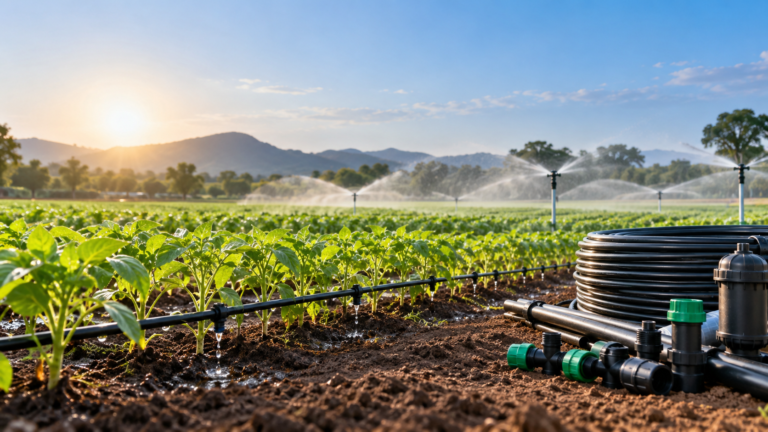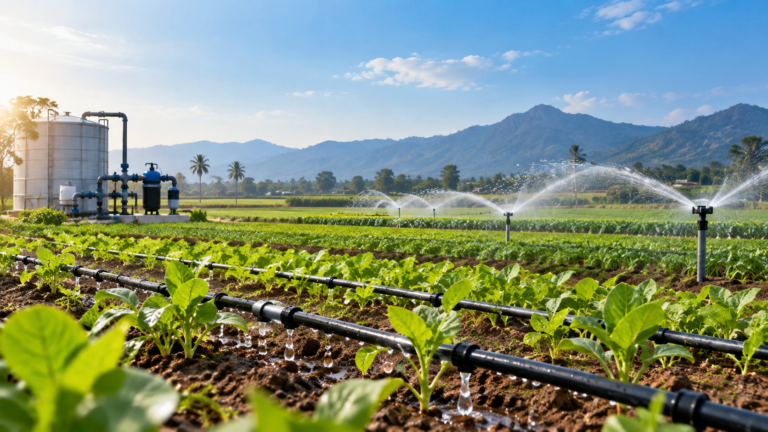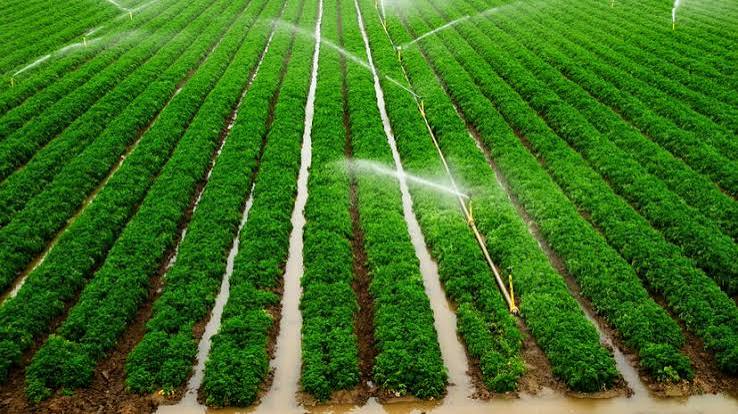
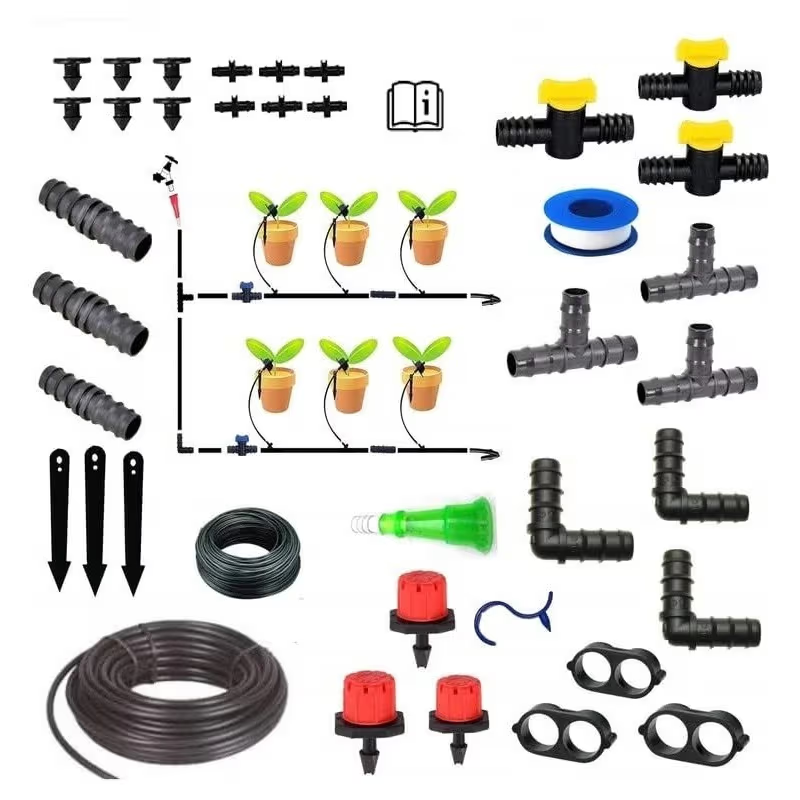
Choosing the best drip irrigation kits available in India can make a major difference in water management, crop growth, fertilizer application, and overall farm efficiency. A good drip irrigation kit delivers water directly to the crop root zone and helps farmers control water flow more precisely than traditional irrigation methods.
However, the best kit is not always the cheapest kit. Farmers should consider crop type, farm size, soil condition, water source, water quality, pipe layout, filtration, pressure, emitter spacing, and fertigation requirements before selecting a system.
For Indian farms, a properly planned drip irrigation system can be used for vegetables, fruits, orchards, cotton, sugarcane, groundnut, horticultural crops, nurseries, greenhouses, and many other agricultural applications.
Gajanand Irrigation provides a wide range of irrigation components, including filters, fittings, valves, Venturi systems, fertigation assemblies and other products required to build an efficient irrigation network. The company is based in Ahmedabad and has been serving irrigation markets since 1993.
This guide explains how to select the right drip irrigation kit, what components you need, how different kits work, and why component quality matters.
What Is a Drip Irrigation Kit?
A drip irrigation kit is a combination of components designed to deliver controlled amounts of water directly to the root zone of plants.
Unlike flood irrigation, where water is distributed across a large area, drip irrigation applies water close to the plant. This helps improve control over water application and can reduce unnecessary water movement across the field.
A typical agricultural drip irrigation system may include:
- Water source
- Pump
- Mainline pipe
- Sub-main pipe
- Drip laterals
- Emitters or drippers
- Screen filter
- Disc filter
- Hydrocyclone filter when required
- Valves
- Poly fittings
- Pressure-control components
- Flush valves
- Fertigation equipment
- Venturi injector or fertilizer tank
- Air-release valves
- End connectors and end caps
The exact configuration depends on the farm and crop.
Therefore, when searching for the best drip irrigation kits available in India, farmers should focus on the complete system rather than one individual component.
Why Are Drip Irrigation Kits Important for Indian Farms?
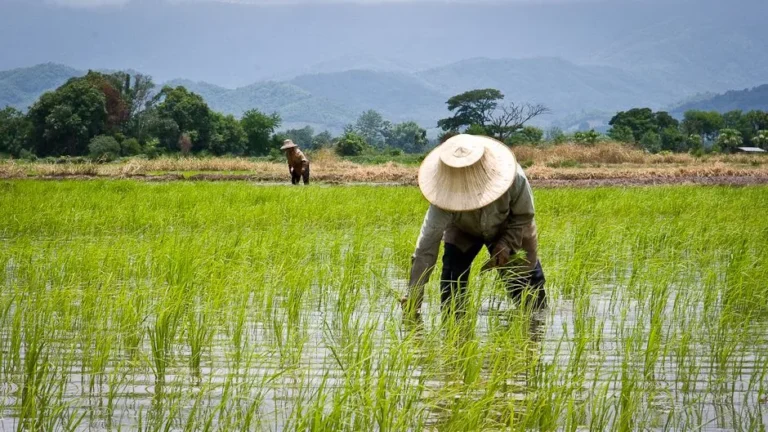
Agriculture in India includes many different climates, soil types, crops, and water sources. Some farms depend on borewells, while others use open wells, reservoirs, canals, ponds, or storage tanks.
This means there is no single drip irrigation configuration suitable for every farm.
A properly designed system can help farmers:
- Apply water closer to plant roots
- Manage irrigation more efficiently
- Reduce unnecessary water loss
- Improve irrigation uniformity
- Support fertigation
- Reduce manual irrigation work
- Protect sensitive irrigation components
- Maintain better control over irrigation zones
- Adapt irrigation to different crops
Government micro-irrigation guidelines also recognize drip irrigation as a method of delivering water to the root zone through emitters installed on a network of mains, sub-mains and laterals.
Best Drip Irrigation Kits Available in India: What Should a Complete Kit Include?
Before purchasing a kit, check whether the package contains the components needed for your specific installation.
A basic kit may contain only pipes, connectors and emitters. A larger agricultural installation may require filtration, valves, pressure control and fertigation equipment.
Here are the major components to consider.
1. Mainline Pipe
The mainline carries water from the source toward the irrigation zones.
Its size should be selected according to:
- Farm area
- Required flow rate
- Pump capacity
- Distance
- Number of irrigation zones
- Pressure requirements
An undersized mainline can create excessive pressure loss. This may affect water distribution in distant areas.
2. Sub-Main Pipe
The sub-main distributes water from the mainline to individual sections or irrigation zones.
Large farms often use multiple sub-main lines to divide the field into manageable irrigation sections.
3. Drip Laterals
Drip laterals are smaller pipes installed near crop rows.
They carry water along the plant rows and release water through emitters.
The lateral spacing should match crop spacing and field layout.
4. Emitters or Drippers
Emitters control the amount of water delivered to plants.
Different crops may require different emitter flow rates and spacing.
For example, closely planted vegetables may require a different arrangement from widely spaced fruit trees.
5. Irrigation Filter
Filtration is one of the most important parts of a drip system.
Water may contain:
- Sand
- Silt
- Mud
- Organic matter
- Algae
- Small debris
- Other suspended particles
These contaminants can enter the irrigation network and contribute to clogging.
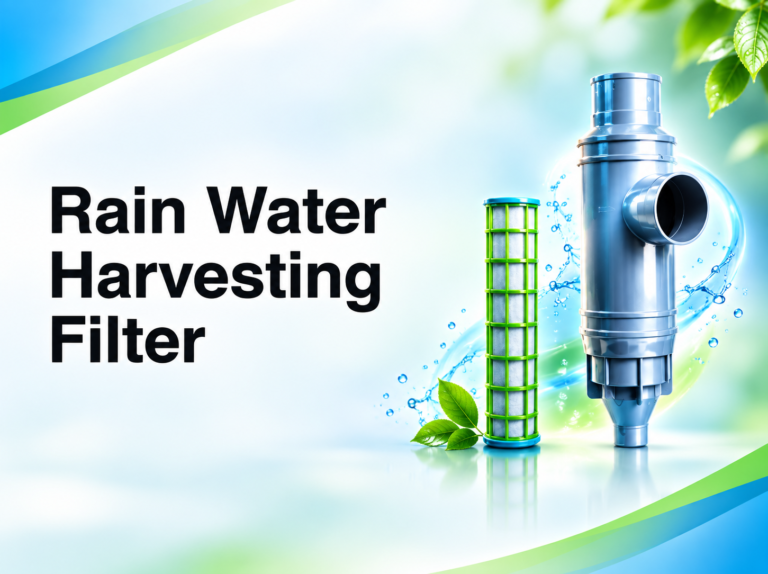
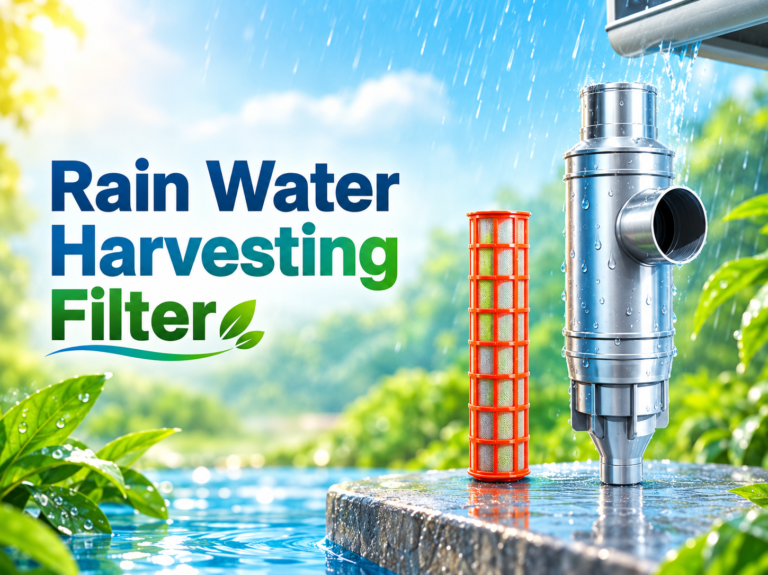
Gajanand Irrigation provides filtration solutions such as screen filters, disc filters and hydrocyclone filters for different irrigation requirements.
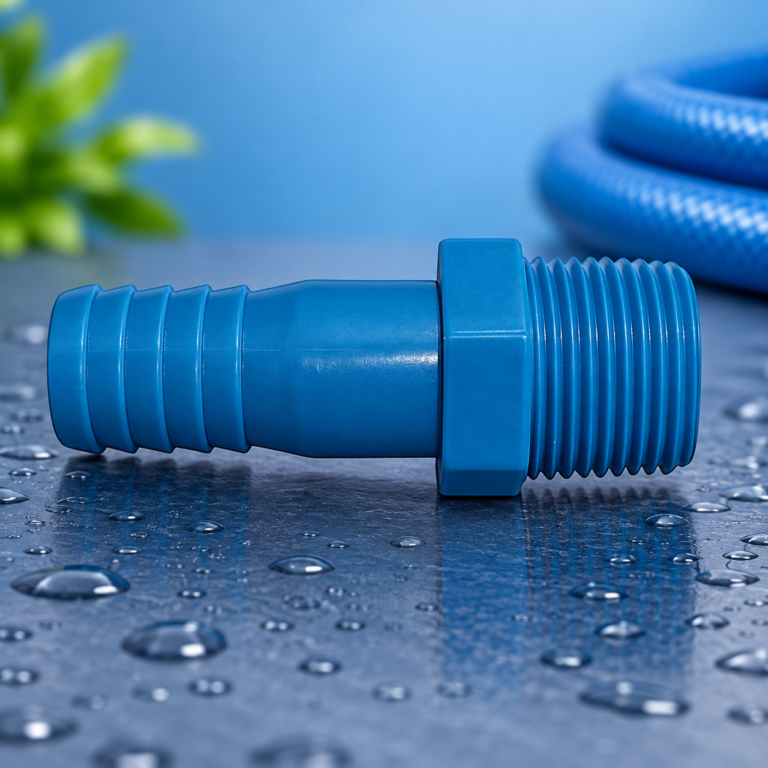
6. Poly Fittings
Fittings connect different pipes and irrigation components.
Common fittings include:
- Tees
- Elbows
- Couplers
- Reducers
- Connectors
- End caps
- Take-off fittings
- Valves
Gajanand poly fittings are designed for irrigation applications and are manufactured for leak-resistant connections and outdoor use.
7. Valves
Valves help control water flow through different irrigation zones.
They can be used to:
- Open or close sections
- Control irrigation zones
- Isolate equipment
- Support maintenance
- Manage water distribution
8. Fertigation Equipment
Fertigation means applying soluble fertilizer through irrigation water.
A Venturi injector or fertigation assembly can help introduce soluble nutrients into the irrigation network.
Government micro-irrigation guidelines specifically recognize fertigation equipment such as Venturi injectors or fertilizer tanks as part of drip irrigation systems.
9. Air-Release Valves
Air can accumulate at certain points in an irrigation pipeline.
Air-release valves help manage trapped air and support stable system operation.
10. Flush Valves and End Caps
Flushing is important for removing accumulated particles from the ends of irrigation lines.
End caps help close the lateral lines and can make system maintenance easier.
Best Drip Irrigation Kits Available in India for Different Farm Sizes
The best drip irrigation kits available in India vary according to the size and purpose of the farm.
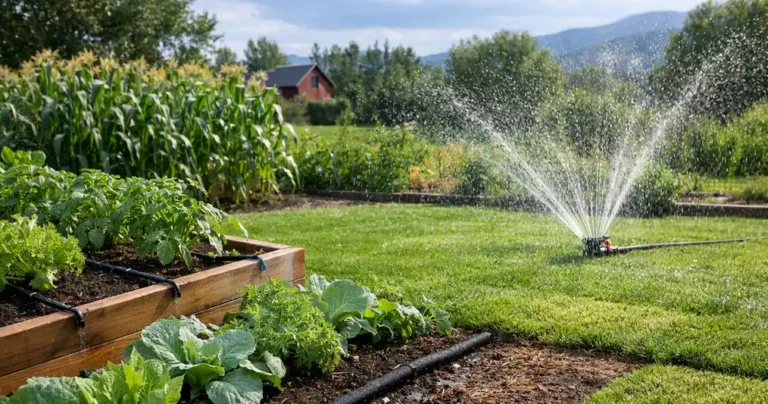
Small Farm or Kitchen Garden
A small installation may need:
- Water connection
- Small filter
- Main pipe
- Drip lateral
- Emitters
- Connectors
- End caps
- Basic valve
A simple system may be enough when the water source is clean and the irrigation area is small.
Small Agricultural Farm
A small agricultural farm may require:
- Pump
- Filter
- Mainline
- Sub-main
- Laterals
- Emitters
- Valves
- Fittings
- Flush arrangements
The system should be designed around crop spacing and field dimensions.
Medium-Sized Farm
Medium farms generally need better flow management.
The system may include:
- Pumping unit
- Hydrocyclone filter where necessary
- Disc or screen filtration
- Mainline
- Sub-main
- Zone valves
- Laterals
- Pressure-control components
- Fertigation assembly
- Venturi injector
- Flush valves
Large Agricultural Farm
Large farms often require multiple irrigation zones.
A complete installation may include:
- High-capacity pump
- Multi-stage filtration
- Large mainline
- Multiple sub-mains
- Zone-control valves
- Pressure-control equipment
- Large-volume fertigation system
- Multiple lateral networks
- Air-release valves
- Flush points
Large systems should be professionally designed because pressure and flow distribution become increasingly important as the field size increases.
Best Drip Irrigation Kits Available in India Based on Crop Type
Another important factor is crop type.
Drip Irrigation for Vegetables
Vegetables such as tomato, chilli, cucumber, capsicum and other row crops can benefit from precise water delivery.
The lateral spacing should correspond to the crop rows.
Drip Irrigation for Fruit Orchards
Orchards require a different approach because plants are usually spaced farther apart.
The system may use emitters positioned around the root zone of each tree.
As plants grow, the irrigation arrangement may also need adjustment.
Drip Irrigation for Sugarcane
Sugarcane requires irrigation over a relatively long crop cycle.
A properly designed drip system can help deliver water along crop rows while allowing farmers to divide the field into irrigation zones.
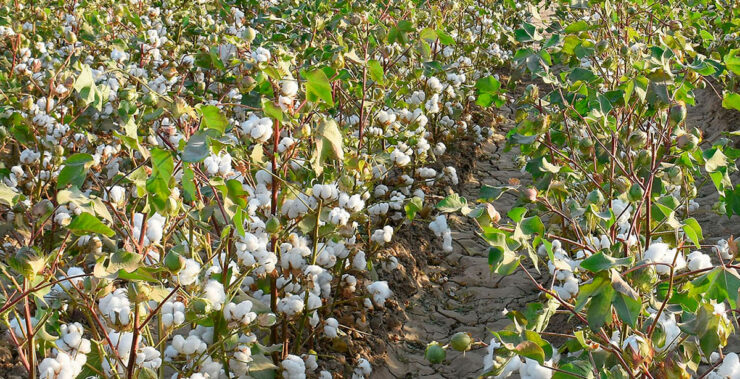
Drip Irrigation for Cotton
Cotton farms can use drip irrigation where field conditions and irrigation planning are suitable.
The lateral arrangement should be based on row spacing and water requirements.
Drip Irrigation for Groundnut
Groundnut requires careful water management, especially during important growth stages.
The irrigation layout should consider soil type, crop spacing and available water.
Drip Irrigation for Nursery and Greenhouse Applications
Nurseries and protected cultivation often require controlled water application.
A well-designed kit can help manage individual plant rows or growing sections.
How to Choose the Best Drip Irrigation Kit for Your Farm
Selecting the right kit requires more than comparing prices.
Use the following checklist.
1. Check Your Water Source
First identify where the irrigation water comes from.
It could be:
- Borewell
- Open well
- Pond
- Canal
- River
- Reservoir
- Storage tank
Water quality strongly influences filtration requirements.
2. Test Water Quality
Water containing high amounts of sand may require a hydrocyclone filter.
Water containing suspended particles may require screen or disc filtration.
Gajanand Irrigation explains that hydrocyclone filtration can be useful for separating heavier particles such as sand and sediment before water moves to subsequent filtration stages.
3. Measure Farm Area
Calculate the total irrigation area before purchasing components.
A kit designed for a small plot may not be appropriate for a large farm.
4. Understand Crop Spacing
Crop spacing determines:
- Lateral spacing
- Emitter spacing
- Number of laterals
- Water delivery points
- Required flow
5. Check Pump Capacity
Your pump should be capable of supplying the required flow and pressure.
A mismatch between pump capacity and irrigation design can cause poor performance.
6. Consider Field Slope
A field with significant elevation differences may require additional pressure management.
7. Choose Suitable Filtration
Never treat filtration as an optional accessory for a drip system.
A clogged filter can reduce flow and increase maintenance requirements.
For more information, read Gajanand Irrigation’s guide on [Disc Filter vs Screen Filter]. Disc Filter vs Screen Filter
8. Plan Fertigation
If you want to apply soluble fertilizer through irrigation water, consider a suitable fertigation assembly or Venturi system.
9. Select Good-Quality Fittings
Poor-quality fittings can lead to leakage, disconnection and unnecessary maintenance.
Gajanand’s range of [Poly Fittings] is designed for irrigation applications and includes different connection options for agricultural systems. Gajanand Poly Fittings
10. Plan for Maintenance
Your irrigation kit should be easy to inspect, flush and clean.
Maintenance should be considered before installation, not after problems occur.
Drip Irrigation Filter: Why It Matters
One of the biggest mistakes farmers can make is buying a drip irrigation kit without considering filtration.
Drippers have relatively small water passages. Suspended particles can accumulate in the system and contribute to clogging.
The correct filtration solution depends on the water source.
Borewell Water
Borewell water may contain sand or other mineral particles.
A hydrocyclone filter may be considered when sand separation is required.
Open Well Water
Open wells can contain:
- Sand
- Silt
- Organic matter
- Leaves
- Other debris
A suitable filtration arrangement is therefore important.
Pond Water
Pond water can contain algae and organic material.
Depending on water quality, multiple filtration stages may be required.
Canal Water
Canal water quality can vary by location and season.
Farmers should evaluate the water before selecting filtration equipment.
Gajanand’s range includes [Hydrocyclone Filters] for sand separation and other filtration products for irrigation applications. Gajanand Hydrocyclone Filters
Why Fertigation Is Important in a Drip Irrigation Kit
Drip irrigation can also be used for fertigation.
Instead of applying fertilizer separately across the field, soluble fertilizer can be introduced into the irrigation network.
Potential advantages include:
- More controlled nutrient application
- Better distribution
- Reduced manual application
- Efficient use of soluble fertilizers
- Convenient application during irrigation
A Venturi injector uses the flow characteristics of water to draw fertilizer solution into the irrigation system.
For commercial farming, the fertigation setup should be selected according to crop requirements, system flow and fertilizer compatibility.
Gajanand Irrigation offers fertigation-related components, including Venturi and fertigation assemblies.
How to Install a Drip Irrigation Kit
Installation should follow the planned field layout.
Step 1: Prepare the Water Source
Make sure the pump and water source are ready.
Step 2: Install Filtration
Install the required filtration equipment near the water entry point.
Step 3: Install the Mainline
Lay the mainline according to the farm layout.
Step 4: Install Sub-Mains
Connect sub-main pipes to the required irrigation zones.
Step 5: Install Laterals
Place drip laterals along crop rows.
Step 6: Connect Emitters
Ensure emitters are positioned correctly relative to plants.
Step 7: Install Valves
Use valves to control different irrigation sections.
Step 8: Install Fertigation Equipment
If fertigation is required, install the appropriate Venturi or fertilizer assembly.
Step 9: Flush the System
Flush the pipes before normal irrigation.
This helps remove installation debris.
Step 10: Check for Leaks
Run the system and inspect:
- Pipe connections
- Fittings
- Valves
- Laterals
- Filter connections
- End points
Correct leaks before regular operation.
Common Mistakes When Buying Drip Irrigation Kits
Even the best drip irrigation kits available in India may perform poorly if they are incorrectly selected or installed.
Avoid these mistakes.
Choosing Only by Price
The cheapest kit may not provide the right filtration, fittings or flow control.
Ignoring Water Quality
Water quality directly affects filtration requirements.
Using the Wrong Emitter Spacing
Emitter spacing should match crop spacing and soil conditions.
Using Undersized Pipes
Small pipes can increase pressure loss.
Ignoring Field Slope
Elevation differences can affect pressure and irrigation uniformity.
Skipping Filtration
This can increase clogging risk.
Poor Maintenance
Filters and laterals need regular inspection.
Installing Without a Layout
A planned layout is essential for larger farms.
How to Maintain the Best Drip Irrigation Kits Available in India
Regular maintenance can help extend the useful life of an irrigation system.
Clean Filters Regularly
Cleaning frequency depends on water quality and system usage.
Flush Laterals
Flush the lateral lines periodically to remove accumulated particles.
Inspect Fittings
Check for:
- Cracks
- Leakage
- Loose connections
- Damaged seals
Check Pressure
Monitor pressure at important points in the irrigation network.
Inspect Emitters
Look for irregular water discharge.
Clean Fertigation Equipment
If fertilizer is injected into the system, clean the fertigation equipment according to the manufacturer’s instructions.
Check Valves
Make sure valves open and close correctly.
Best Drip Irrigation Kits Available in India: Quality vs Price
Price is an important factor, but it should not be the only factor.
A cheaper system may have a lower initial cost but require more maintenance or replacement if components are not suitable for the application.
A better approach is to compare:
| Factor | What to Check |
|---|---|
| Farm size | Total irrigation area |
| Crop | Type and spacing |
| Water source | Borewell, pond, canal, etc. |
| Water quality | Sand, silt, algae and debris |
| Filtration | Screen, disc or hydrocyclone |
| Pipe size | Flow and distance |
| Emitters | Flow rate and spacing |
| Fittings | Strength and leak resistance |
| Fertigation | Venturi or fertilizer assembly |
| Valves | Zone control |
| Maintenance | Cleaning and flushing |
| Support | Installation and technical guidance |
This approach helps farmers choose a system based on actual requirements rather than a simple price comparison.
Government Support for Drip Irrigation in India
Micro-irrigation has been promoted through government programs focused on improving water-use efficiency.
The PMKSY framework includes drip irrigation under the Per Drop More Crop component. Official guidelines state that assistance can depend on factors such as plant spacing and the area covered, while eligibility and assistance conditions should be checked according to the applicable state and scheme rules.
Farmers should verify current subsidy rules with the relevant state agriculture department before making a purchase because assistance conditions can change.
Why Choose Gajanand Irrigation for Drip Irrigation Components?
Gajanand Irrigation is an Ahmedabad-based irrigation manufacturer with operations dating back to 1993. Its product range covers several important components used in agricultural irrigation systems.
Gajanand’s irrigation product range includes:
- Screen filters
- Disc filters
- Hydrocyclone filters
- Poly fittings
- Venturi systems
- Air-release valves
- Push fittings
- Ball valves
- Irrigation fittings
- Fertigation assemblies
- Mini sprinklers
The company states that it operates with manufacturing and quality-testing infrastructure and serves both domestic and international markets.
For farmers and irrigation professionals, having access to multiple components from one irrigation manufacturer can simplify system planning and sourcing.
You can explore the complete [Gajanand Irrigation Product Catalog] to understand the available irrigation components. Gajanand Irrigation Product Catalog
How Gajanand Helps Build a Complete Irrigation Solution
A drip irrigation system is not simply a collection of pipes.
It is a network where every component must work together.
The water source supplies water.
The pump provides the required flow.
The filter protects the system.
The mainline carries water.
The sub-main divides the water supply.
Valves control irrigation zones.
Laterals carry water toward crops.
Emitters deliver water near plant roots.
Fertigation equipment can introduce nutrients.
Fittings connect the entire network.
This is why selecting individual components based only on price can create problems later.
A properly planned irrigation system should consider the complete water path from the source to the plant.
Future of Drip Irrigation in India
Indian agriculture is increasingly focused on efficient water management.
Farmers are looking for irrigation methods that can provide better control while reducing unnecessary water use.
Modern irrigation systems are also becoming more adaptable.
Future systems may increasingly combine:
- Precision irrigation
- Automated valves
- Soil moisture monitoring
- Smart controllers
- Remote monitoring
- Automated fertigation
- Better filtration
- Improved emitter technology
However, advanced technology cannot compensate for poor basic design.
Good filtration, suitable pipes, reliable fittings, correct pressure and proper installation remain the foundation of an efficient drip irrigation system.
Frequently Asked Questions About the Best Drip Irrigation Kits Available in India
What are the best drip irrigation kits available in India?
The best drip irrigation kit depends on the crop, farm size, water source, water quality, soil, field layout and irrigation requirements. A complete agricultural kit should include suitable pipes, laterals, emitters, filtration, fittings, valves and other components required for the specific farm.
What should a drip irrigation kit include?
A typical kit may include mainline pipes, sub-main pipes, drip laterals, emitters, filters, fittings, valves, end caps and flushing components. Larger systems may also require hydrocyclone filtration, pressure-control equipment and fertigation assemblies.
Which filter is best for a drip irrigation system?
There is no single filter that is best for every farm. Screen filters, disc filters and hydrocyclone filters serve different purposes. The correct selection depends on water quality and the type of particles present.
Is a filter necessary for drip irrigation?
Yes. Filtration is an important part of most drip irrigation systems because suspended particles can contribute to emitter clogging. The filtration method should be selected according to the water source and system requirements.
Can drip irrigation be used for vegetables?
Yes. Drip irrigation is commonly suitable for vegetable cultivation. The lateral arrangement, emitter spacing and flow should be selected according to crop spacing and field conditions.
Can drip irrigation be used for orchards?
Yes. Drip irrigation can be designed for orchards by positioning emitters around the root zones of individual trees. The layout can be adapted as trees grow.
What is fertigation in drip irrigation?
Fertigation is the application of soluble fertilizer through irrigation water. A Venturi injector or suitable fertigation assembly can introduce fertilizer solution into the irrigation network.
How often should drip irrigation filters be cleaned?
There is no universal cleaning schedule. Cleaning frequency depends on water quality, system usage and the amount of suspended material. Farmers should regularly inspect filters and monitor system performance.
How do I choose the right drip irrigation kit for my farm?
Start by evaluating your farm size, crop type, crop spacing, water source, water quality, pump capacity, field slope and irrigation requirements. Then select the appropriate filtration, pipe sizes, emitters, fittings, valves and fertigation equipment.
Are low-cost drip irrigation kits good for farms?
A low-cost kit may be suitable for a small application, but price should not be the only selection factor for agricultural use. Farmers should check component quality, filtration, flow capacity, durability, compatibility and maintenance requirements.
Can Gajanand Irrigation provide irrigation components?
Yes. Gajanand Irrigation’s product range includes filters, hydrocyclone filters, poly fittings, Venturi systems, valves, irrigation fittings and fertigation assemblies.
Final Thoughts
Selecting the best drip irrigation kits available in India requires careful consideration of the complete irrigation system.
The right kit should match your crop, farm size, water source, water quality, soil, field layout and irrigation requirements.
Do not select a kit only because it is inexpensive. Pay attention to filtration, pipe sizing, emitters, fittings, valves and fertigation requirements.
A properly planned system can provide controlled water delivery and make irrigation management easier.
For farmers looking for reliable irrigation components, Gajanand Irrigation offers a broad range of products, including filtration systems, poly fittings, valves, Venturi systems and fertigation components.