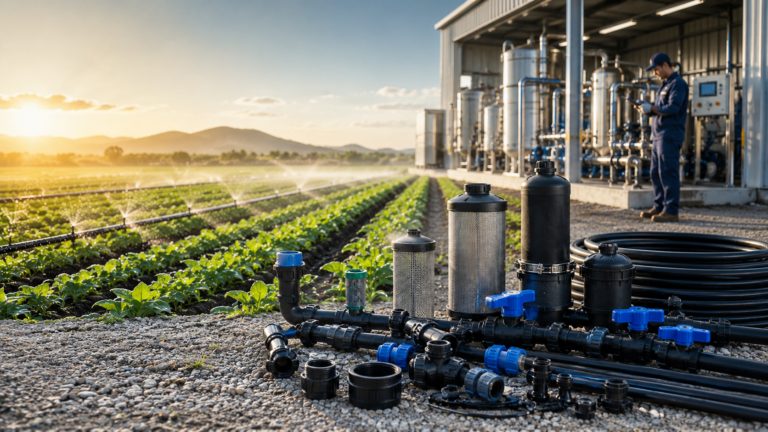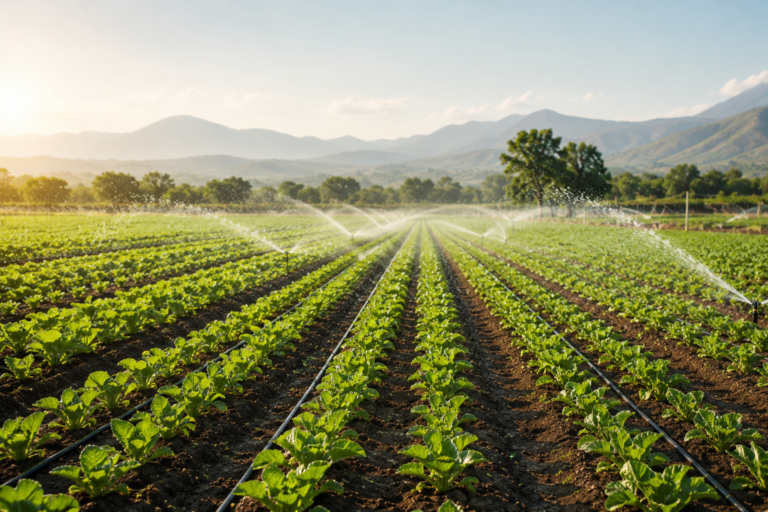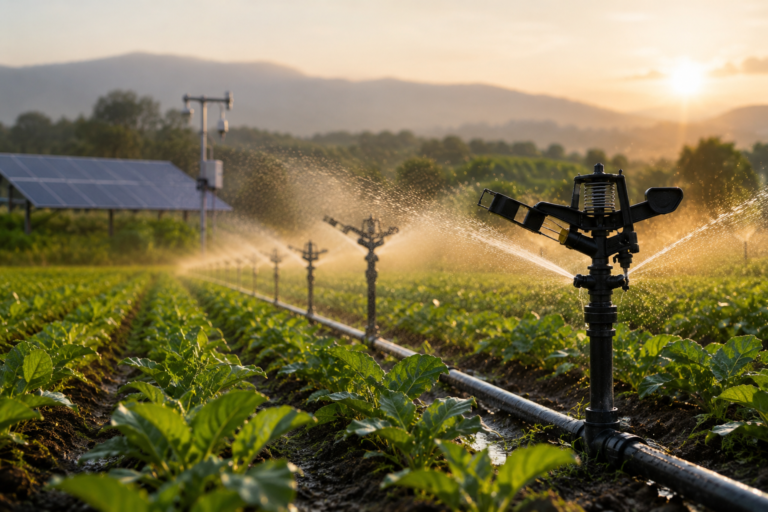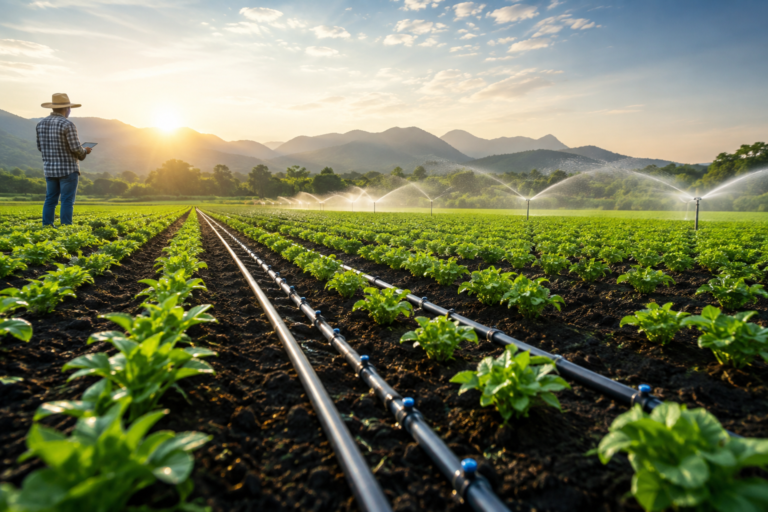
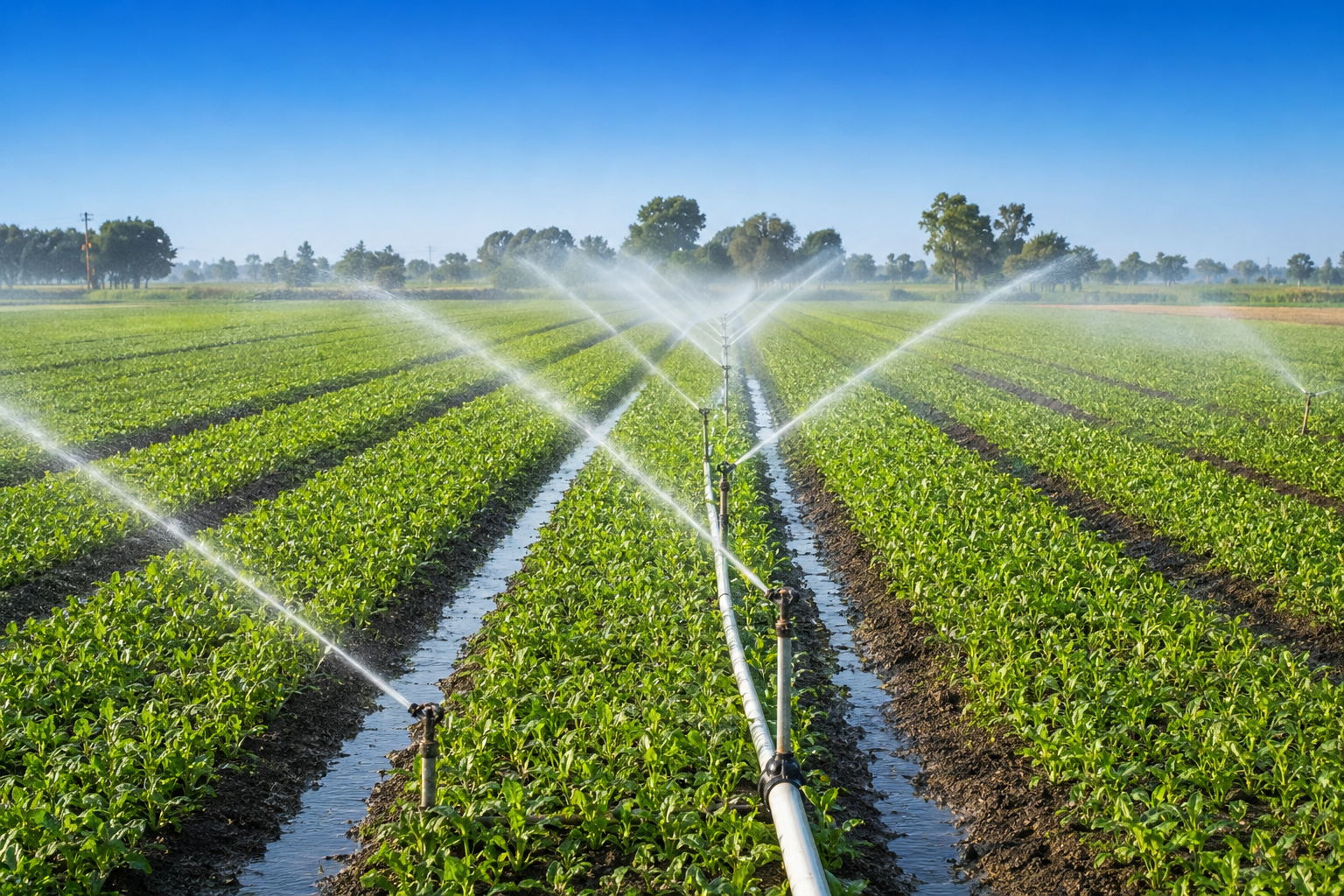
Modern agriculture depends on efficient irrigation systems to deliver the right amount of water to crops. However, water used for drip irrigation can contain sand, silt, algae, suspended particles, and other impurities that may clog emitters and reduce system performance. An agricultural water filtration system is therefore essential for maintaining clean irrigation water and protecting drip irrigation components.
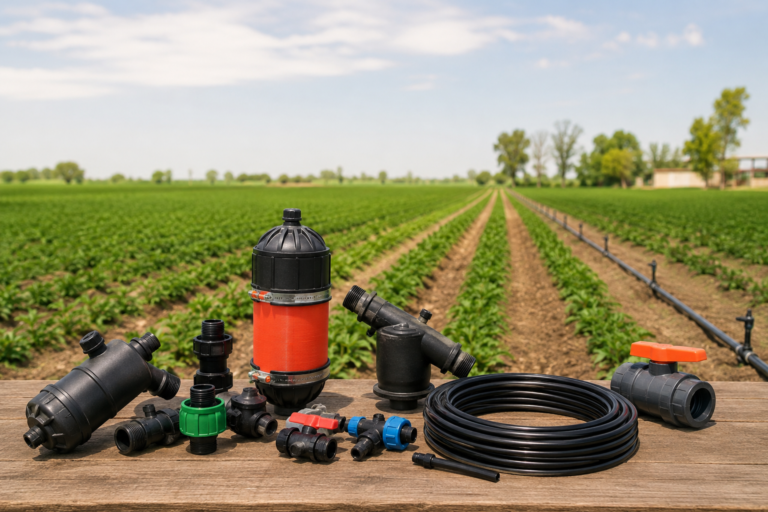
Screen filters, disc filters and hydrocyclone filters are among the most commonly used filtration solutions for agricultural irrigation. Each filter works differently and is suitable for specific water-quality conditions. Selecting the right filtration system can help farmers improve irrigation efficiency, reduce maintenance and support uniform water distribution.
In this guide, we explain the different types of irrigation water filters, their applications, benefits and how they can be used together in modern drip irrigation systems.
What Is an Agricultural Water Filtration System?
Water from borewells, ponds, canals, rivers and reservoirs may contain:
- Sand and fine particles
- Silt and suspended solids
- Algae and organic matter
- Soil particles
- Rust and debris
- Other impurities
Why Filtration Is Important for Drip Irrigation
Drip irrigation delivers water through small emitters directly to the root zone of crops. While this method offers excellent water efficiency, the small passages inside emitters can be vulnerable to clogging.
A good filtration system can help:
- Reduce emitter clogging
- Maintain consistent water flow
- Improve irrigation uniformity
- Protect drip irrigation equipment
- Reduce cleaning and maintenance requirements
- Increase the service life of irrigation components
- Improve overall irrigation system performance
Types of Agricultural Water Filters
Different water sources contain different types and levels of impurities. Three important filtration technologies used in agriculture are screen filters, disc filters,s and hydrocyclone filters.
1. Screen Filter for Irrigation
A screen filter uses a mesh screen to separate suspended particles from irrigation water. As water passes through the filter, particles larger than the screen openings are retained.
Benefits of Screen Filters
- Simple filtration mechanism
- Easy to inspect
- Suitable for many agricultural applications
- Helps protect drip emitters
- Available in different filtration grades
- Can be cleaned and maintained regularly
2. Disc Filter for Drip Irrigation
Disc filters use a stack of specially designed discs compressed together inside a filter housing. The grooves and filtration channels between the discs trap suspended particles as water passes through the filter.
They can be suitable for applications where water contains a mixture of suspended particles and organic impurities.
Benefits of Disc Filters
- Effective filtration performance
- Suitable for drip irrigation systems
- Compact filtration design
- Easy maintenance
- Suitable for different agricultural applications
- Helps reduce emitter clogging
3. Hydrocyclone Filter for Sand Separation
A hydrocyclone filter, also known as a hydrocyclone sand separator, works differently from screen and disc filtration systems.
It uses centrifugal force to separate heavier particles such as sand from water. As water enters the hydrocyclone, it creates a rotating flow. Heavier particles move toward the outer wall and are separated from the main water flow.
Benefits of Hydrocyclone Filters
- Effective sand separation
- Helps protect downstream filters
- Reduces the load on secondary filtration
- Suitable for borewell irrigation applications
- Helps reduce abrasive particles entering irrigation equipment
- Can improve the overall performance of a multi-stage filtration system
For water containing substantial sand, a hydrocyclone can often be installed before a screen or disc filter.
Screen Filter vs Disc Filter vs Hydrocyclone Filter
Each filter has a different role in an agricultural water filtration system.
| Filter Type | Main Purpose | Typical Application |
|---|---|---|
| Screen Filter | Removes suspended particles | Drip and sprinkler irrigation |
| Disc Filter | Filters suspended and organic particles | Drip irrigation and agriculture |
| Hydrocyclone Filter | Separates sand and heavier particles | Borewell and sandy water |
| Hydrocyclone + Disc/Screen | Multi-stage filtration | Challenging agricultural water |
The correct selection depends on the water source, contamination level, required filtration grade, irrigation flow rate, and type of irrigation equipment.
Why Use Multi-Stage Filtration?
In many agricultural applications, using a single filter may not provide the best solution. A multi-stage irrigation filtration system can provide better protection by assigning different filtration tasks to different components.
For example, a system may use:
Water Source → Hydrocyclone → Disc/Screen Filter → Mainline → Drip Irrigation
In this arrangement, the hydrocyclone removes heavier sand particles first. The secondary filter then removes smaller suspended particles before water reaches the drip lines.
This approach can reduce the filtration load and provide better protection for irrigation equipment.
How to Choose the Right Irrigation Filter
Choosing an agricultural water filter should not be based only on the filter type. Several factors need to be considered.
1. Water Source
First,t identify where the irrigation water comes from.
Examples include:
- Borewell
- Open well
- Canal
- River
- Pond
- Reservoir
- Surface water storage
Different sources can contain different types of impurities.
2. Water Quality
Analyze the water to determine whether it contains sand, silt, algae, organic matter, or other suspended particles.
Understanding water quality helps determine the appropriate filtration technology.
3. Irrigation Flow Rate
The filter should be selected according to the required flow rate of the irrigation system. An appropriately sized filter helps maintain efficient water delivery without unnecessarily restricting flow.
4. Filtration Requirement
Different irrigation components require different levels of filtration. Drip emitters, for example, may require more careful filtration than some other irrigation applications.
5. Maintenance Requirements
Farmers and irrigation operators should consider how often the filter needs cleaning and how easily maintenance can be performed.
Applications of Agricultural Water Filtration Systems
Agricultural filtration systems are used in many irrigation applications, including:
- Drip irrigation
- Sprinkler irrigation
- Greenhouse irrigation
- Nursery irrigation
- Farm irrigation
- Orchard irrigation
- Vegetable farming
- Fertigation systems
- Landscape irrigation
- Horticulture
Proper filtration is especially important in drip irrigation because clogged emitters can cause uneven water distribution across the field.
Benefits of Installing a Proper Irrigation Filtration System
A professionally selected filtration system can provide several benefits for agricultural operations.
Better Water Distribution
Clean water helps irrigation equipment operate more consistently, supporting uniform water delivery throughout the field.
Reduced Emitter Clogging
Filtration removes unwanted particles before they reach drip emitters, helping reduce blockages.
Lower Maintenance
Reducing the amount of debris entering the irrigation network can decrease cleaning and maintenance requirements.
Protection of Irrigation Equipment
Filters help protect drip lines, valves, fertigation equipment, and other components from unwanted particles.
Improved Irrigation Efficiency
When irrigation components operate properly, farmers can manage water delivery more effectively and support efficient crop irrigation.
Irrigation Filtration and Fertigation
Filtration also plays an important role in fertigation systems. Fertigation involves applying fertilizers through irrigation water.
A properly designed filtration system can help protect irrigation components and support consistent operation of the fertigation network.
Why Choose a Reliable Irrigation Product Manufacturer?
The performance of an irrigation filtration system depends on selecting appropriate filtration technology, sizing the system correctly,y and using reliable components.
An experienced irrigation product manufacturer can help customers select suitable filters based on:
- Water source
- Water quality
- Flow requirements
- Irrigation system design
- Crop requirements
- Filtration level
- Installation conditions
- Maintenance requirements
Conclusion
An effective agricultural water filtration system is essential for protecting modern drip irrigation systems from sand, silt, suspended particles and other contaminants. Screen filters, disc filters and hydrocyclone filters each provide specific filtration functions and can be selected according to water quality and irrigation requirements.
Hydrocyclone filters are particularly useful for separating sand and heavier particles, while screen and disc filters can provide additional filtration before water enters drip lines. In challenging water conditions, combining multiple filtration technologies can provide a more comprehensive solution.
For farmers, irrigation dealers and agricultural projects, selecting the right filtration system can help improve irrigation performance, reduce clogging and simplify maintenance.
Gajanand Irrigation provides irrigation products designed for modern agricultural and drip irrigation applications, helping farmers and irrigation professionals build efficient and reliable irrigation systems.iFollow-up Optimizetype // for shortcuts Save