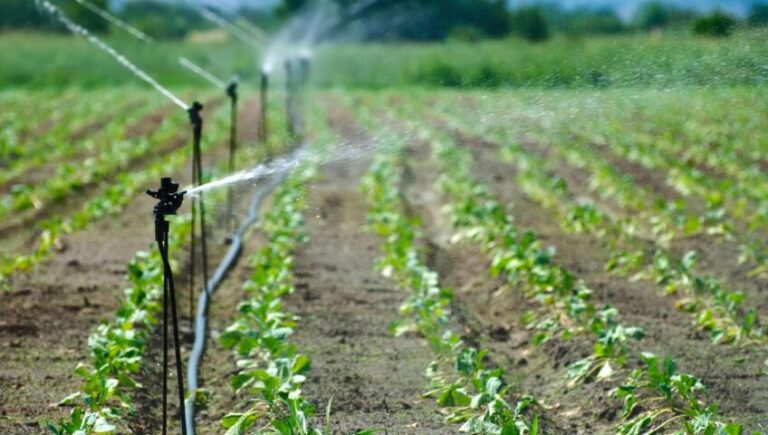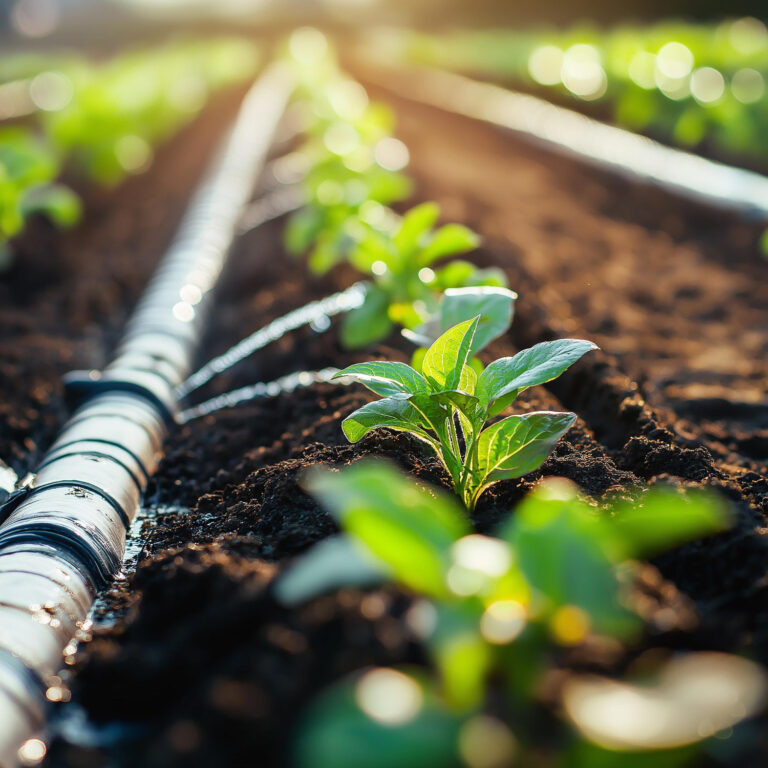
Choosing the best drip irrigation system for your farm is an important decision for modern agriculture. A well-designed drip system can deliver water directly to the crop root zone, improve irrigation control, support fertigation, and reduce unnecessary water losses. However, every farm has different requirements.
Crop type, soil, farm size, water source, water quality, field layout, pressure, plant spacing, budget, and maintenance requirements all affect the right irrigation design.
A drip irrigation system is not simply a collection of pipes and emitters. It is a complete water distribution network. It may include a pump, filters, mainline, sub-main, valves, pressure-control equipment, laterals, emitters, fittings, and fertigation equipment.
According to the Food and Agriculture Organization (FAO), drip irrigation delivers water at low rates close to the plants and is particularly suitable for row crops, vegetables, orchards, and situations where water availability is limited.
For Indian agriculture, micro-irrigation is also an important part of efficient water management. The Government of India has promoted drip and sprinkler irrigation through its micro-irrigation programmes.
If you are planning a new irrigation installation or upgrading an existing system, this guide will help you understand how to choose the best drip irrigation system for your farm.
Why Choosing the Best Drip Irrigation System for Your Farm Matters
A drip irrigation system should be selected according to actual farm conditions rather than price alone.
A system that works well on one farm may not be suitable for another farm because water sources, soil types, crop spacing, pressure requirements, and field sizes can be very different.
The best drip irrigation system for your farm should provide:
- Consistent water distribution
- Suitable pressure throughout the field
- Proper filtration
- Correct emitter discharge
- Efficient root-zone irrigation
- Easy maintenance
- Suitable fertigation capability
- Reliable valves and fittings
- Room for future expansion
- Good long-term operating value
A properly designed system can also make irrigation management easier because farmers can control when and where water is applied.
Gajanand Irrigation provides a range of irrigation products, including filters, fittings, valves, fertigation assemblies, and other irrigation components designed for agricultural applications.
What Is a Drip Irrigation System?
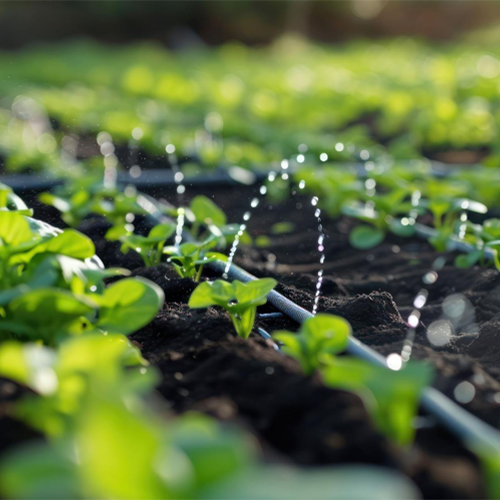
A drip irrigation system is a pressurized irrigation method that delivers controlled amounts of water close to the roots of plants.
Instead of flooding an entire field, water travels through pipes and is released through small outlets called emitters or drippers.
A typical system contains:
- Water source
- Pump, where required
- Filtration system
- Mainline
- Sub-main
- Control valves
- Pressure-control equipment
- Laterals
- Drippers or emitters
- Fittings and connectors
- Fertigation equipment, when required
The objective is simple: provide water to the crop root zone in a controlled and uniform manner.
FAO describes a typical drip system as including the pump unit, control head, main and sub-main lines, laterals, and emitters.
Factors to Consider When Choosing the Best Drip Irrigation System for Your Farm
There is no single drip irrigation system that is perfect for every farm. The right choice starts with understanding your field.
Here are the most important factors to evaluate.
1. Consider Your Crop Type
Crop type should be one of the first factors considered when selecting a drip irrigation system.
Different crops have different:
- Water requirements
- Root structures
- Plant spacing
- Row spacing
- Growth patterns
- Irrigation frequency
- Fertigation requirements
For example, vegetables planted in close rows may require a different lateral arrangement than an orchard with widely spaced trees.
Drip irrigation is commonly suitable for vegetables, fruits, orchards, flowers, greenhouse crops, and many row crops.
For orchard crops, emitters may be positioned around individual plants. For row crops, lateral lines can generally be arranged along the crop rows.
Therefore, the best drip irrigation system for your farm should match the crop’s planting pattern and root-zone requirements.
2. Evaluate Your Soil Type
Soil type has a major effect on how water moves through the ground.
Common soil categories include:
- Sandy soil
- Loamy soil
- Clay soil
- Sandy loam
- Clay loam
Water moves faster through sandy soil than through heavier clay soil.
This means irrigation scheduling and emitter placement may need to be adjusted according to soil conditions.
Sandy soils may require shorter and more frequent irrigation cycles, while heavier soils may require careful management to prevent excessive moisture.
The goal is not simply to apply more water. The goal is to maintain suitable moisture in the crop root zone.
When selecting the best drip irrigation system for your farm, soil should therefore be considered together with crop type and emitter discharge.
3. Check Your Water Source
Your water source directly affects the design of the irrigation system.
Common agricultural water sources include:
- Borewell
- Open well
- Farm pond
- Reservoir
- Canal
- Storage tank
- Rainwater storage system
Each source may have different water-quality and pumping characteristics.
For example, borewell water may contain sand or mineral particles, while open water sources may contain organic matter, algae, or suspended particles.
Before installing a drip system, it is useful to understand:
- Water availability
- Flow rate
- Pressure
- Water quality
- Suspended particles
- Seasonal changes
- Pump capacity
This information helps determine the required filtration and hydraulic design.
4. Pay Attention to Water Quality
Water quality is one of the most important considerations in drip irrigation.
Drip emitters contain small passages through which water flows. Suspended particles can cause clogging if filtration and maintenance are inadequate.
Depending on the water source, a farm may require different filtration arrangements.
Common filtration options include:
- Screen filters
- Disc filters
- Hydrocyclone filters
- Sand or media filtration in suitable applications
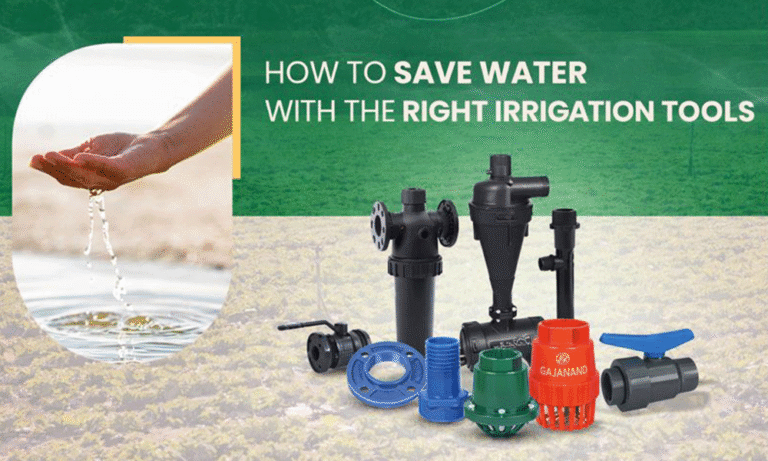
Gajanand Irrigation offers disc filters designed for agricultural drip and sprinkler systems. Its disc filters are designed to remove particles such as sand, silt, algae, and organic impurities.
The correct filtration system should be selected according to actual water quality and irrigation requirements rather than choosing a filter only by price.
For additional technical guidance, farmers can also refer to FAO’s irrigation resources.
5. Select the Right Filter
A filter protects the irrigation network from unwanted particles.
This makes filtration especially important in drip irrigation.
A suitable filter can help protect:
- Drippers
- Laterals
- Valves
- Fertigation equipment
- Other irrigation components
Disc Filters
Disc filters use stacked discs with grooves that create a filtration surface. Gajanand Irrigation states that its disc filters can filter impurities down to 120 microns and are available for drip, sprinkler, greenhouse, and fertigation applications.
Screen Filters
Screen filters can be useful for removing suspended particles when the water characteristics and system requirements are appropriate.
The filter choice should depend on:
- Water source
- Particle size
- Contamination level
- Flow rate
- Emitter requirements
- System design
A good filter is an investment in the reliability of the complete irrigation system.
6. Understand Flow Rate and Pressure
Pressure and flow are critical to drip irrigation performance.
If pressure is too low, water may not reach all parts of the field correctly.
If pressure is too high, irrigation components may experience unnecessary stress and the system may not operate as intended.
Before selecting equipment, determine:
- Available water flow
- Pump capacity
- Required operating pressure
- Mainline size
- Sub-main size
- Lateral length
- Number of irrigation zones
A professional irrigation design should calculate these factors before installation.
The best drip irrigation system for your farm should maintain suitable operating conditions from the beginning of the mainline to the farthest irrigation point.
7. Choose the Correct Dripper or Emitter
Emitters are one of the most important components of a drip irrigation system.
They control the amount of water delivered to plants.
Different applications may require different emitter characteristics.
Consider:
- Emitter discharge
- Emitter spacing
- Pressure requirements
- Plant spacing
- Soil type
- Crop water requirement
- Lateral spacing
For closely planted vegetables, emitter spacing may be relatively close.
For orchards, emitters may need to be positioned according to tree spacing and root-zone development.
Do not select emitters only because they are inexpensive. A suitable emitter should match the complete hydraulic and agronomic design.
8. Consider Farm Size
Farm size affects the complexity of the irrigation system.
Small Farms
A small farm may require:
- Pump
- Filter
- Mainline
- Simple valves
- Laterals
- Emitters
- Basic fittings
The system can be relatively simple if the field is uniform.
Medium Farms
Medium-sized farms may require:
- Multiple irrigation zones
- Larger filtration
- Multiple valves
- Larger mainlines
- Pressure management
- Fertigation equipment
Large Farms
Large commercial farms may require:
- Multiple zones
- Large-capacity filtration
- High-capacity pumps
- Automated valves
- Pressure regulation
- Fertigation
- Advanced irrigation controllers
- Monitoring systems
Therefore, farm size should be considered before selecting individual components.
9. Think About Field Shape and Topography
Field layout can affect irrigation uniformity.
A flat rectangular field may be easier to design than a field with:
- Slopes
- Irregular boundaries
- Different elevations
- Multiple crop sections
- Long irrigation runs
Elevation differences can influence pressure.
For uneven land, the irrigation design should account for elevation changes so that plants receive appropriate water distribution.
FAO notes that drip irrigation can be adapted to farmable slopes, making it useful in various field conditions when properly designed.
10. Select Reliable Pipes and Fittings
Pipes transport water throughout the irrigation network.
Important components may include:
- Mainline pipes
- Sub-main pipes
- Laterals
- Connectors
- Elbows
- Tees
- Take-off connectors
- End caps
- Valves
- Flush components
Poor-quality fittings can lead to:
- Leakage
- Pressure loss
- Frequent repairs
- Uneven water distribution
- Increased maintenance
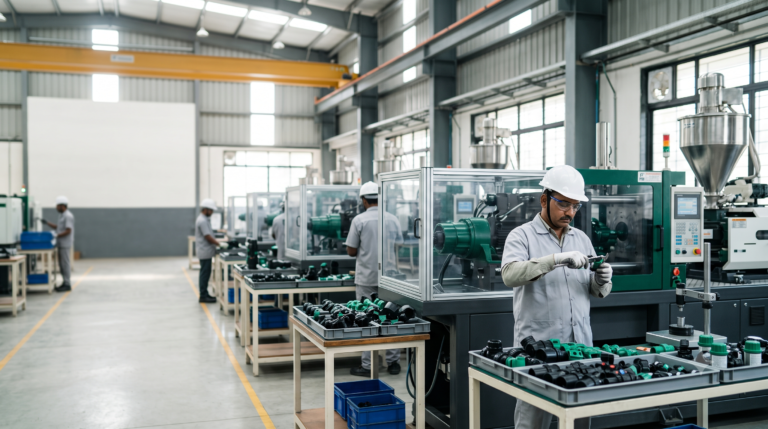
Gajanand Irrigation manufactures irrigation fittings and other components designed for agricultural applications. Its product range includes poly fittings, irrigation fittings, valves, filters, and related irrigation products.
11. Consider Fertigation
Fertigation means applying soluble fertilizer through an irrigation system.
A drip irrigation network can distribute nutrients close to the crop root zone when the fertigation equipment and operating procedure are properly designed.
A Venturi injector can be used for controlled fertilizer injection in suitable irrigation systems.
Benefits of proper fertigation management can include:
- Better nutrient distribution
- More controlled fertilizer application
- Reduced manual application
- Improved nutrient availability
- Better integration of irrigation and crop nutrition
Gajanand Irrigation lists Venturi injectors and fertigation assemblies among its agricultural irrigation products.
For Indian micro-irrigation planning, official guidelines also identify water requirement, plant age, spacing, soil type, water quality, and availability as factors influencing the choice of emitting system.
Best Drip Irrigation System for Different Farm Applications
The best drip irrigation system for your farm depends on what you are growing and how your field is organized.
| Farm Application | Important Considerations |
|---|---|
| Vegetables | Close emitter spacing, filtration, frequent irrigation |
| Fruit Orchards | Plant spacing, root-zone coverage, multiple emitters |
| Cotton | Row spacing, soil type, irrigation scheduling |
| Sugarcane | Long rows, lateral arrangement, filtration |
| Groundnut | Soil type, crop spacing, water availability |
| Greenhouse | Precise irrigation, filtration, fertigation |
| Nursery | Small flow rates, accurate distribution |
| Flowers | Uniform water and fertigation |
| Large Farms | Zoning, pressure control, automation |
This table provides a general starting point. Actual system specifications should be based on field conditions.
How to Choose Drip Irrigation Based on Your Budget
Budget is important, but the cheapest system is not always the most economical.
Consider the total cost of ownership.
This includes:
- Initial equipment
- Installation
- Pumping energy
- Filter maintenance
- Replacement parts
- Labour
- Water management
- Fertilizer application
- System lifespan
A low-cost component that fails frequently may cost more over time.
A properly designed irrigation system can provide better long-term value because it is designed around the farm’s actual requirements.
When comparing the best drip irrigation system for your farm, compare performance, reliability, maintenance, and expected operating life along with the initial price.
Common Mistakes When Choosing a Drip Irrigation System
Farmers sometimes focus only on pipes and drip lines. However, the complete system must work together.
Here are some common mistakes to avoid.
Choosing Only by Price
A cheaper system may not provide the required filtration, pressure control, or durability.
Ignoring Water Quality
Poor filtration can result in emitter clogging.
Using the Wrong Emitter Spacing
Emitter spacing should match the crop and soil.
Ignoring Pressure
Incorrect pressure can lead to uneven irrigation.
Using Incorrect Pipe Sizes
Pipe diameter should be selected according to flow requirements and system design.
Skipping Maintenance
Even a high-quality irrigation system requires regular inspection and cleaning.
Overwatering
Drip irrigation does not mean crops should receive unlimited water. Irrigation scheduling should follow crop requirements, weather, soil, and growth stage.
How to Install the Best Drip Irrigation System for Your Farm
Proper installation is as important as product selection.
A typical installation process includes:
Step 1: Survey the Farm
Measure the field and identify:
- Boundaries
- Crop rows
- Water source
- Elevation
- Irrigation zones
Step 2: Check the Water Source
Determine available flow, pressure, and water quality.
Step 3: Design the Mainline
The mainline carries water from the source toward the irrigation zones.
Step 4: Install Filtration
Install suitable filtration before water enters the sensitive irrigation network.
Step 5: Install Valves
Valves can help divide the field into manageable irrigation zones.
Step 6: Install Sub-Mains
Sub-main pipes distribute water toward individual field sections.
Step 7: Install Laterals
Laterals should be positioned according to crop rows and planting patterns.
Step 8: Install Emitters
Emitter spacing and discharge should match the irrigation design.
Step 9: Test the System
Check:
- Pressure
- Flow
- Leakage
- Filter operation
- Emitter discharge
- Valve operation
Step 10: Flush the Network
Flush pipes and laterals before normal operation and continue flushing as required during maintenance.
Maintenance Tips for Your Drip Irrigation System
Even the best drip irrigation system for your farm needs regular maintenance.
Follow these practices:
- Clean filters regularly.
- Inspect the system for leaks.
- Flush laterals when required.
- Check pressure.
- Inspect valves.
- Check emitter performance.
- Clean filtration equipment.
- Inspect pipe connections.
- Protect pipes from physical damage.
- Keep animals away from exposed irrigation components.
- Monitor changes in water quality.
Regular maintenance helps maintain uniform irrigation and can extend the useful life of the system.
ISO guidance on drip irrigation also highlights filtration, field inspection, dripline maintenance, flushing, and appropriate water treatment as important maintenance considerations.
How Gajanand Irrigation Can Support Your Farm Irrigation Requirements
Gajanand Irrigation is an irrigation products manufacturer based in Ahmedabad, Gujarat, with operations dating back to 1993. The company offers agricultural irrigation products including filters, fittings, valves, fertigation assemblies, and related components.
Its product range includes:
- Screen Filters
- Disc Filters
- Hydrocyclone Filters
- Poly Fittings
- Venturi
- Air Release Valves
- Push Fittings
- Ball Valves
- Irrigation Fittings
- Fertigation Assemblies
- Mini Sprinklers
Gajanand Irrigation also states that it serves domestic and international markets and focuses on quality control, manufacturing infrastructure, and irrigation solutions.
For farmers who are comparing irrigation components, you can explore the Gajanand Irrigation product range and review the available irrigation products.
You can also explore the Gajanand Irrigation Disc Filter for filtration requirements in drip and sprinkler irrigation applications.
For pump-related applications, Gajanand also offers Foot Valves for Irrigation Pumps.
For customized requirements or product enquiries, farmers and irrigation professionals can contact Gajanand Irrigation.
Questions to Ask Before Buying a Drip Irrigation System
Before purchasing, ask these questions:
What crop will I grow?
This determines emitter placement, spacing, and irrigation requirements.
What is my water source?
Borewell, pond, canal, and tank water may require different filtration and pumping arrangements.
How much water is available?
The available flow affects system sizing.
What is the water pressure?
Pressure is important for proper operation.
What is my soil type?
Soil affects water movement and irrigation scheduling.
What is the field size?
Large fields may require multiple irrigation zones.
How much maintenance can I manage?
Choose equipment that matches your ability to clean and maintain the system.
Will I use fertigation?
If yes, include appropriate fertigation equipment during system planning.
Will the farm expand later?
Planning for future expansion can prevent expensive modifications.
Frequently Asked Questions About the Best Drip Irrigation System for Your Farm
What is the best drip irrigation system for a farm?
The best drip irrigation system for your farm is one designed according to your crop, soil, water source, water quality, field size, pressure, plant spacing, and irrigation requirements. There is no universal system suitable for every farm.
Is drip irrigation suitable for Indian farms?
Yes. Drip irrigation can be suitable for many Indian agricultural applications, particularly crops where controlled root-zone irrigation is beneficial. The Government of India promotes micro-irrigation as part of its water-efficiency initiatives.
Which filter is best for drip irrigation?
The correct filter depends on water quality, flow rate, contaminants, and emitter requirements. Disc and screen filters are commonly used in irrigation systems. Gajanand Irrigation provides both filtration options for agricultural applications.
How do I select drip emitter spacing?
Emitter spacing should be selected according to crop spacing, soil type, root-zone requirements, emitter discharge, and irrigation design.
Does drip irrigation require a pump?
Not always. A pump may be necessary when the available water pressure is insufficient for the system. The requirement depends on the water source and hydraulic design.
Can drip irrigation be used for orchards?
Yes. Drip irrigation can be designed for orchards by positioning emitters around the plant root zone and adjusting the system as plants mature.
Can fertilizer be applied through drip irrigation?
Yes. Fertigation equipment can introduce suitable soluble fertilizers into the irrigation water when the system is properly designed and operated.
How often should drip irrigation filters be cleaned?
Cleaning frequency depends on water quality, filter type, contamination level, and system usage. Filters should be inspected regularly and cleaned whenever pressure loss or contamination indicates that cleaning is required.
How can I prevent drip emitter clogging?
Use appropriate filtration, maintain water quality, flush the system regularly, inspect emitters, and follow suitable maintenance practices.
Is drip irrigation suitable for large farms?
Yes. Large farms can use zoned drip irrigation networks with appropriate pumps, filtration, valves, pipelines, pressure control, and automation.
Final Checklist for Choosing the Best Drip Irrigation System for Your Farm
Before purchasing or installing your system, use this checklist:
- Identify your crop.
- Measure your farm area.
- Check soil type.
- Test water quality.
- Identify your water source.
- Determine available flow.
- Check operating pressure.
- Select the right filter.
- Select suitable emitters.
- Calculate mainline requirements.
- Plan irrigation zones.
- Select reliable fittings.
- Consider fertigation.
- Plan system maintenance.
- Consider future expansion.
- Compare total ownership cost.
- Test the complete system after installation.
Conclusion
Selecting the best drip irrigation system for your farm requires more than choosing pipes and drippers. A successful system should be designed around the crop, soil, water source, water quality, farm size, pressure, flow rate, field layout, and long-term maintenance requirements.
The right combination of filters, pipes, valves, fittings, laterals, emitters, and fertigation equipment can create a reliable irrigation network that delivers water where crops need it.
Modern irrigation is about using water intelligently. Instead of applying water uniformly across an entire field, drip irrigation allows farmers to manage water closer to the crop root zone. This can support more controlled irrigation and better resource management when the system is correctly designed and operated. FAO and Indian agricultural authorities both recognize drip and micro-irrigation as important tools for efficient agricultural water management.
For farmers looking for dependable irrigation components, Gajanand Irrigation offers a broad range of filters, valves, fittings, fertigation products, and other irrigation solutions.
If you are planning a new irrigation project, upgrading an existing system, or looking for specific agricultural irrigation components, visit the Gajanand Irrigation website or contact Gajanand Irrigation for product guidance.