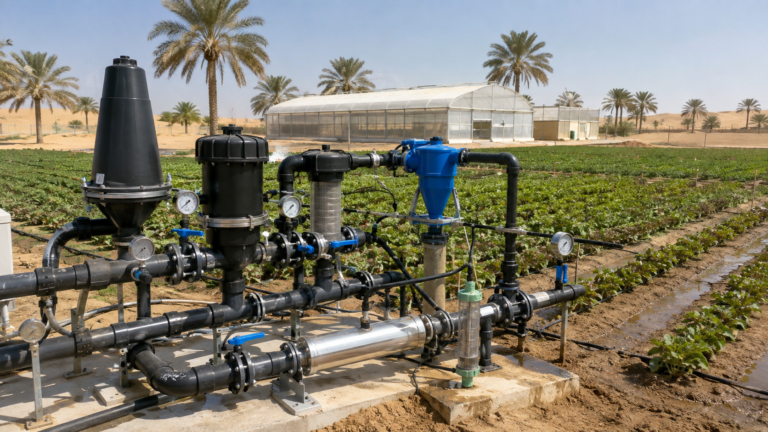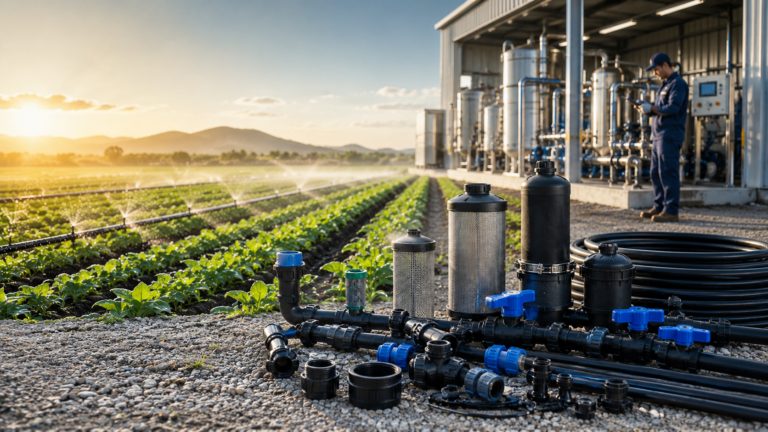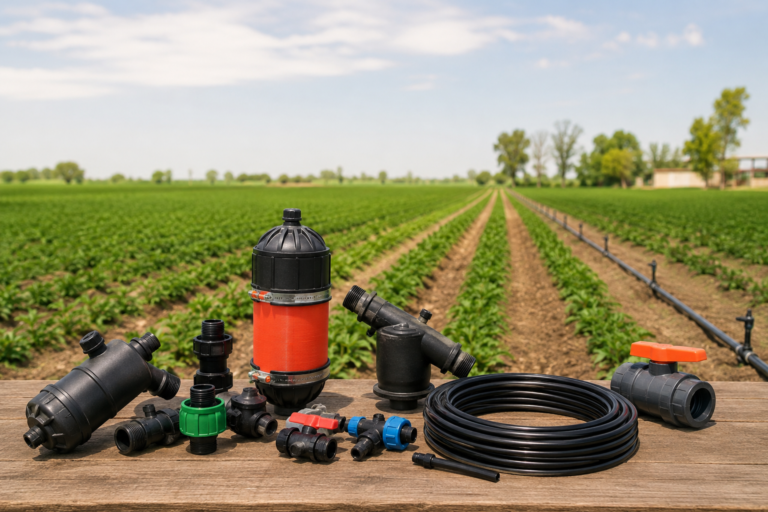
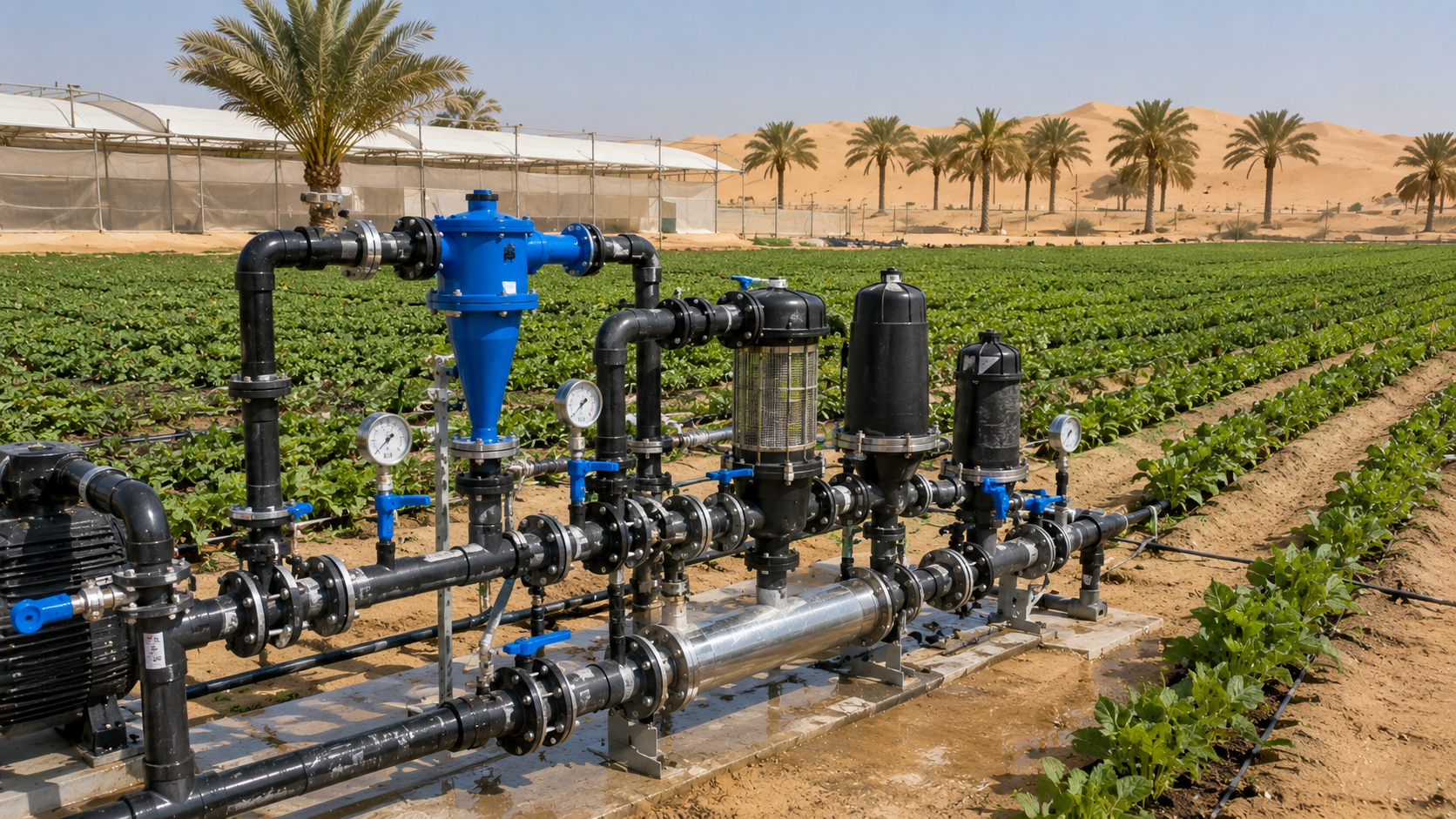
Hydrocyclone filters are mainly used to separate sand and heavier particles, screen filters remove suspended particles through mesh filtration; and disc filters provide deeper filtration through stacked grooved discs. For sandy borewell water, a hydrocyclone can be installed before a disc or screen filter as part of a multi-stage filtration system.
Why Is Water Filtration Important for Drip Irrigation in the UAE?
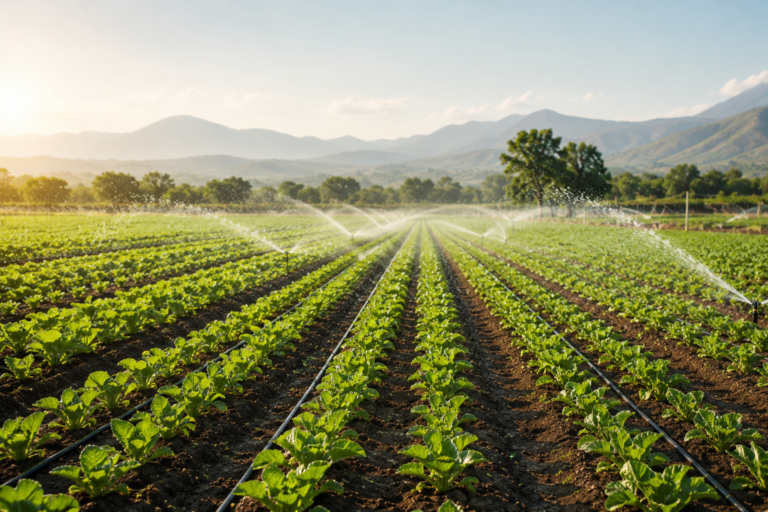
Agriculture in the UAE depends heavily on efficient water management. With limited freshwater resources, groundwater, treated water and other available sources must be used carefully. Drip irrigation and other precision irrigation methods can help deliver water directly to crops, but their performance depends greatly on water quality and effective filtration.
An agricultural water filtration system in the UAE helps remove sand, silt, suspended particles, algae, organic matter and other contaminants before they enter drip lines, sprinklers and irrigation equipment. The right combination of screen filters, disc filters and hydrocyclone filters can reduce emitter clogging, protect irrigation components and support more uniform water distribution.
For UAE farms, greenhouses, nurseries, orchards and landscaping projects, filtration should be selected according to the water source, contamination level, flow rate and irrigation system requirements. UAE national irrigation guidance recommends assessing water quality for drip and micro-irrigation systems and specifying filtration based on the water-quality test.
What Is an Agricultural Water Filtration System?
An agricultural water filtration system is a combination of filtration equipment designed to remove unwanted particles from irrigation water before the water reaches crops and irrigation components.
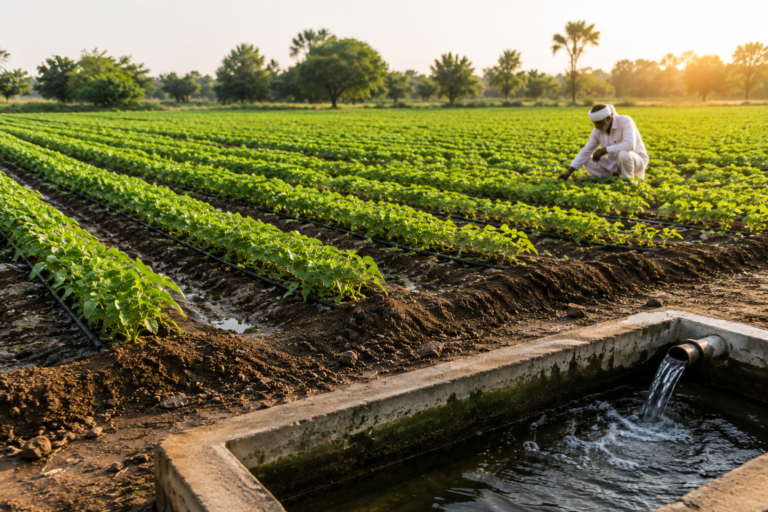
Water used for agricultural irrigation may come from borewells, wells, reservoirs, ponds, canals, treated wastewater or other sources. Depending on the source, the water may contain:
- Sand and fine particles
- Silt and suspended solids
- Algae and organic matter
- Soil particles
- Rust and debris
- Other suspended contaminants
These particles can enter irrigation pipelines and eventually reach emitters, valves and other components. Gajanand Irrigation’s agricultural filtration solutions include screen filters, disc filters and hydrocyclone filters for different irrigation applications.
Why Is Water Filtration Important for Drip Irrigation in the UAE?
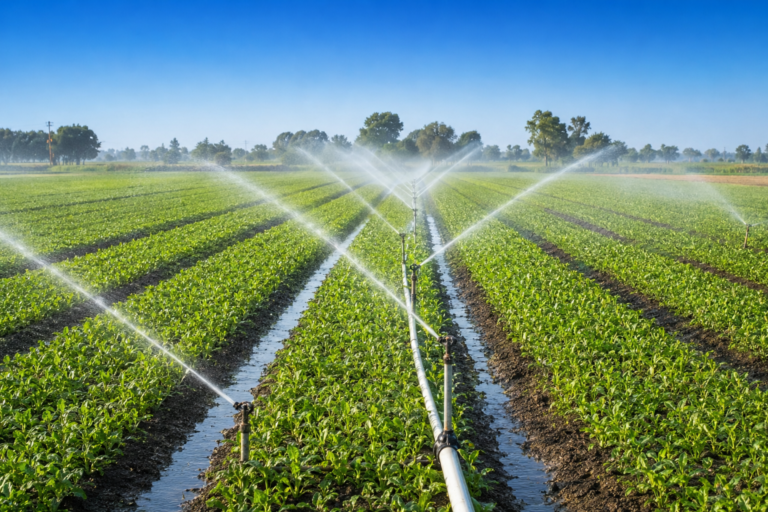
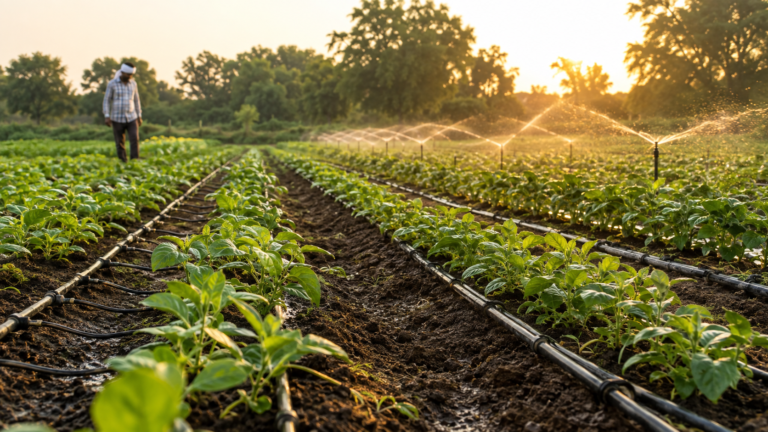
Drip irrigation uses small outlets or emitters to deliver water near the crop root zone. Because these passages are relatively small, suspended particles can create blockages and affect water distribution.
A properly selected drip irrigation filtration system can help:
- Reduce emitter clogging
- Maintain consistent water flow
- Improve irrigation uniformity
- Protect drip lines and irrigation components
- Reduce cleaning requirements
- Support reliable fertigation
- Improve overall irrigation system performance
Filtration is particularly important where irrigation water contains sand or suspended particles. Agriculture Victoria notes that filtration is essential for reliable drip irrigation and identifies screen filters, disc filters and hydrocyclone sand separators as important filtration technologies.
Types of Agricultural Water Filters
There is no single filter that is ideal for every farm. Different filters perform different jobs.
1. Screen Filter for Irrigation
A screen filter uses a mesh screen to retain suspended particles larger than the openings in the screen. It is commonly used for agricultural irrigation applications where water contains suspended solids that need to be separated before entering the irrigation network.
Screen filters are useful because they are relatively simple to inspect and maintain. They can be selected according to the required filtration grade and irrigation flow.
For example, Gajanand’s irrigation filter range includes screen filtration solutions designed for agricultural and drip irrigation applications.
2. Disc Filter for Drip Irrigation
A disc filter uses multiple grooved discs stacked together inside a filter housing. As water passes through the disc stack, particles become trapped within the filtration channels.
Disc filters can be particularly useful when irrigation water contains a mixture of suspended particles and organic matter. Their three-dimensional filtration structure provides a larger filtration area compared with a simple screen surface.
Gajanand disc filters are designed for drip, sprinkler, greenhouse, orchard and horticultural applications, with models capable of filtration down to approximately 130 microns depending on configuration.
3. Hydrocyclone Filter for Sand Separation
A hydrocyclone filter, also known as a hydrocyclone sand separator, works differently from screen and disc filters.
Instead of using a physical mesh or disc barrier, a hydrocyclone uses centrifugal force to separate heavier particles such as sand from water. As water enters the conical chamber, it rotates rapidly. Heavier particles move toward the outer wall and are separated from the main water flow.
This makes hydrocyclones particularly useful for borewell irrigation and sandy water sources.
Gajanand’s hydrocyclone filtration systems are designed for agricultural drip irrigation applications and use centrifugal separation to remove sand and heavier particles.
Screen Filter vs Disc Filter vs Hydrocyclone Filter
| Filter | Main Function | Suitable Application |
|---|---|---|
| Screen Filter | Removes suspended particles | Drip and sprinkler irrigation |
| Disc Filter | Filters suspended and organic particles | Drip irrigation, agriculture and horticulture |
| Hydrocyclone | Separates sand and heavier particles | Borewell and sandy water |
| Hydrocyclone + Disc/Screen | Multi-stage filtration | Challenging water conditions |
The correct choice depends on water quality, source, flow rate, required filtration level and irrigation equipment.
Why Use Multi-Stage Filtration?
For many agricultural applications, combining filtration technologies can provide better protection than relying on one filter.
A typical multi-stage system can follow this sequence:
Water Source → Hydrocyclone → Disc/Screen Filter → Mainline → Drip Irrigation
The hydrocyclone acts as a preliminary sand separator. It removes heavier particles before they reach the main filter. The disc or screen filter then provides secondary filtration for smaller suspended particles.
Industry filtration guidance similarly describes hydrocyclones as a preliminary stage when sand or heavy particles are present, followed by screen or disc filtration for finer particles.
This arrangement can reduce the load on downstream filters and help protect irrigation equipment.
How to Choose the Right Agricultural Water Filtration System in UAE
Before selecting a filter, farmers and irrigation professionals should evaluate several factors.
Water Source
Identify whether the water comes from:
- Borewell
- Open well
- Canal
- Pond
- Reservoir
- Treated wastewater
- Other agricultural water sources
Each source can have different contamination characteristics.
Water Quality
A water-quality assessment can identify the presence of sand, silt, algae, organic matter and other suspended contaminants. UAE irrigation guidance specifically recommends assessing water quality for drip and micro-irrigation applications and specifying filtration according to the water-quality assessment.
Flow Rate
Filter capacity must match the irrigation system’s required flow rate. An undersized filter can create unnecessary pressure loss, while an unsuitable oversized system may increase project costs.
Filtration Requirement
The required filtration level should also consider the irrigation equipment and emitter specifications. Irrigation filtration guidance commonly uses mesh and micron ratings when specifying filtration.
Maintenance
Consider how frequently the filter needs inspection, cleaning or flushing and whether maintenance can be performed easily by farm operators.
Applications in UAE Agriculture
Agricultural water filtration systems can be used in:
- Date palm farms
- Vegetable farms
- Fruit orchards
- Greenhouses
- Nurseries
- Landscape irrigation
- Horticulture
- Drip irrigation projects
- Sprinkler irrigation systems
- Fertigation systems
The UAE’s focus on efficient irrigation and sustainable water management makes filtration an important component of modern agricultural infrastructure. The UAE’s 2026 groundwater economic management guidance also emphasizes sustainable irrigation methods and improved water-use efficiency.
Benefits of a Proper Irrigation Filtration System
A properly designed filtration system can provide several operational benefits.
Better Irrigation Uniformity
Cleaner irrigation water can help irrigation components operate consistently and support more uniform water distribution.
Reduced Emitter Clogging
Removing unwanted particles before they reach drip emitters helps reduce the risk of blockages.
Protection of Irrigation Equipment
Filtration can protect drip lines, valves, fertigation equipment and other components from unwanted particles.
Lower Maintenance
When less debris enters the irrigation network, cleaning and maintenance requirements can potentially be reduced.
Improved System Reliability
A filtration system designed around actual water quality and flow requirements can help maintain dependable irrigation performance.
Agricultural Water Filtration and Fertigation
Filtration is also important for fertigation systems, where fertilizers are introduced through irrigation water.
A suitable filtration system helps protect downstream irrigation components and supports consistent operation. However, filtration should be designed together with the fertigation equipment, water chemistry and irrigation requirements.
It is important to understand that standard irrigation filters are designed primarily for suspended particles. They should not be assumed to remove dissolved salts or other dissolved substances.
Why Choose Gajanand Irrigation for Agricultural Filtration Solutions?
Gajanand Irrigation has been serving the irrigation industry since 1993 and manufactures irrigation products including screen filters, disc filters and hydrocyclone filters. The company states that it serves domestic and international markets, including the UAE and other Middle Eastern and African markets.
For UAE agricultural projects, irrigation dealers and farm operators, the right filtration solution should be selected according to the water source, water quality, flow requirements, crop requirements and irrigation system design.
Conclusion
A reliable agricultural water filtration system in the UAE is an important part of modern drip and precision irrigation. Sand, silt, algae and suspended particles can affect irrigation performance and contribute to emitter clogging when they are not properly managed.
Hydrocyclone filters are especially useful for separating sand and heavier particles, while screen filters and disc filters provide additional filtration before water enters the irrigation network. In challenging water conditions, a multi-stage filtration system can provide a more comprehensive approach.
For farms, greenhouses, orchards, nurseries and agricultural irrigation projects in the UAE, choosing filtration according to water quality, flow rate and irrigation requirements can help create a more reliable and efficient irrigation system.
Looking for an agricultural water filtration system in UAE? Contact Gajanand Irrigation to discuss the right screen, disc or hydrocyclone filtration solution for your irrigation application.
What is the best water filter for agricultural irrigation in the UAE?
There is no single best filter for every application. The appropriate filter depends on the water source, contamination, flow rate and irrigation equipment. Hydrocyclones are useful for sand-heavy water, while screen and disc filters handle suspended particles.
Which filter is best for sandy borewell water?
A hydrocyclone sand separator is commonly used as a preliminary filtration stage for water containing significant quantities of sand or other heavy particles. A screen or disc filter can then provide secondary filtration.
What is the difference between a screen filter and a disc filter?
A screen filter uses a mesh surface to retain particles, while a disc filter uses stacked grooved discs that provide three-dimensional filtration. Disc filters can be advantageous where water contains mixed suspended and organic particles.
Do irrigation filters remove salt from UAE water?
Standard irrigation screen, disc and hydrocyclone filters are primarily intended for suspended particles and sand. They should not be considered desalination systems for removing dissolved salts.
Why is filtration important for drip irrigation?
Filtration helps prevent particles from reaching small emitter passages, reducing clogging and supporting more consistent water distribution.
Can a hydrocyclone and disc filter be used together?
Yes. A common multi-stage arrangement is water source → hydrocyclone → disc or screen filter → drip irrigation, particularly when the source contains significant sand and suspended particles.