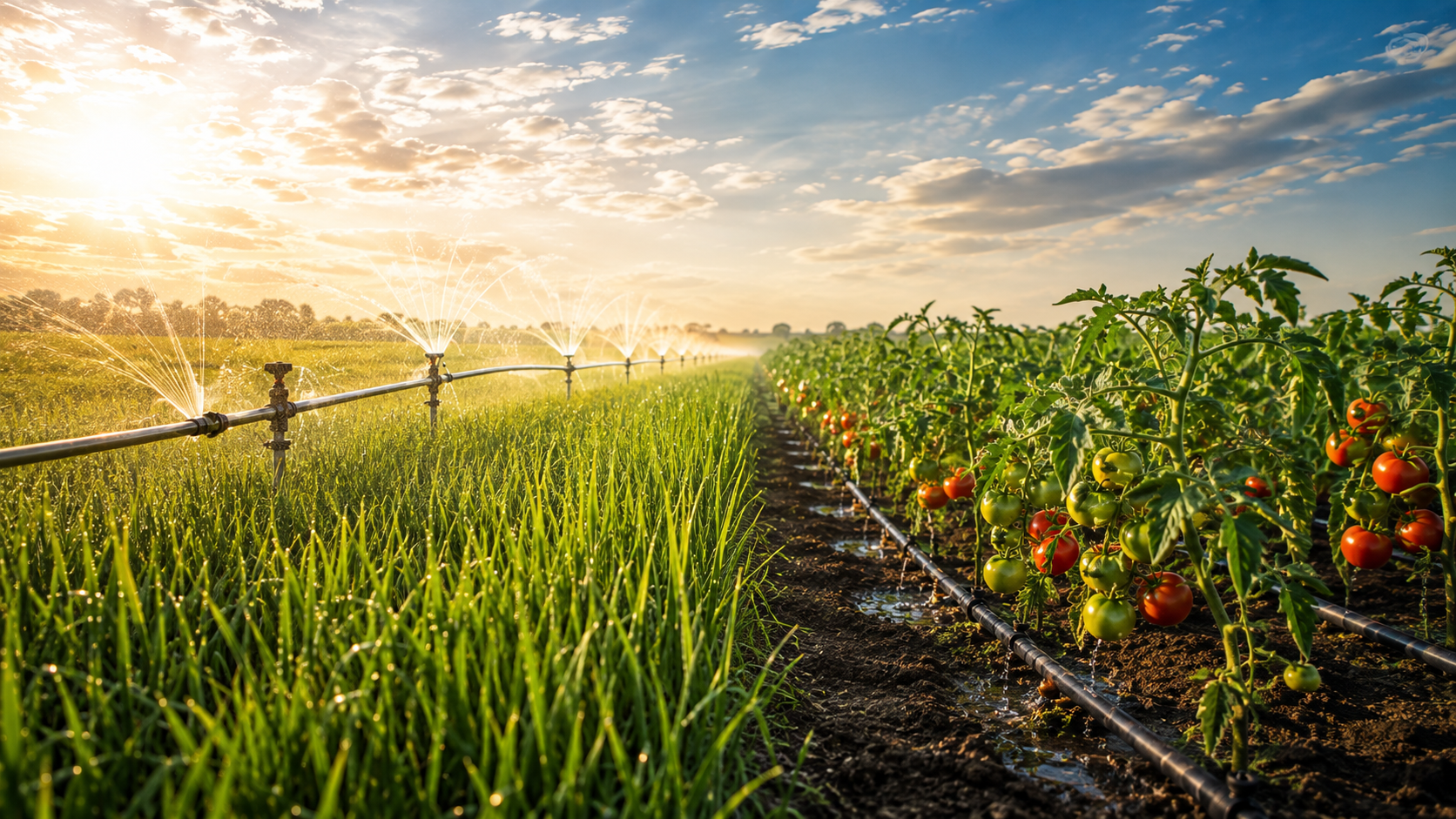
Water is one of the most valuable resources in agriculture. With changing weather patterns, increasing water scarcity, and the growing need for higher crop productivity, choosing the best irrigation system has become more important than ever. Among the most popular modern irrigation methods are Sprinkler Irrigation and Drip Irrigation.
Both systems are designed to improve water efficiency, reduce wastage, and support healthy crop growth. However, each has its own advantages and is better suited for specific crops, soil types, and farming conditions.
In this guide, we’ll compare Sprinkler Irrigation vs Drip Irrigation to help you determine the right solution for your farm.
What is Sprinkler Irrigation?
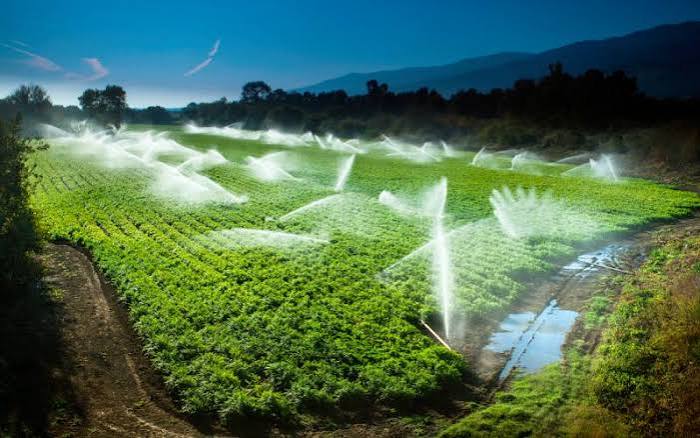
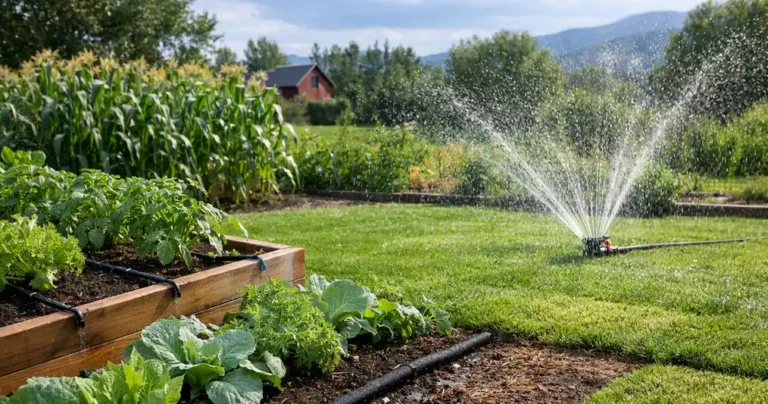
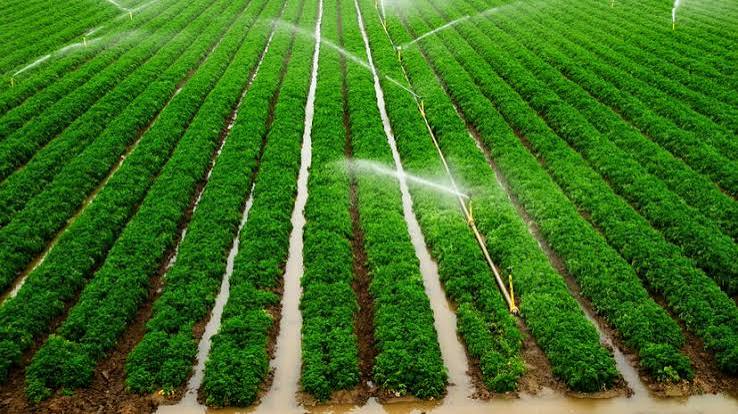
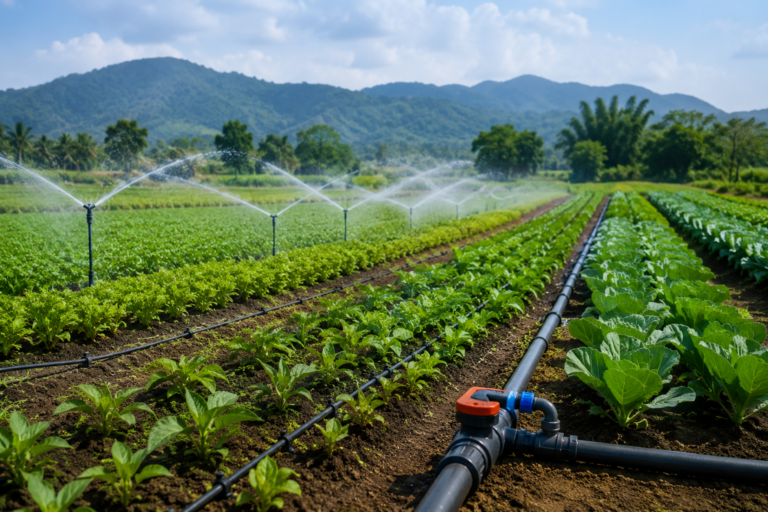
Sprinkler irrigation is a method where water is distributed through a network of pipes and emitted through sprinklers, simulating natural rainfall. The system spreads water evenly across the field, ensuring uniform coverage.
It is suitable for both small and large farms and is widely used for vegetables, cereals, lawns, orchards, and commercial crops.
Benefits of Sprinkler Irrigation
- Uniform water distribution across the field
- Covers large farming areas efficiently
- Suitable for uneven or sloping land
- Easy installation and maintenance
- Reduces soil erosion compared to flood irrigation
- It can also help cool crops during extreme heat
What is Drip Irrigation?
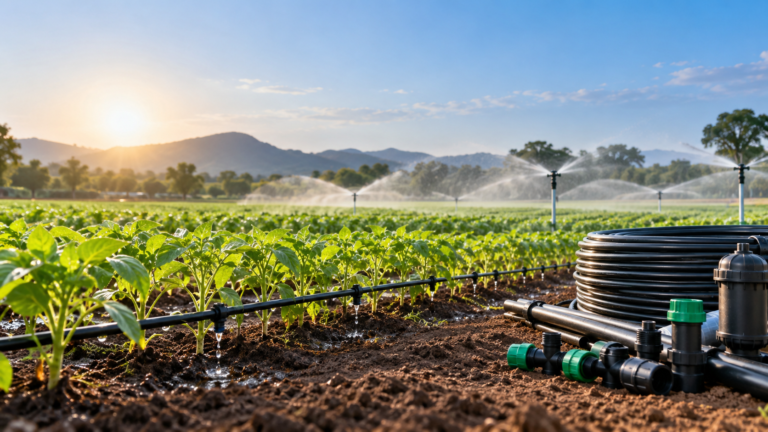
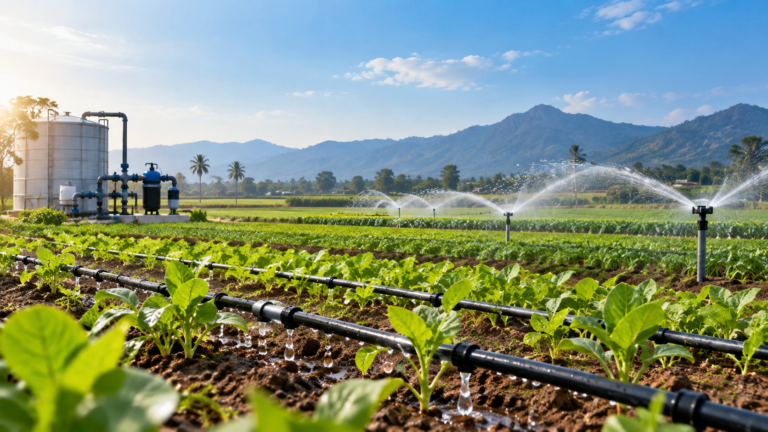
Drip irrigation delivers water directly to the root zone through a network of pipes, emitters, and valves. Water is released slowly, minimising evaporation and runoff.
This system is considered one of the most water-efficient irrigation methods available today.
Benefits of Drip Irrigation
- Saves up to 50–70% water compared to traditional methods
- Delivers water directly to plant roots
- Reduces weed growth
- Minimises fertiliser loss through fertigation
- Improves crop quality and productivity
- Suitable for water-scarce regions
Sprinkler Irrigation vs Drip Irrigation: Key Comparison
| Feature | Sprinkler Irrigation | Drip Irrigation |
|---|---|---|
| Water Distribution | Over entire field | Directly to the roots |
| Water Efficiency | High | Very High |
| Installation Cost | Moderate | Higher |
| Maintenance | Easy | Moderate |
| Suitable for Large Fields | Yes | Yes |
| Weed Control | Moderate | Excellent |
| Soil Erosion | Low | Very Low |
| Fertigation | Possible | Highly Efficient |
| Best for Dense Crops | Excellent | Limited |
| Water Saving | Good | Excellent |
Which Irrigation System Saves More Water?
If your primary goal is water conservation, drip irrigation is the clear winner.
Since water reaches the roots directly, evaporation losses are significantly reduced. Drip systems are ideal for areas where water availability is limited.
However, sprinkler irrigation still offers substantial water savings compared to traditional flood irrigation and is highly efficient for crops requiring broader coverage.
Best Crops for Sprinkler Irrigation
Sprinkler systems perform well for crops that require uniform watering over a wide area.
Examples include:
- Wheat
- Maize
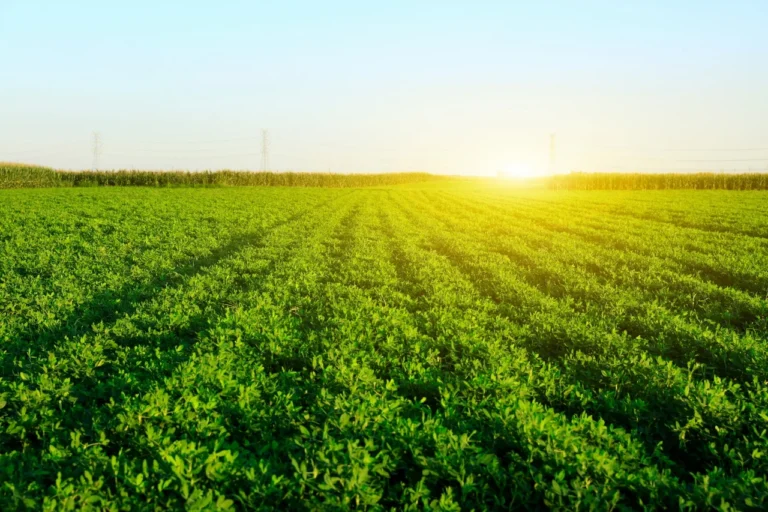
- Groundnut
- Soybean
- Onion
- Potato
- Fodder Crops
- Tea
- Coffee
- Grass
- Lawns
- Nursery Plants
These crops benefit from even moisture distribution and consistent irrigation.
Best Crops for Drip Irrigation
Drip irrigation is ideal for crops planted with spacing between rows and plants.
Examples include:
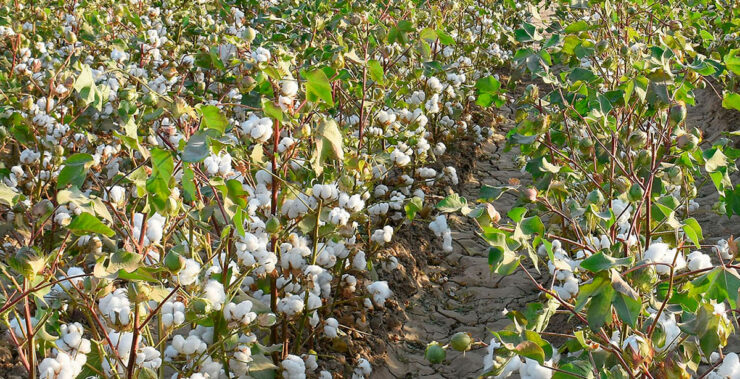
- Cotton
- Sugarcane
- Tomato
- Chilli
- Brinjal
- Banana
- Grapes
- Pomegranate
- Mango
- Papaya
- Watermelon
- Cucumber
These crops respond well to targeted root-zone watering.
Cost Comparison
When selecting an irrigation system, budget is another important consideration.
Sprinkler Irrigation
- Lower initial investment
- Faster installation
- Lower maintenance costs
- Suitable for larger open fields
Drip Irrigation
- Higher installation cost
- Greater long-term water savings
- Reduced fertilizer consumption
- Higher return on investment for horticulture crops
Government subsidies in many Indian states also help reduce the cost of installing both systems.
Which System Improves Crop Yield?
Both systems can increase crop productivity when designed and managed correctly.
Sprinkler Irrigation
- Provides uniform moisture
- Supports healthy germination
- Reduces dry patches
- Ideal for close-growing crops
Drip Irrigation
- Maintains consistent root moisture
- Reduces plant stress
- Minimises disease caused by excess moisture
- Produces better fruit size and quality
Ultimately, the right system depends on your crop type, climate, and farm layout.
Factors to Consider Before Choosing
Before investing in an irrigation system, evaluate the following:
Water Availability
If water is limited, drip irrigation is often the better choice.
Crop Type
Dense field crops usually benefit from sprinkler systems, while orchards, vegetables, and row crops often perform better with drip irrigation.
Soil Type
- Sandy soils generally work well with drip irrigation because water infiltrates quickly.
- Clay and loamy soils can support both sprinkler and drip systems effectively.
Farm Size
Large, open fields are commonly irrigated using sprinkler systems, while orchards and high-value crops often use drip irrigation for precise water application.
Budget
Sprinkler irrigation typically requires a lower initial investment, while drip irrigation can offer greater long-term savings through reduced water and fertiliser use.
Environmental Benefits
Modern irrigation systems help promote sustainable agriculture by:
- Conserving water resources
- Reducing groundwater depletion
- Lowering energy consumption
- Preventing soil erosion
- Improving fertilizer efficiency
- Supporting environmentally friendly farming practices
Choosing the right irrigation system contributes to both farm profitability and environmental conservation.
Which Irrigation System is Best?
There is no one-size-fits-all solution.
Choose Sprinkler Irrigation if you need:
- Wide field coverage
- Uniform watering
- Irrigation for cereals, fodder, or lawns
- A cost-effective system for larger areas
Choose Drip Irrigation if you want:
- Maximum water savings
- Precise root-zone watering
- Efficient fertigation
- Irrigation for orchards, vegetables, and high-value crops
In many cases, farmers use both systems on different sections of their farms to optimize water use and crop performance.
Conclusion
Both Sprinkler Irrigation and Drip Irrigation are valuable modern irrigation methods that improve water efficiency, crop health, and agricultural productivity. The best choice depends on your crop type, soil conditions, water availability, and budget.
For farmers seeking reliable, high-quality irrigation solutions, investing in a well-designed system can lead to better yields, reduced water consumption, and long-term sustainability. Whether you choose a sprinkler or drip system, proper planning and quality equipment are key to achieving the best results.