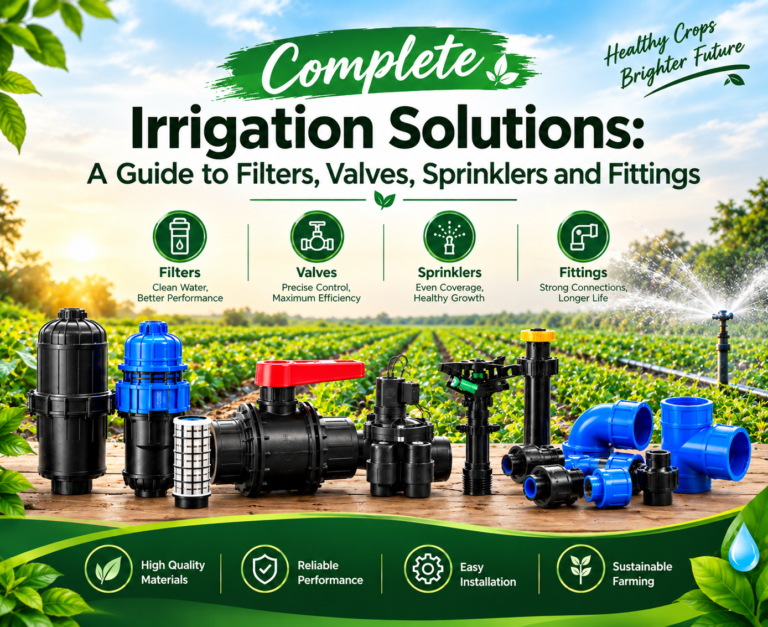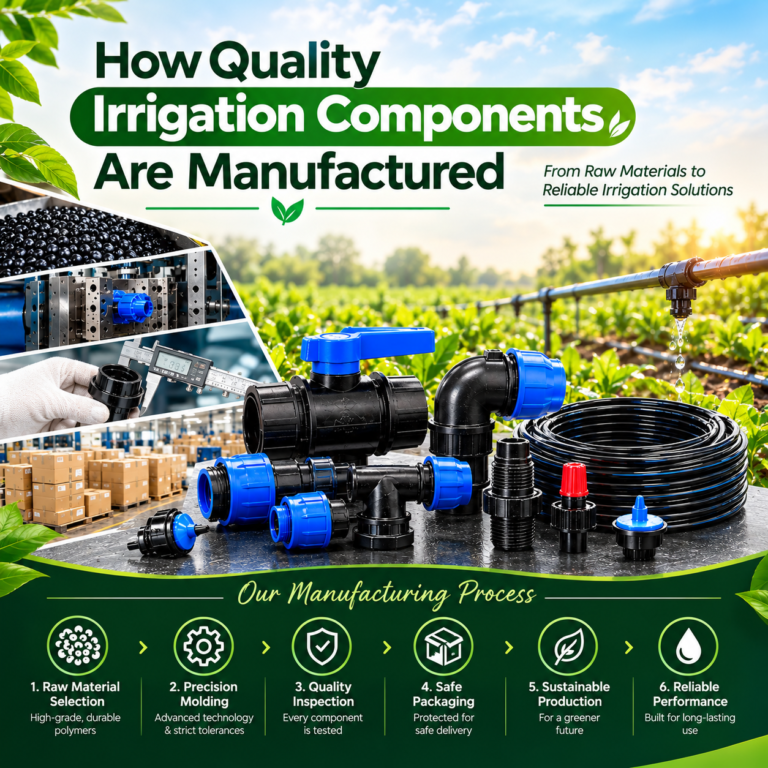

Agriculture is an important part of Italy’s economy, culture, and food production industry. The country is globally recognised for its vineyards, olive plantations, fruit orchards, vegetable cultivation, and high-quality agricultural products. Regions such as Tuscany, Veneto, Emilia-Romagna, Puglia, Sicily, and Lombardy contribute significantly to Italy’s agricultural production.
However, modern agriculture faces several challenges, including changing weather conditions, seasonal water shortages, rising operational costs, soil management requirements, and the need for improved crop productivity. Farmers increasingly require efficient technologies that help them manage water and nutrients while maintaining healthy crop development.
This is where fertigation equipment and irrigation valves for modern Italian agriculture play an important role.
Fertigation is an agricultural technique that combines fertilization and irrigation. Instead of applying fertilizers separately, nutrients are dissolved or prepared in a suitable form and delivered to crops through an irrigation system. This allows farmers to supply water and nutrients together according to crop requirements.
At the same time, irrigation valves control the movement, pressure, and distribution of water throughout agricultural irrigation networks. They help farmers manage different irrigation zones, regulate water flow, and operate irrigation systems more effectively.
When fertigation equipment and irrigation valves work together, they create an integrated agricultural water and nutrient management solution.
From vineyards in Tuscany to greenhouse farms in northern Italy and olive plantations in southern regions, modern fertigation and irrigation technologies can support more controlled farming practices.
In this blog, we will explore how fertigation systems work, the importance of agricultural irrigation valves, different equipment types, their applications across Italy, and how these technologies contribute to efficient and sustainable agriculture.
1. What Is Fertigation in Modern Agriculture?
Fertigation is the process of delivering plant nutrients through an irrigation system. It combines two important agricultural operations: irrigation and fertilization.
Traditionally, farmers apply fertilizers directly to the soil or around plants. However, this method may not always distribute nutrients evenly, particularly across large agricultural fields.
With fertigation, fertilizers that are compatible with the irrigation system are dissolved or prepared in a suitable solution and injected into the irrigation water.
The nutrient-rich water is then distributed through pipelines, drip irrigation lines, sprinklers, or other suitable irrigation equipment.
This method allows farmers to control when and how nutrients are supplied to crops.
How Does a Fertigation System Work?
A typical agricultural fertigation system includes several important components:
- Water source: Supplies water required for irrigation.
- Water pump: Provides the necessary pressure for water distribution.
- Fertilizer tank: Stores the prepared fertilizer solution.
- Fertilizer injector: Introduces nutrients into the irrigation water.
- Mixing equipment: Helps maintain a suitable fertilizer solution.
- Filtration system: Removes suspended particles that could affect irrigation equipment.
- Irrigation valves: Control water flow and distribution across different sections.
- Pipelines and drip lines: Transport nutrient-rich water towards crops.
- Control system: Manages irrigation timing, flow rates, and fertilizer injection.
All these components work together to provide controlled water and nutrient delivery.
For Italian farmers, fertigation can be particularly useful in drip irrigation systems, greenhouses, orchards, vineyards, and high-value horticultural crops where accurate nutrient management is important.
2. Why Fertigation Equipment Is Important for Italian Agriculture
Italy has a diverse agricultural environment. Different regions grow different crops under varying climatic, soil, and water conditions.
For example, northern Italy has important fruit-growing and greenhouse production areas, central Italy is known for vineyards and olive cultivation, while southern regions such as Puglia and Sicily have extensive olive, citrus, and vegetable production.
Each crop has different nutritional requirements throughout its growing cycle.
Fertigation equipment helps farmers manage these requirements by supplying suitable nutrients through irrigation water.
2.1 Controlled Nutrient Delivery
Plants require essential nutrients such as nitrogen, phosphorus, and potassium, along with secondary nutrients and micronutrients.
The quantity and timing of nutrient application depend on crop type, growth stage, soil conditions, and agricultural management practices.
Fertigation allows nutrients to be supplied through irrigation water according to the crop’s requirements.
This supports more controlled fertilizer application and helps farmers manage plant nutrition.
2.2 Better Fertilizer Management
Traditional fertilizer application may involve distributing nutrients across large areas, even when individual crop sections have different requirements.
A fertigation system allows farmers to divide fields into irrigation zones and manage nutrient delivery according to specific crop needs.
This can improve fertilizer management and reduce unnecessary application when properly designed.
2.3 Improved Water and Nutrient Utilisation
Fertigation combines irrigation and fertilization into a coordinated process.
When used with drip irrigation, water and nutrients can be delivered near the root zone.
This helps farmers manage the placement of nutrients and irrigation water more precisely.
However, actual improvements depend on irrigation design, soil type, fertilizer compatibility, and proper scheduling.
2.4 Suitable for Different Agricultural Applications
Fertigation equipment can be used across several agricultural sectors, including:
- Vineyards and grape cultivation.
- Olive plantations.
- Citrus orchards.
- Fruit and vegetable farms.
- Greenhouse agriculture.
- Nursery operations.
- Commercial horticulture.
- Protected cultivation systems.
Its flexibility makes fertigation a useful technology for different types of Italian farming operations.
3. Understanding Irrigation Valves and Their Role in Agriculture
Irrigation valves are important components of agricultural water distribution systems.
Their main purpose is to control the movement of water through pipelines and irrigation networks.
A typical agricultural irrigation system may contain multiple zones, each requiring different water quantities and operating schedules.
Without suitable valves, controlling water distribution across these sections can become difficult.
Irrigation valves help farmers open, close, regulate, and direct water flow according to irrigation requirements.
Main Functions of Agricultural Irrigation Valves
1. Water Flow Control
Irrigation valves control the movement of water through different pipeline sections.
2. Irrigation Zone Management
They allow farmers to operate different agricultural areas independently.
3. Pressure Regulation
Certain valve types help regulate pressure and maintain suitable operating conditions.
4. Automated Irrigation
Electric and solenoid-operated valves can connect with irrigation controllers for scheduled operation.
5. System Protection
Suitable valve arrangements can help isolate pipeline sections and support safer irrigation system operation.
For modern Italian agriculture, irrigation valves are essential for managing large irrigation networks, greenhouse systems, orchards, and drip irrigation installations.
4. Different Types of Irrigation Valves Used in Modern Agriculture
Selecting the correct irrigation valve is important for maintaining reliable water distribution.
Different valves are designed for different operating conditions, pressure requirements, flow rates, and automation needs.
The following are some commonly used agricultural irrigation valves.
4.1 Solenoid Valves
Solenoid valves are electrically operated valves that control water flow using an electromagnetic mechanism.
When an electrical signal is received, the valve opens or closes according to its design.
They are commonly integrated with automatic irrigation controllers.
Key benefits:
- Support automated irrigation operations.
- Allow remote or scheduled water control.
- Help manage individual irrigation zones.
- Reduce the need for manual valve operation.
- Can be integrated with smart irrigation systems.
Solenoid valves are particularly useful in greenhouses, nurseries, and agricultural installations where irrigation needs to operate according to predefined schedules.
4.2 Pressure Regulating Valves
Pressure regulating valves help maintain a suitable downstream pressure within an irrigation network.
Different agricultural irrigation components require specific operating pressure levels.
Excessive pressure may damage components or affect water distribution, while insufficient pressure may result in poor irrigation performance.
Pressure regulating valves help maintain operating conditions within the required range.
Main advantages:
- Help maintain consistent operating pressure.
- Support drip irrigation performance.
- Protect downstream components from excessive pressure.
- Help manage different irrigation zones.
- Support reliable water distribution.
4.3 Ball Valves
Ball valves use a rotating ball with an internal opening to control water flow.
They are commonly used for manual isolation and control in agricultural pipelines.
Benefits of ball valves:
- Simple operating mechanism.
- Quick opening and closing.
- Suitable for pipeline isolation.
- Available in different materials and sizes.
- Useful in agricultural water distribution networks.
They are often installed near pumps, tanks, filters, and pipeline connections.
4.4 Butterfly Valves
Butterfly valves use a rotating disc to regulate or stop water flow.
They are commonly used in larger pipelines where controlling substantial water volumes is necessary.
Key advantages:
- Compact construction.
- Suitable for large-diameter pipelines.
- Require relatively little installation space.
- Support water flow isolation and control.
- Available in different configurations.
Butterfly valves can be useful in larger agricultural irrigation installations and water distribution infrastructure.
4.5 Check Valves
Check valves allow water to flow in one direction and help prevent reverse flow.
They are important in irrigation networks where backflow could affect pumps, pipelines, or water sources.
Main benefits:
- Help prevent reverse water flow.
- Protect pumping equipment.
- Support directional flow control.
- Reduce the risk of certain backflow-related problems.
The correct check valve should be selected according to the system’s pressure, flow direction, and installation requirements.
4.6 Hydraulic Control Valves
Hydraulic control valves use water pressure to operate and regulate flow within irrigation systems.
Depending on their design, they can perform functions such as pressure regulation, flow control, pressure relief, and automatic on/off operation.
They are useful in larger agricultural irrigation networks that require controlled water distribution.
These valves can also be integrated into automated irrigation arrangements.
5. How Fertigation Equipment and Irrigation Valves Work Together
Fertigation equipment and irrigation valves perform different functions, but they are closely connected in a modern agricultural irrigation system.
Fertigation equipment manages nutrient injection, while irrigation valves control where and when water and dissolved nutrients are distributed.
When properly integrated, these technologies help farmers manage irrigation and fertilization through a coordinated system.
Here is how they work together:
Step 1: Water Supply
Water is collected from a suitable source, such as a well, reservoir, or agricultural water storage tank.
Step 2: Water Filtration
The water passes through filtration equipment to remove suspended particles that could block drip emitters, injectors, or other irrigation components.
Step 3: Fertilizer Preparation
The required fertilizer is prepared in a suitable mixing tank according to crop requirements and fertilizer compatibility.
Step 4: Fertilizer Injection
A fertilizer injector introduces the nutrient solution into the irrigation water at a controlled rate.
Step 5: Valve Operation
Irrigation valves control water distribution to the selected agricultural zones.
Step 6: Nutrient Distribution
Water containing dissolved nutrients travels through the irrigation pipelines and reaches crops through drip emitters or other irrigation outlets.
Step 7: System Monitoring
Farmers monitor water pressure, flow rates, nutrient concentration, and irrigation schedules to maintain suitable operating conditions.
This coordinated approach supports precision irrigation and nutrient management.
6. Importance of Fertigation and Irrigation Valves Across Different Italian Agricultural Regions
Italy has a wide variety of agricultural activities, and the requirements of irrigation systems differ according to regional climate, soil conditions, and crop types.
Fertigation equipment and irrigation valves can support several agricultural applications across the country.
6.1 Tuscany – Vineyards and Olive Cultivation
Tuscany is one of Italy’s most recognised agricultural regions, particularly for vineyards, olive groves, and wine production.
Crops require different quantities of water and nutrients throughout their growing cycles.
Fertigation systems can help vineyard and olive growers manage nutrient application through irrigation water.
Irrigation valves allow different vineyard sections to be controlled independently, supporting better water distribution according to local field conditions.
6.2 Puglia – Olive Plantations and Fruit Cultivation
Puglia is an important agricultural region in southern Italy, known for olive production, grapes, vegetables, and other crops.
Water management is particularly important during hot and dry periods.
Drip irrigation combined with fertigation equipment can help deliver water and nutrients near plant roots.
Agricultural valves support the management of irrigation zones and help regulate water flow across larger plantations.
6.3 Sicily – Citrus and Vegetable Farming
Sicily has a Mediterranean climate and supports the cultivation of citrus fruits, olives, grapes, and vegetables.
Farmers may require irrigation systems that provide controlled water distribution during periods of limited rainfall.
Fertigation allows nutrients to be supplied through irrigation water, while automatic irrigation valves can help manage different cultivation areas.
6.4 Emilia-Romagna – Fruit and Vegetable Production
Emilia-Romagna is an important agricultural region known for fruit production, vegetables, and intensive farming activities.
Modern irrigation and nutrient management technologies can support these agricultural operations.
Fertigation equipment helps manage nutrient application, while pressure regulating and solenoid valves support efficient irrigation network operation.
6.5 Veneto – Vineyards and Horticulture
Veneto is internationally recognised for its wine production and also supports several horticultural activities.
Irrigation requirements can differ between vineyard locations depending on soil conditions, rainfall, and cultivation practices.
Fertigation systems can help farmers manage crop nutrition, while suitable irrigation valves allow controlled water distribution across different sections.
Regional consideration: The suitability of fertigation and irrigation systems depends on local agricultural conditions, water availability, and applicable Italian and European regulations. Farmers should follow regional water-use requirements and appropriate nutrient management practices.
7. Applications of Fertigation Equipment in Different Agricultural Sectors
Fertigation is not limited to one particular crop. It can be adapted to several agricultural activities where irrigation water is used to deliver suitable nutrients.
7.1 Vineyard Irrigation
Vineyards require careful management of water and nutrients throughout the growing season.
Fertigation equipment can help deliver nutrients through drip irrigation systems according to grapevine requirements.
Combined with suitable irrigation valves, farmers can manage different vineyard zones and adjust nutrient delivery according to their agricultural plans.
7.2 Greenhouse Agriculture
Greenhouse farming requires controlled environmental and irrigation conditions.
Crops such as tomatoes, cucumbers, peppers, and leafy vegetables often require carefully managed water and nutrient supplies.
Fertigation systems help greenhouse operators prepare and distribute nutrient solutions through irrigation networks.
Solenoid valves and automated controllers can manage individual growing sections, making irrigation operations more organised.
7.3 Fruit Orchards
Fruit crops such as apples, pears, citrus fruits, peaches, and other orchard varieties require suitable water and nutrient management.
Fertigation allows nutrients to be supplied through irrigation water during different crop growth stages.
Agricultural irrigation valves help control water delivery to individual orchard sections.
7.4 Olive Plantations
Olive cultivation is an important agricultural activity in several Italian regions.
Although olive trees are relatively adaptable to dry conditions, irrigation may be used depending on rainfall, soil conditions, cultivation practices, and production objectives.
Fertigation can support nutrient management when properly planned, while irrigation valves help control water distribution across plantation areas.
7.5 Vegetable Farming
Vegetable crops often require carefully managed water and nutrient availability.
Fertigation systems can be useful for crops such as tomatoes, peppers, lettuce, cucumbers, and other vegetables.
By combining fertilizer injection with controlled irrigation, farmers can manage nutrient delivery according to crop requirements.
8. Benefits of Automated Irrigation Valves in Modern Farming
Agricultural automation is becoming increasingly important as farmers look for ways to improve operational efficiency and manage larger irrigation networks.
Automated irrigation valves help reduce the need for manual water control and support scheduled irrigation operations.
Some important benefits include:
1. Reduced Manual Operations
Automatic valves can open and close according to programmed irrigation schedules, reducing the need for farmers to operate every valve manually.
2. Better Irrigation Zone Management
Different sections of a farm can receive water according to their specific irrigation requirements.
3. Improved Water Distribution Control
Suitable valves help regulate water flow and pressure throughout the irrigation network.
4. Integration with Smart Irrigation Systems
Automated valves can work with irrigation controllers, sensors, and monitoring equipment.
5. Greater Operational Convenience
Farmers can manage irrigation schedules more systematically and reduce repetitive manual tasks.
6. Support for Precision Agriculture
When connected to suitable monitoring and control systems, automated valves help implement more precise irrigation strategies.
9. How to Choose the Right Fertigation Equipment and Irrigation Valves
Choosing the right agricultural equipment requires an understanding of the farm’s irrigation requirements.
A system designed for a small greenhouse may not be suitable for a large vineyard or commercial orchard.
Before selecting fertigation equipment and irrigation valves, farmers should consider the following factors.
9.1 Understand Crop Nutrient Requirements
Different crops require different nutrients and quantities during their growing cycles.
Farmers should consider soil testing, crop type, plant growth stage, and professional fertilizer recommendations before selecting fertigation equipment.
9.2 Evaluate Water Quality
Water quality directly affects the performance of fertigation and irrigation equipment.
Important parameters include:
- Water pH.
- Electrical conductivity.
- Dissolved salts.
- Suspended particles.
- Iron and other minerals.
- Water hardness.
- Chemical compatibility.
Water testing helps identify potential problems such as scaling, precipitation, and equipment blockage.
9.3 Select the Correct Fertilizer Injector
Fertilizer injectors are available in different configurations and capacities.
The selection should depend on the required injection rate, water flow, operating pressure, fertilizer concentration, and chemical compatibility.
9.4 Check Valve Size and Operating Pressure
Irrigation valves should match the pipeline diameter, required flow rate, and operating pressure.
An incorrectly sized valve can affect system performance and create unnecessary pressure losses.
9.5 Consider Automation Requirements
Small farms may prefer manually operated valves, while larger agricultural operations may benefit from automated solenoid or hydraulic control valves.
The selection depends on farm size, labour availability, irrigation scheduling, and automation requirements.
9.6 Evaluate Material Quality
Fertigation equipment and irrigation valves may come into contact with water containing dissolved fertilizers and different chemical compounds.
Materials should therefore be compatible with the intended application.
Farmers should consider corrosion resistance, pressure ratings, temperature limits, and manufacturer specifications before purchasing equipment.
10. Maintenance Tips for Fertigation Equipment and Irrigation Valves
Regular maintenance is essential for maintaining the performance of agricultural irrigation systems.
Even advanced equipment requires periodic inspection to prevent unexpected problems.
Here are some important maintenance practices.
- Inspect fertilizer injectors: Check injection lines, seals, connections, and dosing components for leakage or damage.
- Clean mixing tanks: Remove accumulated residues and prepare fertilizer solutions according to manufacturer recommendations.
- Check irrigation filters: Clean filtration equipment regularly to prevent particle accumulation.
- Inspect irrigation valves: Check for leakage, damaged seals, blocked passages, and incorrect operation.
- Monitor operating pressure: Ensure that pumps, valves, and pipelines operate within their recommended pressure ranges.
- Check solenoid valves: Inspect electrical connections, coils, and control signals.
- Flush pipelines: Flush irrigation lines when required to remove accumulated deposits.
- Monitor fertilizer concentration: Check nutrient solution concentration and ensure correct dosing.
- Check system performance: Inspect water distribution across different irrigation zones.
Proper maintenance can reduce equipment failures, support consistent irrigation operations, and help extend the service life of agricultural infrastructure.
11. Common Problems in Fertigation and Irrigation Systems
Understanding common operational problems can help farmers identify issues before they affect crop irrigation.
| Common Problem | Possible Cause | Recommended Solution |
|---|---|---|
| Uneven fertilizer distribution | Incorrect injection rate or poor mixing | Check injector calibration and mixing |
| Low water pressure | Pump problems or pipeline restrictions | Inspect pump, filters, and pipelines |
| Valve leakage | Damaged seals or incorrect installation | Inspect and replace damaged components |
| Blocked drip emitters | Suspended particles or chemical deposits | Improve filtration and investigate water chemistry |
| Incorrect fertilizer dosing | Injector malfunction or incorrect settings | Calibrate the injection equipment |
| Valve not opening | Electrical or hydraulic control issue | Inspect the control mechanism |
| Mineral deposits | Incompatible fertilizer and water chemistry | Conduct water analysis and adjust treatment |
Farmers should identify the actual cause of a problem before replacing equipment. In many cases, correct calibration, cleaning, or pressure adjustment may resolve the issue.
12. The Role of Precision Agriculture in Italy’s Future
Precision agriculture uses technology and data to help farmers make better decisions about crop management, irrigation, and resource utilisation.
In Italy, precision farming technologies can support agricultural operations across vineyards, orchards, greenhouses, and commercial farms.
Modern irrigation systems can combine several technologies, including:
- Automated irrigation valves.
- Fertilizer injection equipment.
- Soil moisture sensors.
- Weather monitoring systems.
- Flow meters.
- Pressure sensors.
- Irrigation controllers.
- Remote monitoring systems.
These technologies allow farmers to monitor field conditions and manage irrigation operations more effectively.
For example, soil moisture sensors can provide information about water availability in the root zone. An irrigation controller can use this information as part of an irrigation scheduling strategy, while automated valves control water distribution to selected areas.
Fertigation equipment can then deliver nutrients according to an appropriate nutrient management plan.
This integrated approach supports better agricultural planning and more informed resource management.
13. Sustainable Agriculture Through Efficient Water and Nutrient Management
Sustainability is an important consideration for modern agriculture.
Farmers need to manage water resources, soil fertility, and fertilizer application while maintaining productive agricultural operations.
Fertigation equipment and irrigation valves can contribute to these objectives when correctly selected and operated.
Fertigation helps deliver nutrients through irrigation water, while suitable valves allow farmers to control water distribution across different field sections.
When combined with drip irrigation, filtration, soil monitoring, and proper scheduling, these technologies can support:
- More controlled fertilizer application.
- Efficient irrigation management.
- Better nutrient placement.
- Reduced unnecessary water application.
- Improved control over irrigation operations.
- More organised agricultural resource management.
It is important to remember that technology alone does not guarantee sustainable farming. Proper equipment selection, crop-specific planning, soil testing, and responsible water and fertilizer management remain essential.
14. Why Investing in Quality Agricultural Irrigation Equipment Matters
Choosing reliable fertigation equipment and irrigation valves is an important investment for farmers who want to improve their irrigation infrastructure.
Low-quality or incorrectly selected equipment may create problems such as inconsistent fertilizer injection, water leakage, pressure fluctuations, and frequent maintenance requirements.
A reliable agricultural irrigation system should be designed according to the farm’s size, water source, crop requirements, and operating conditions.
Before purchasing equipment, farmers should evaluate:
- Product quality and material durability.
- Compatibility with fertilizers and irrigation water.
- Required flow rate and pressure capacity.
- Filtration and maintenance requirements.
- Manual or automatic operating options.
- Availability of technical support and replacement components.
Working with an experienced agricultural irrigation equipment supplier can help farmers identify suitable solutions for their specific applications.
For agricultural businesses in Italy, investing in appropriate irrigation technology can support more reliable farming operations and better long-term water and nutrient management.
Frequently Asked Questions (FAQs)
1. What is fertigation equipment in agriculture?
Fertigation equipment is used to deliver fertilizers through irrigation water. It generally includes fertilizer tanks, injectors, mixing equipment, filters, pumps, and control systems that help supply nutrients to crops through irrigation networks.
2. What are the benefits of fertigation systems for Italian farmers?
Fertigation systems help Italian farmers manage nutrient application, deliver fertilizers through irrigation water, control nutrient distribution, and coordinate irrigation with crop nutrition requirements. They are suitable for vineyards, olive plantations, orchards, greenhouses, and vegetable farms.
3. What are agricultural irrigation valves used for?
Agricultural irrigation valves control the flow, direction, and distribution of water through irrigation pipelines. They help manage irrigation zones, regulate pressure, isolate pipeline sections, and automate water distribution.
4. Which irrigation valves are best for agricultural applications?
Solenoid valves, hydraulic control valves, ball valves, butterfly valves, pressure regulating valves, and check valves are commonly used in agriculture. The best option depends on pipeline size, operating pressure, flow rate, and automation requirements.
5. How do fertigation equipment and irrigation valves work together?
Fertigation equipment injects nutrients into irrigation water, while irrigation valves control where the nutrient-rich water flows. Together, they help farmers manage water and fertilizer distribution across different agricultural zones.
6. Is fertigation suitable for vineyards in Italy?
Yes. Fertigation can be used in vineyards when irrigation and nutrient application are required. It allows grape growers to supply suitable nutrients through irrigation water according to crop requirements, soil conditions, and vineyard management practices.
7. Can fertigation systems be used in greenhouse farming?
Yes. Fertigation is widely suitable for greenhouse applications involving crops such as tomatoes, cucumbers, peppers, and leafy vegetables. It helps greenhouse operators manage nutrient concentration and irrigation according to crop requirements.
8. What factors should be considered when selecting fertigation equipment?
Important factors include crop nutrient requirements, water quality, fertilizer compatibility, injection capacity, irrigation flow rate, operating pressure, filtration requirements, and automation needs.
9. What is the difference between manual and automatic irrigation valves?
Manual irrigation valves require physical operation to control water flow. Automatic irrigation valves operate through electrical or hydraulic control mechanisms and can be connected to irrigation controllers for scheduled water distribution.
10. How can automatic irrigation valves improve farming efficiency?
Automatic irrigation valves help farmers manage irrigation schedules, control different irrigation zones, reduce manual operations, and integrate water distribution with sensors and irrigation controllers.
11. Why is water filtration important in fertigation systems?
Water filtration helps remove suspended particles that may block fertilizer injectors, pipelines, drip emitters, and irrigation components. Proper filtration supports reliable operation and reduces particle-related maintenance problems.
12. How does precision agriculture support fertigation?
Precision agriculture uses sensors, monitoring equipment, and automated controls to help farmers manage water and nutrient application according to field conditions. When integrated with fertigation systems, these technologies support more controlled agricultural resource management.
Conclusion
Modern agriculture requires efficient technologies that help farmers manage water, nutrients, and agricultural resources. In Italy, where vineyards, olive plantations, fruit orchards, greenhouses, and vegetable farming contribute significantly to agricultural production, reliable irrigation infrastructure is increasingly important.
Fertigation equipment and irrigation valves for modern Italian agriculture provide an effective combination for managing water distribution and nutrient delivery.
Fertigation equipment helps supply essential plant nutrients through irrigation water, while irrigation valves control water flow, pressure, and distribution across different agricultural zones.
From solenoid and hydraulic control valves to fertilizer injectors and automated fertigation systems, these technologies offer practical solutions for different farming requirements.
By combining suitable fertigation equipment, quality irrigation valves, filtration systems, and automated controls, farmers can improve irrigation management and support more sustainable agricultural practices.
As precision agriculture continues to develop, investing in reliable agricultural irrigation technology will remain an important consideration for Italian farmers looking to improve their farming operations.