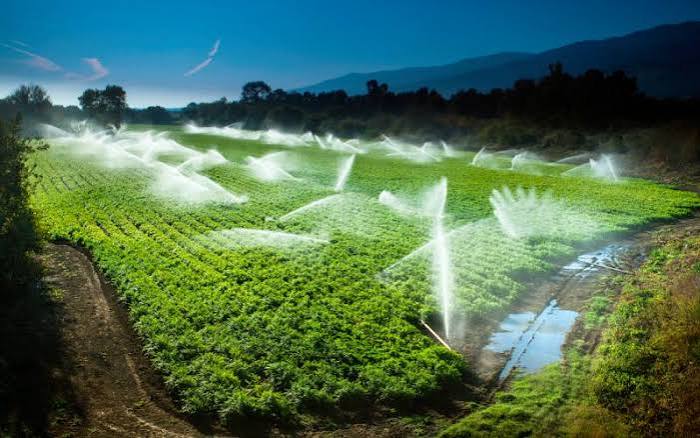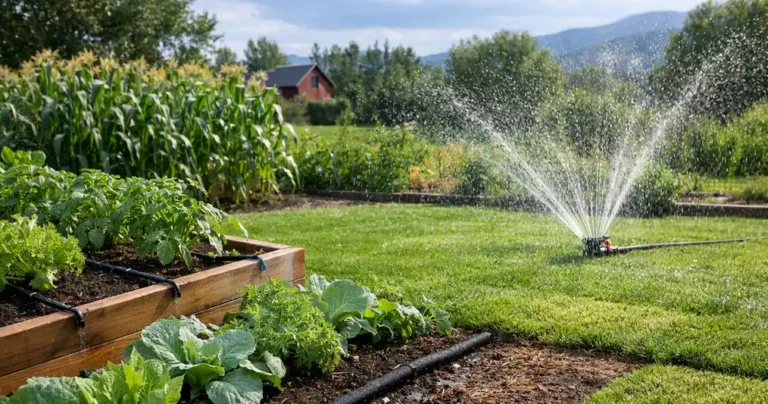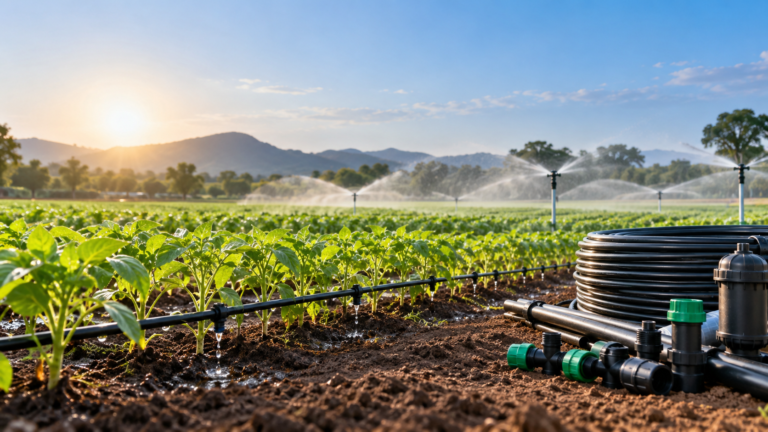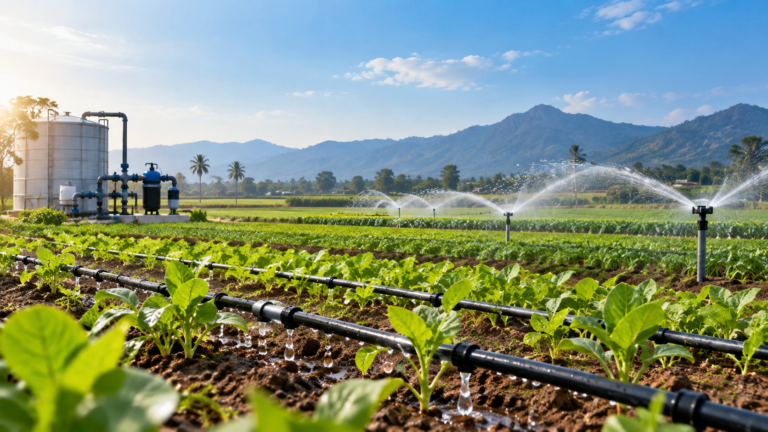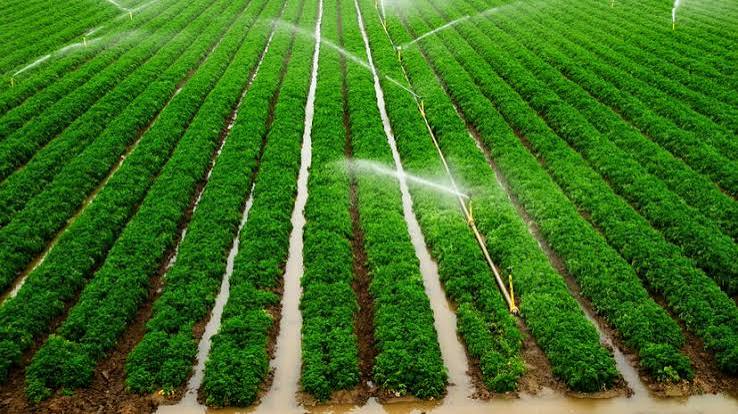
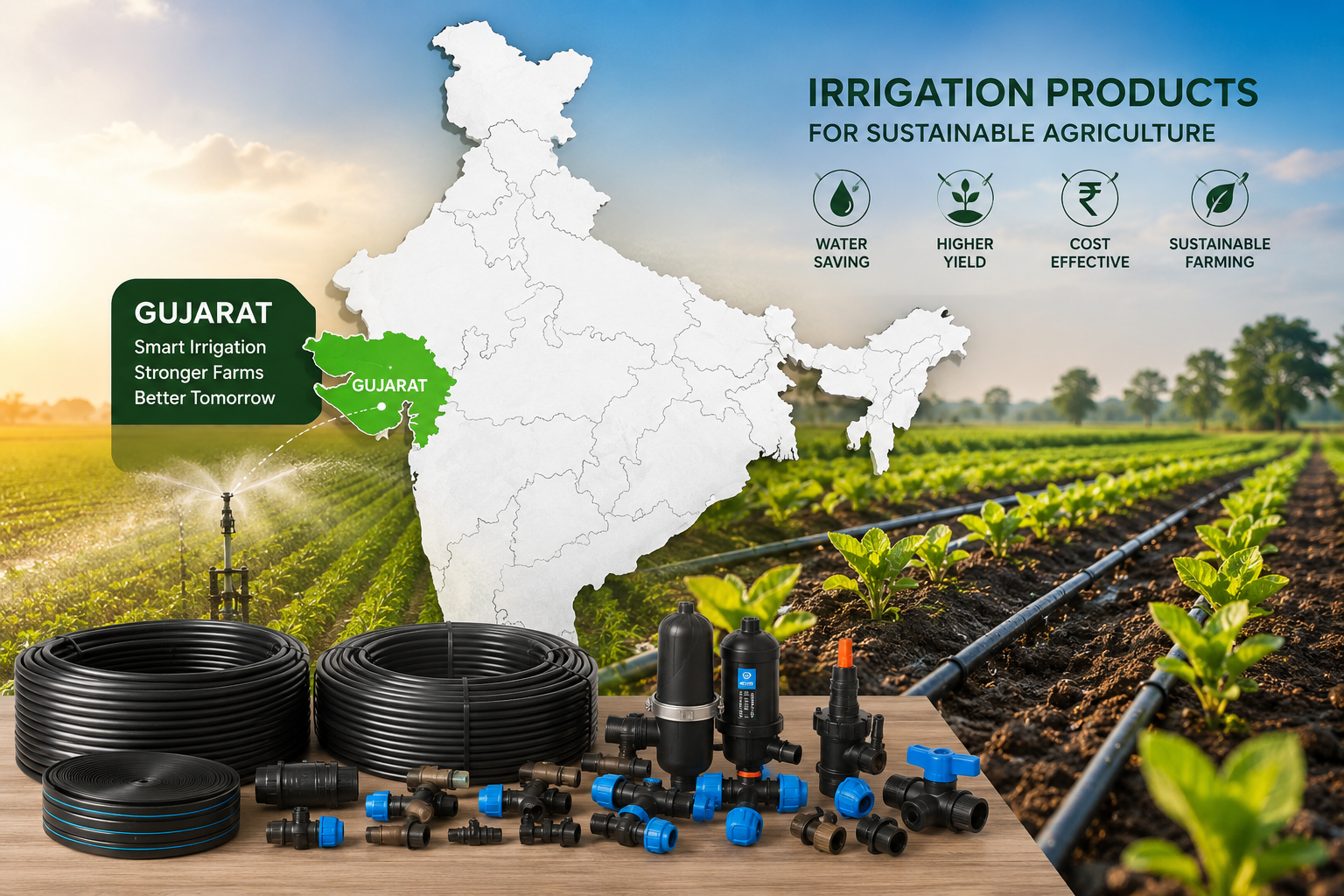
Gujarat is one of India’s leading agricultural states, producing crops such as cotton, groundnut, cumin, wheat, vegetables, fruits, sugarcane, and horticultural crops. However, farmers across Gujarat face a common challenge—water scarcity. With irregular rainfall, declining groundwater levels, and increasing irrigation costs, efficient water management has become more important than ever.
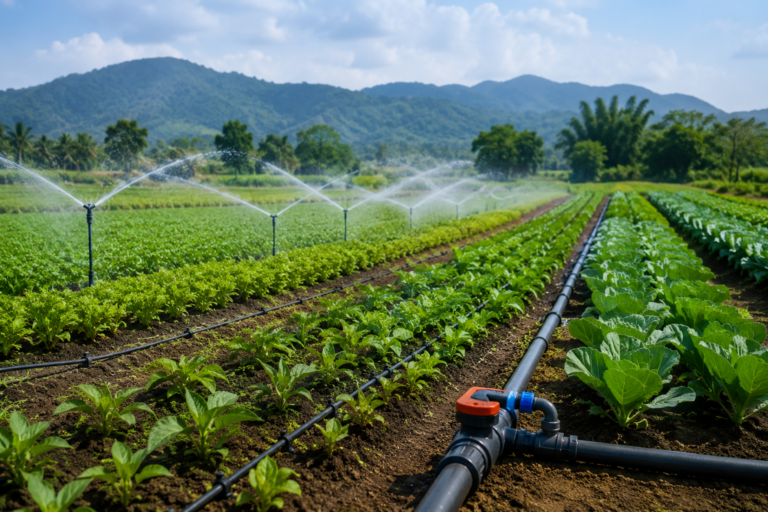
This is where drip irrigation systems play a crucial role. A modern drip irrigation system delivers water directly to the plant’s root zone through a network of pipes, emitters, and filters. Unlike traditional flood irrigation, drip irrigation minimizes water wastage, improves crop health, and increases overall farm productivity.
Whether you’re farming in Ahmedabad, Rajkot, Junagadh, Amreli, Banaskantha, Mehsana, or any other district of Gujarat, this complete guide will help you understand everything about drip irrigation, including its benefits, components, suitable crops, installation process, government subsidies, maintenance tips, and how to choose the best drip irrigation system.
What is a Drip Irrigation System?
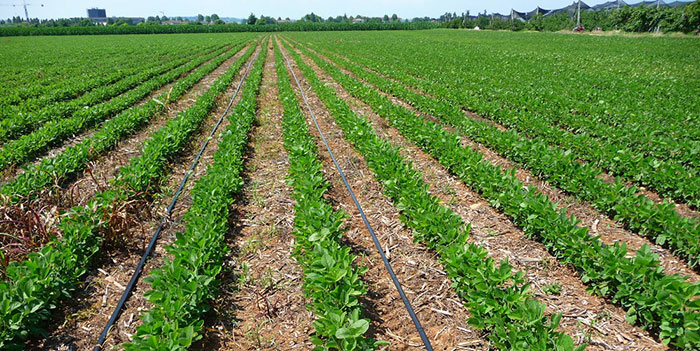
A drip irrigation system is a micro-irrigation method that slowly supplies water directly to plant roots through specially designed emitters.
Instead of flooding the entire field, only the required amount of water reaches each plant. This significantly reduces evaporation, runoff, and water loss.
Main Components
- Main HDPE Pipe
- Sub-main Pipe
- Lateral Pipe
- Drippers (Emitters)
- Sand Filter
- Screen/Disc Filter
- Fertigation Tank or Venturi
- Control Valves
- End Caps and Connectors
Every component works together to ensure uniform water distribution across the farm.
Why Gujarat Farmers Prefer Drip Irrigation
The climate in Gujarat ranges from semi-arid to arid in many regions. Water conservation has become essential for sustainable farming.
Major Benefits
1. Saves Water up to 60%
Traditional irrigation wastes a significant amount of water through seepage and evaporation.
Drip irrigation supplies water directly to roots, helping farmers save up to 40–60% water.
2. Increases Crop Yield
Healthy plants receive consistent moisture.
Benefits include:
- Better root development
- Uniform crop growth
- Higher productivity
- Improved crop quality
Many farmers experience yield improvements ranging from 20–50%, depending on the crop.
3. Reduces Labour Costs
Manual irrigation requires multiple labourers.
With drip irrigation:
- Less manual work
- Easier irrigation scheduling
- Lower operational costs
4. Saves Fertilizer
Drip irrigation allows fertigation, where fertilizers are mixed with irrigation water.
Advantages include:
- Better nutrient absorption
- Reduced fertilizer wastage
- Lower input costs
5. Controls Weed Growth
Only crop roots receive water.
Dry spaces between rows reduce weed growth significantly.
6. Improves Soil Health
Flood irrigation often causes:
- Soil erosion
- Nutrient leaching
- Waterlogging
Drip irrigation keeps soil structure healthy while maintaining ideal moisture levels.
Crops Suitable for Drip Irrigation in Gujarat
Drip irrigation is ideal for almost every high-value crop.
Fruit Crops
- Mango
- Pomegranate
- Lemon
- Orange
- Papaya
- Banana
- Guava
- Sapota
Vegetable Crops
- Tomato
- Onion
- Potato
- Chilli
- Brinjal
- Okra
- Cucumber
- Cabbage
- Cauliflower
Field Crops
- Cotton
- Sugarcane
- Groundnut
- Maize
- Castor
Plantation Crops
- Coconut
- Arecanut
Greenhouse Farming
- Capsicum
- Strawberry
- Exotic vegetables
- Flowers
Types of Drip Irrigation Systems
Surface Drip Irrigation
Pipes are installed above the soil surface.
Suitable for:
- Vegetables
- Orchards
- Cotton
- Groundnut
Subsurface Drip Irrigation
Laterals remain below the soil surface.
Advantages:
- Reduced evaporation
- Better water efficiency
- Long-term use
Online Dripper System
Emitters are attached individually.
Best for:
- Mango
- Coconut
- Pomegranate
- Lemon orchards
Inline Drip System
Emitters are pre-installed inside the lateral pipe.
Suitable for:
- Vegetables
- Sugarcane
- Cotton
- Row crops
How to Choose the Best Drip Irrigation System
Before purchasing a system, farmers should evaluate several important factors.
Farm Size
Large farms require larger pipelines and filtration units.
Small farms can use compact systems.
Crop Type
Different crops require different emitter spacing and water discharge.
Water Source
Possible water sources include:
- Borewell
- Open well
- Farm pond
- Canal
- Water tank
Water Quality
Hard water requires efficient filtration.
Installing quality filters increases system lifespan.
Pipe Quality
Choose UV-stabilized HDPE and LLDPE pipes.
Good quality pipes last for many years under harsh sunlight.
Reliable Manufacturer
Always choose manufacturers known for:
- Durable products
- Quality standards
- Good customer service
- Easy availability of spare parts
Installation Process
Professional installation ensures maximum efficiency.
Step 1
Survey the farm.
Step 2
Prepare the irrigation layout.
Step 3
Install the mainline.
Step 4
Install filters and valves.
Step 5
Connect sub-main pipelines.
Step 6
Install lateral pipes.
Step 7
Fix emitters.
Step 8
Test the complete system.
Step 9
Train farmers on operation and maintenance.
Maintenance Tips
Proper maintenance increases system life.
Clean Filters Regularly
Dirty filters reduce water flow.
Flush Laterals
Flush pipelines every few weeks.
Check Drippers
Replace blocked emitters immediately.
Repair Leakages
Fix damaged pipes quickly to avoid water loss.
Monitor Water Pressure
Maintain recommended pressure for uniform irrigation.
Use Clean Water
Filtered water reduces clogging problems.
Government Subsidy for Drip Irrigation in Gujarat
The Government of Gujarat promotes micro-irrigation through various agricultural support schemes.
Depending on eligibility, farmers may receive financial assistance for installing drip irrigation systems.
To apply, farmers generally need:
- Aadhaar Card
- Land Records
- Bank Account Details
- Crop Information
- Required Application Documents
Interested farmers should contact the local Agriculture Department or authorized micro-irrigation agencies for the latest subsidy details and eligibility criteria.
Common Mistakes Farmers Should Avoid
Many irrigation problems occur due to simple mistakes.
Avoid the following:
- Buying low-quality pipes
- Ignoring filtration
- Installing without proper design
- Not cleaning filters
- Using excessive pressure
- Delaying repairs
- Incorrect emitter spacing
Proper planning ensures long-term success.
Why Quality Matters
A quality drip irrigation system offers:
- Longer lifespan
- Better water distribution
- Lower maintenance costs
- Higher crop productivity
- Improved return on investment
Cheap systems often result in frequent repairs and uneven irrigation.
Why Farmers Trust Gajanand Irrigation
For farmers looking for reliable irrigation solutions in Gujarat, Gajanand Irrigation provides high-quality products designed for Indian farming conditions.
Key advantages include:
- Premium-quality drip irrigation components
- Durable HDPE and LLDPE pipes
- Efficient water-saving solutions
- Suitable systems for vegetables, fruits, orchards, and field crops
- Professional guidance for installation and maintenance
- Products built to withstand Gujarat’s climate
Choosing the right irrigation partner helps farmers maximize productivity while conserving water.
Frequently Asked Questions (FAQs)
Which crops benefit the most from drip irrigation?
Fruit crops, vegetables, sugarcane, cotton, pomegranate, banana, chilli, tomato, onion, and greenhouse crops benefit significantly from drip irrigation.
How much water can drip irrigation save?
A well-designed system can save approximately 40–60% of irrigation water compared to traditional methods.
Is drip irrigation suitable for small farms?
Yes. Drip irrigation is suitable for farms of all sizes, from small vegetable plots to large commercial orchards.
How long does a drip irrigation system last?
With proper maintenance and quality components, a drip irrigation system can last many years.
Does drip irrigation reduce fertilizer costs?
Yes. Fertigation allows nutrients to be delivered directly to the root zone, improving fertilizer efficiency and reducing wastage.
Conclusion
Water is one of the most valuable resources in agriculture, and using it wisely is essential for sustainable farming. Drip irrigation has transformed modern agriculture by helping farmers conserve water, reduce production costs, improve crop quality, and achieve higher yields.
For Gujarat farmers growing vegetables, fruits, cotton, sugarcane, or horticultural crops, investing in a high-quality drip irrigation system is a smart long-term decision. By selecting durable equipment, maintaining the system regularly, and following proper irrigation practices, farmers can increase profitability while protecting natural resources.
If you are planning to modernize your farm, Gajanand Irrigation offers dependable drip irrigation solutions tailored to the needs of Gujarat’s farmers. Choosing the right system today can lead to healthier crops, better harvests, and a more sustainable future for your farm.