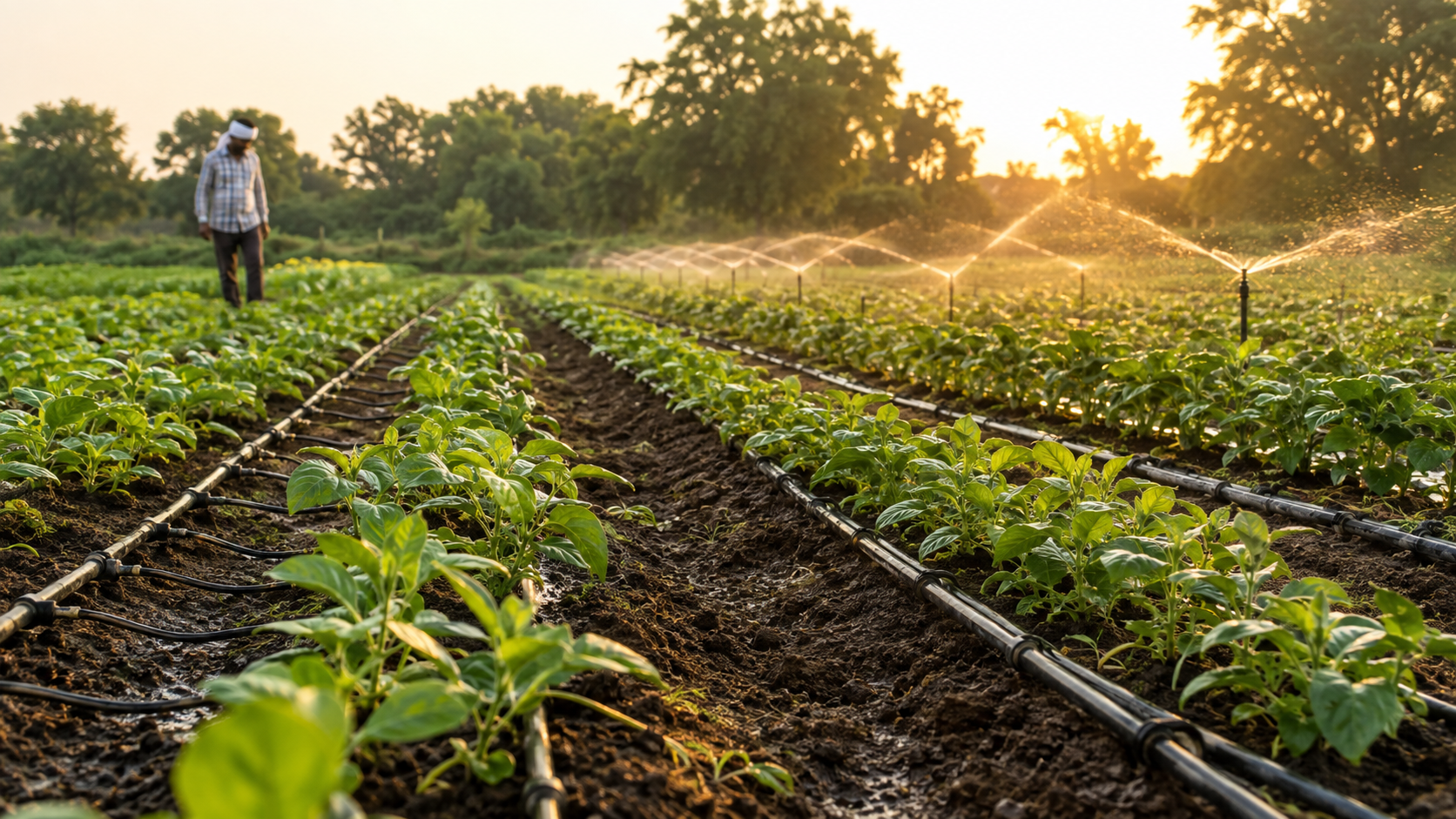
Modern agriculture in India is increasingly focused on efficient water management, higher crop productivity, and sustainable farming practices. With changing weather conditions, irregular rainfall, and increasing pressure on water resources, choosing the best irrigation system for modern farming has become essential for farmers.
Traditional irrigation methods can result in significant water loss through evaporation, runoff, and uneven distribution. Modern irrigation technologies such as drip irrigation, sprinkler irrigation, mini sprinklers, filtration systems, valves, and fertigation solutions help farmers deliver water more efficiently while supporting healthy crop growth.
For reliable irrigation components, Gajanand Irrigation provides a wide range of agricultural irrigation products designed to support efficient water distribution and modern farming applications.
What Is the Best Irrigation System for Modern Farming?
The best irrigation system depends on several factors, including crop type, soil condition, field size, water availability, climate, and farming method. Among the most widely used modern irrigation solutions are drip irrigation and sprinkler irrigation systems.
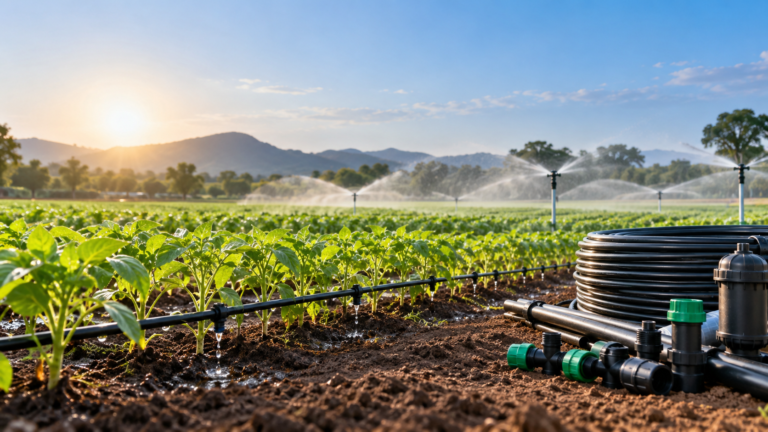
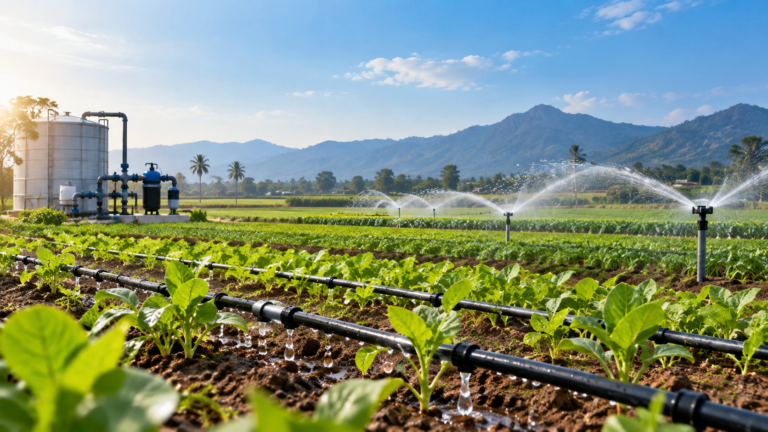
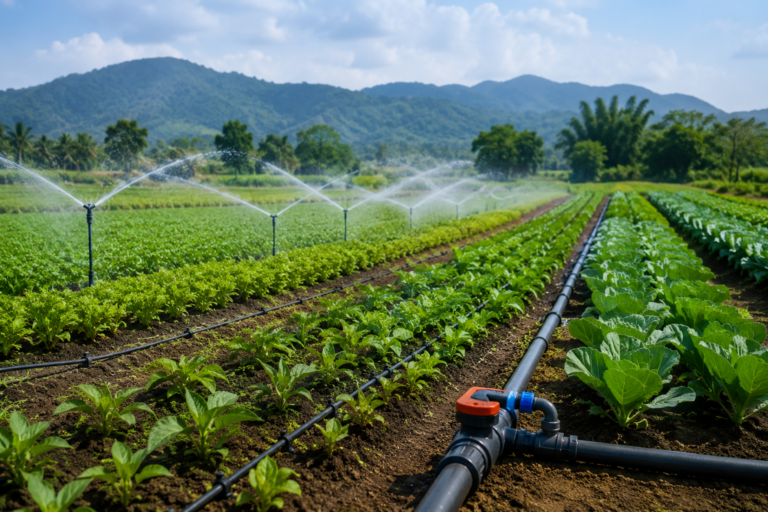
Drip irrigation delivers water slowly and directly to the root zone of plants. Sprinkler irrigation distributes water over crops in a manner similar to natural rainfall. Both systems can improve water-use efficiency when properly designed and maintained.
A complete modern irrigation system may also include:
- Drip irrigation fittings
- Screen filters
- Disc filters
- Hydrocyclone filters
- Irrigation valves
- Foot valves
- Mini sprinklers
- Fertigation assemblies
- Pipes and connectors
- Water flow control components
Using the right combination of these components can improve irrigation performance and help farmers manage water more effectively.
1. Drip Irrigation System for Efficient Water Management
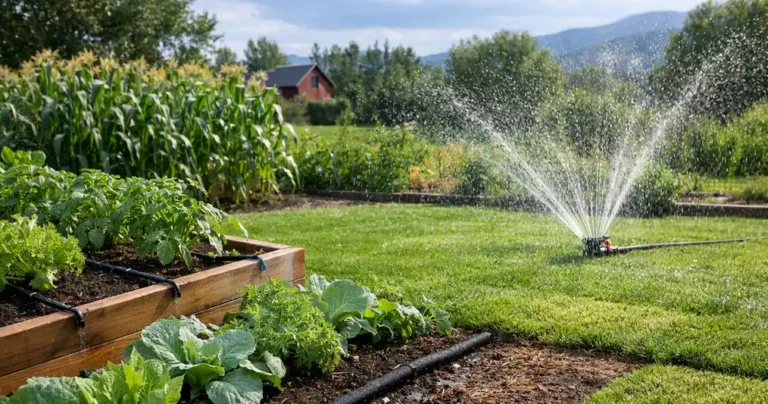
Drip irrigation is one of the most effective irrigation methods for crops that require controlled and regular watering. It supplies water close to the plant roots through drippers or emitters.
Instead of flooding the entire field, drip irrigation provides water gradually and directly to the crop’s root zone. This can reduce unnecessary water usage and help maintain more consistent soil moisture.
Benefits of Drip Irrigation
- Efficient water distribution
- Reduced water loss from evaporation and runoff
- Direct watering of the root zone
- Better control over irrigation schedules
- Suitable for row crops and horticulture
- Supports fertigation applications
- Helps maintain uniform crop growth
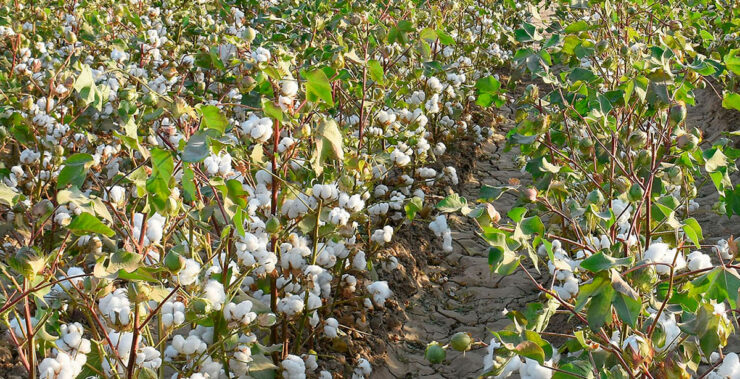
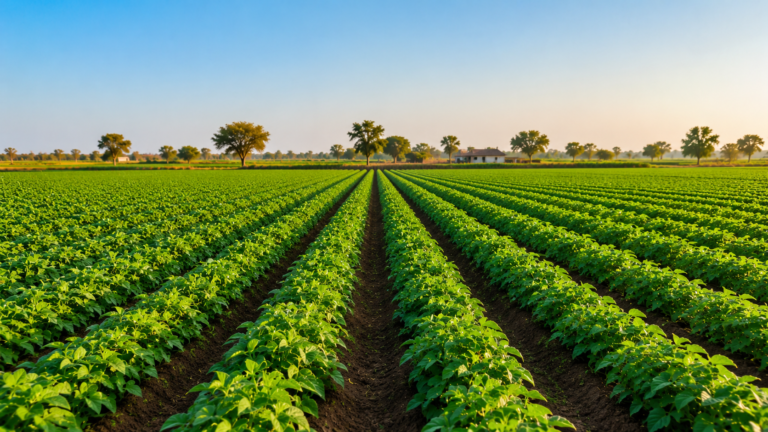
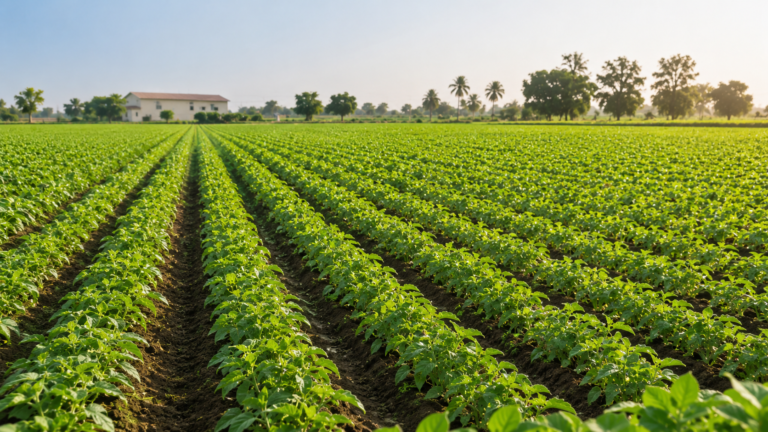
Drip irrigation is widely suitable for crops such as vegetables, fruits, cotton, sugarcane, grapes, banana, pomegranate, and other agricultural and horticultural crops.
However, filtration is extremely important in drip irrigation because dirt, sand, algae, and other particles can clog emitters.
2. Sprinkler Irrigation System for Modern Agriculture
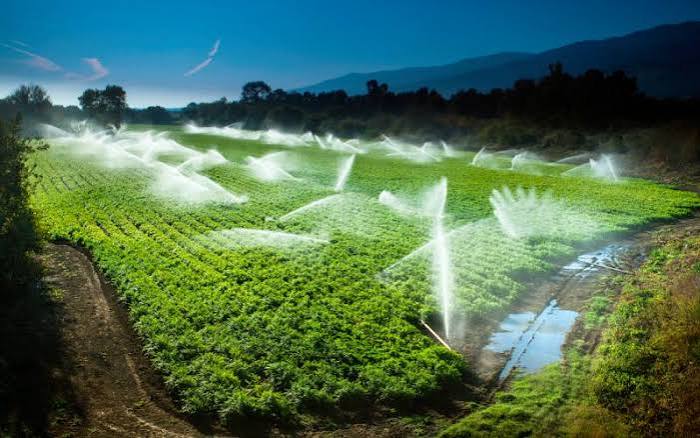
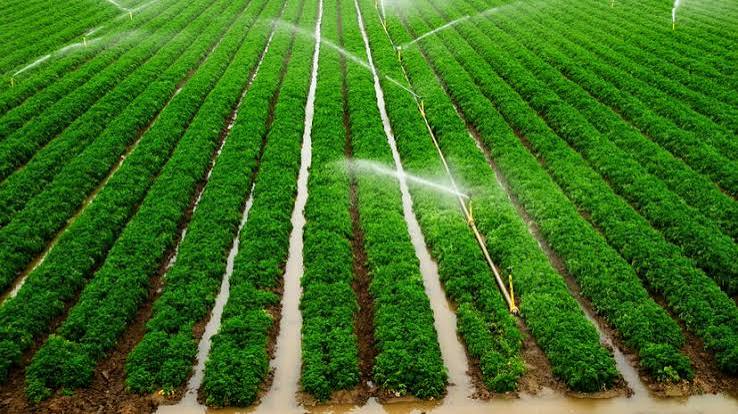
Sprinkler irrigation is another popular solution for modern farming. It distributes water through sprinklers, creating a spray that reaches the soil and crops.
This system can be useful for agricultural fields where uniform water distribution is required and where drip irrigation may not be the preferred option.
Sprinkler systems can be used for various crops, lawns, nurseries, vegetables, and other agricultural applications.
Advantages of Sprinkler Irrigation
- Uniform water distribution
- Suitable for different soil types
- Useful for large agricultural areas
- Can reduce water wastage compared with traditional flood irrigation
- Flexible installation options
- Suitable for various crop conditions
Mini sprinklers can also be used for specific agricultural and horticultural applications where localized sprinkler coverage is preferred.
3. Irrigation Filtration Systems for Clean Water
A good filtration system is one of the most important parts of a modern irrigation setup.
Water from ponds, borewells, canals, reservoirs, and other sources may contain sand, silt, algae, organic matter, and other particles. If these contaminants enter irrigation lines, they can cause clogging and reduce system efficiency.
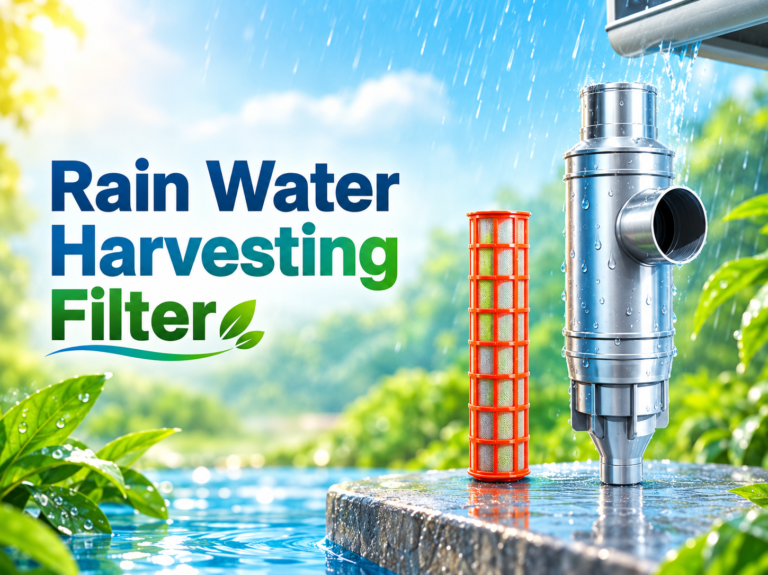
Gajanand Irrigation offers different filtration solutions for agricultural irrigation applications, including screen filters, disc filters, and hydrocyclone filters.
Screen Filters
Screen filters are commonly used to remove suspended particles from irrigation water. They can help protect downstream irrigation components and reduce clogging problems.
Disc Filters
Disc filters use specially designed discs to capture particles from water. They can provide effective filtration for drip and other micro-irrigation systems.
Hydrocyclone Filters
Hydrocyclone filters are particularly useful when irrigation water contains sand or heavier suspended particles. They separate heavier particles from water before the water reaches sensitive irrigation components.
Selecting the right filtration system according to the water source and contamination level can help improve irrigation system performance.
4. Irrigation Valves for Better Water Flow Control
Water management requires more than simply supplying water to a field. Farmers also need to control where, when, and how much water is delivered.
Irrigation valves play an important role in controlling water flow through different sections of an irrigation network.
Valves can help farmers:
- Start or stop water flow
- Control different irrigation zones
- Manage water pressure
- Isolate sections for maintenance
- Improve overall system management
A properly designed irrigation system should use suitable valves according to pipeline size, pressure requirements, and application.
5. Fertigation for Efficient Nutrient Management
Modern farming is not only about efficient irrigation. Farmers also need to manage nutrients effectively.
Fertigation combines irrigation and fertilizer application. Nutrients can be supplied through irrigation water, allowing farmers to deliver nutrients closer to the plant root zone.
Fertigation can provide several advantages when properly managed:
- More controlled nutrient application
- Efficient use of fertilizers
- Reduced manual application requirements
- Better integration with drip irrigation
- Improved nutrient distribution
Fertigation assemblies and suitable irrigation components can therefore become an important part of modern agricultural irrigation systems.
How to Choose the Best Irrigation System for Your Farm
There is no single irrigation system that is perfect for every farm. Farmers should consider several factors before selecting an irrigation solution.
1. Crop Type
Different crops have different water requirements. Fruits, vegetables, field crops, and plantation crops may require different irrigation methods.
2. Soil Type
Sandy, loamy, and clay soils have different water-holding capacities. The irrigation method should be selected according to soil characteristics.
3. Water Source
Farmers should evaluate whether water comes from a borewell, pond, canal, reservoir, or another source. Water quality also determines the filtration requirements.
4. Field Size and Layout
Large farms may require multiple irrigation zones, pipelines, valves, and filtration stages to achieve uniform distribution.
5. Water Availability
Where water availability is limited, efficient irrigation technologies can help farmers manage available water more carefully.
6. Maintenance Requirements
Filters, valves, pipes, fittings, and other components should be easy to inspect, clean, and maintain.
Why Filtration Is Essential for Drip Irrigation
One of the biggest challenges in drip irrigation is emitter clogging. Even small particles can accumulate inside narrow irrigation passages.
A properly selected filtration system can help reduce the amount of unwanted material entering the irrigation network.
Farmers should regularly inspect filters and clean them according to the water quality and irrigation system requirements. Regular maintenance can help maintain consistent water flow and extend the working life of irrigation components.
Water-Saving Solutions for Sustainable Agriculture
Water conservation is becoming increasingly important for Indian agriculture. Modern irrigation systems can help farmers move away from inefficient water application toward more controlled irrigation.
A water-efficient agricultural irrigation setup may combine:
Water Source → Hydrocyclone/Primary Filtration → Screen or Disc Filtration → Valves → Mainline → Sub-mainline → Drip/Sprinkler System → Crop Root Zone
The exact configuration depends on the farm, water quality, crop, pressure, and irrigation design.
Using efficient irrigation components together can help farmers improve water distribution and reduce avoidable losses.
Why Choose Gajanand Irrigation Products?
Gajanand Irrigation is an agricultural irrigation product manufacturer offering a broad range of irrigation components for modern farming applications.
Its product range includes screen filters, disc filters, hydrocyclone filters, irrigation fittings, valves, foot valves, mini sprinklers, fertigation assemblies, and other irrigation products.
For farmers, dealers, agricultural businesses, and irrigation professionals, selecting reliable components is important for building an efficient irrigation network.
The right products, combined with proper irrigation design and regular maintenance, can help create a dependable water management system for modern agriculture.
Conclusion
Choosing the best irrigation system for modern farming in India requires careful consideration of crop requirements, soil type, water availability, field size, water quality, and budget.
Drip irrigation is highly suitable for controlled root-zone watering, while sprinkler irrigation can provide effective coverage across suitable agricultural areas. Filtration systems such as screen filters, disc filters, and hydrocyclone filters can help protect irrigation networks from unwanted particles, while valves and fertigation components provide additional control and efficiency.
As Indian agriculture moves toward more efficient and sustainable water management, modern irrigation solutions can play an important role in improving the way water is delivered to crops.
Gajanand Irrigation provides a wide range of irrigation products designed for agricultural applications. By selecting the right combination of irrigation filters, fittings, valves, sprinklers, and fertigation components, farmers can build an irrigation system suited to their specific farming requirements.
Choose the right irrigation solution, manage water efficiently, and support a more productive and sustainable future for modern farming in India.