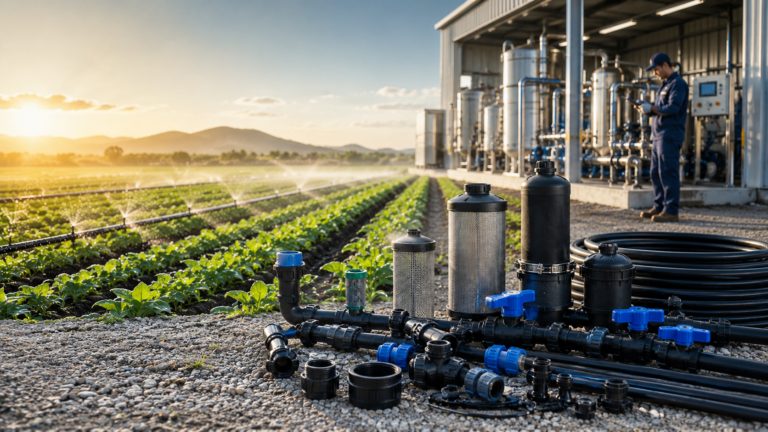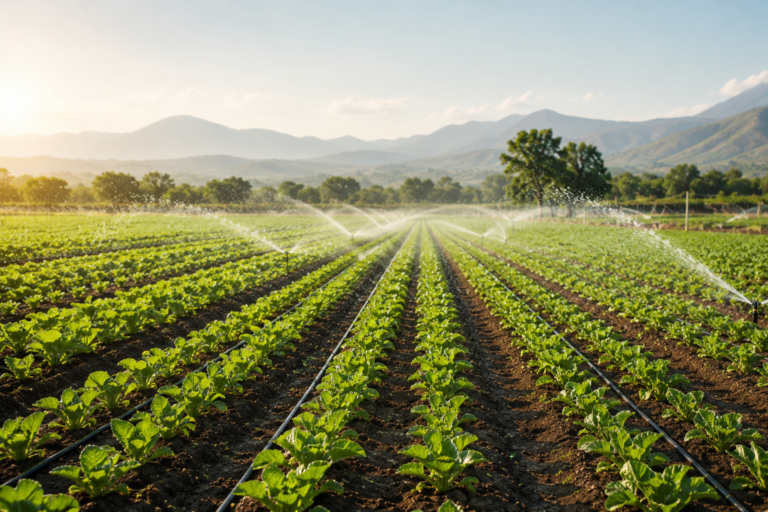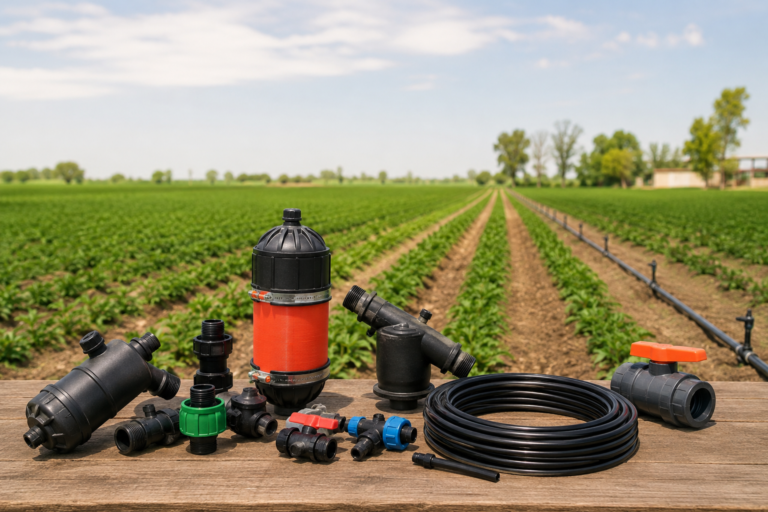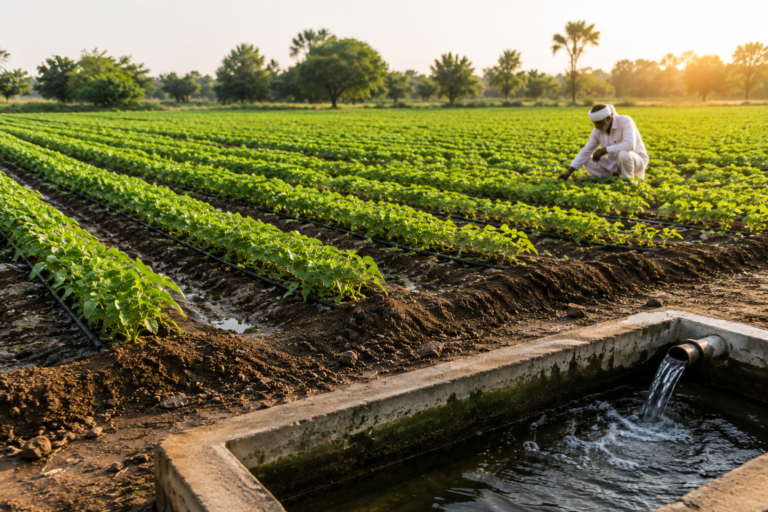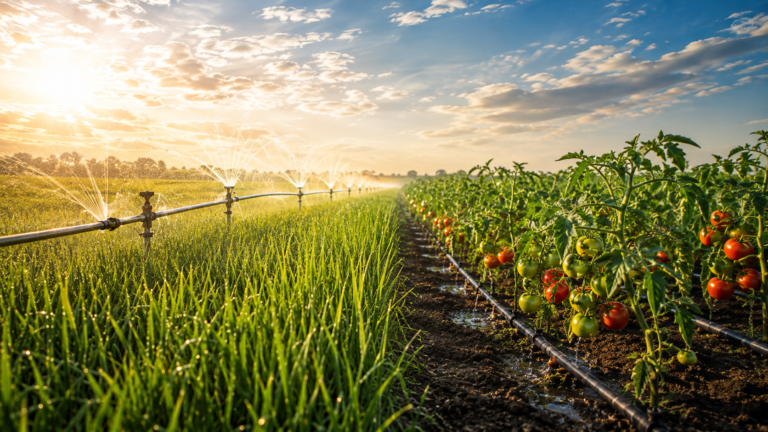
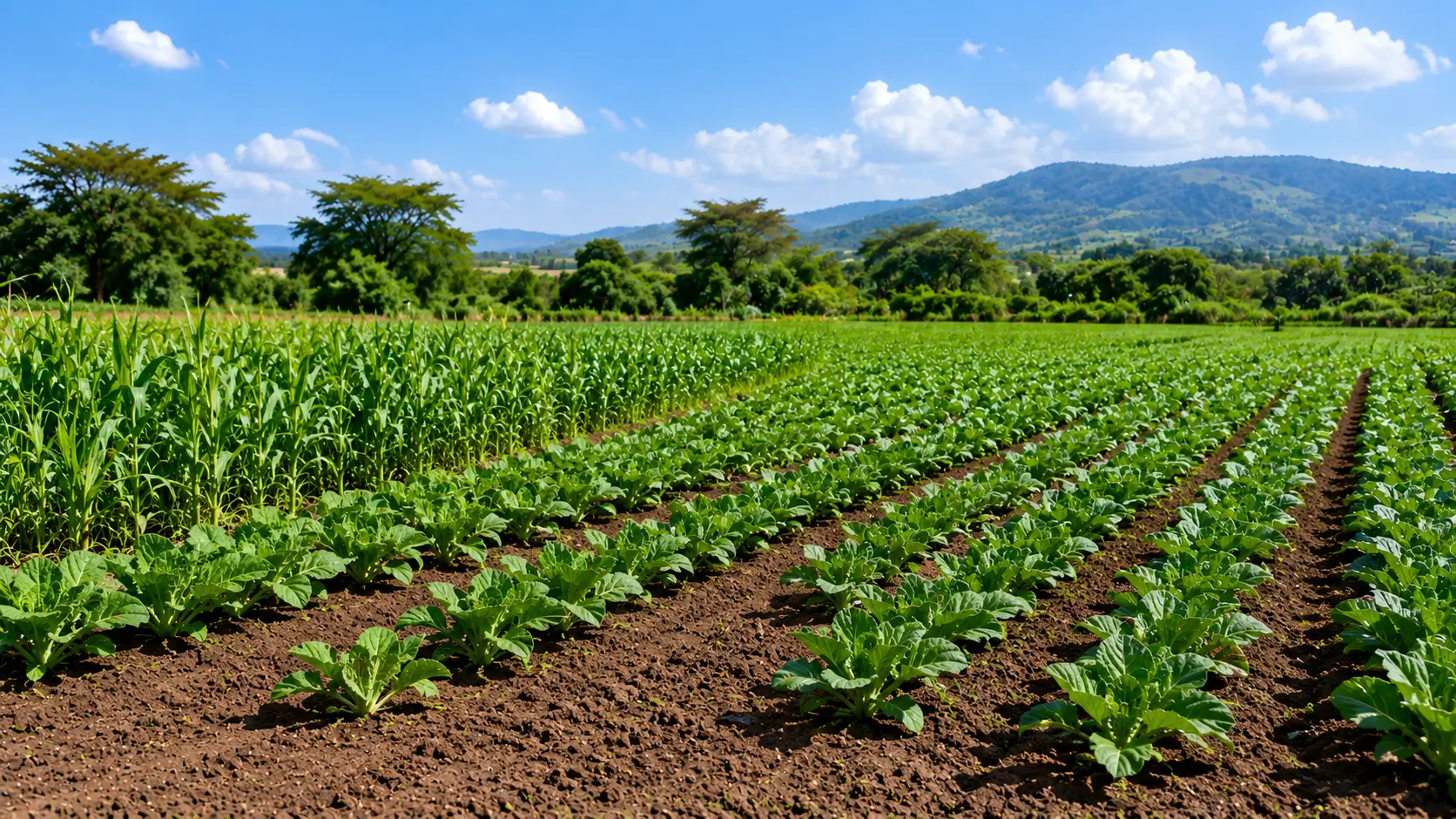
Kenya’s agricultural sector depends heavily on efficient water management, especially in areas where rainfall is seasonal or unpredictable. Agricultural irrigation products in Kenya help farmers deliver the right amount of water directly to crops, reduce water wastage, and improve crop productivity. Modern irrigation solutions include drip irrigation systems, sprinkler systems, irrigation pipes, filters, pumps, valves, fertigation equipment, and water storage solutions.
Choosing the right irrigation system depends on crop type, farm size, soil conditions, water availability, pressure requirements, and the local climate. A properly designed irrigation system can help Kenyan farmers improve water efficiency while maintaining consistent crop growth.
What Are Agricultural Irrigation Products?
Agricultural irrigation products are equipment and components used to transport, filter, control, and distribute water to agricultural crops. These products form a complete irrigation network from the water source to the root zone or crop canopy.
Common agricultural irrigation products include:
- Drip irrigation systems
- Sprinkler irrigation systems
- Irrigation pipes and fittings
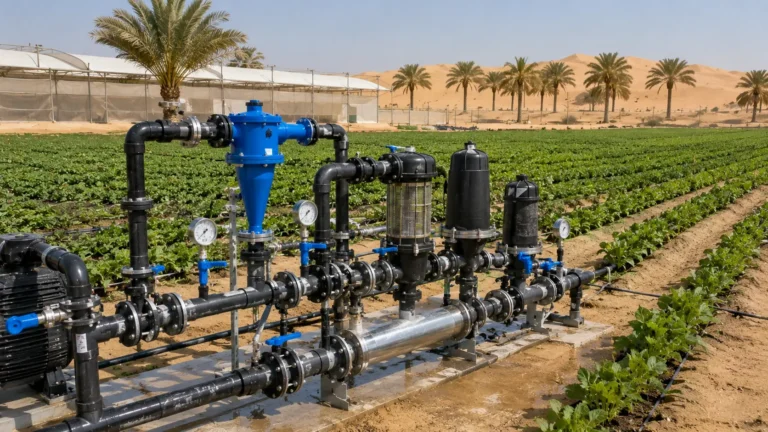
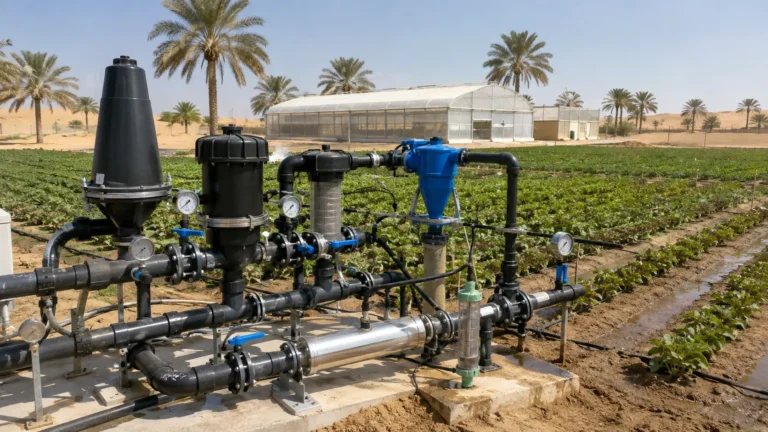
- Screen and disc filters
- Hydrocyclone sand separators
- Irrigation pumps
- Pressure regulators
- Control valves
- Fertigation systems
- Drippers and emitters
- Sprinklers and micro-sprinklers
- Water storage and distribution equipment
Farmers can combine these products to create an irrigation system that matches the specific requirements of their crops and farm.
Why Is Irrigation Important for Agriculture in Kenya?
Water availability plays an important role in agricultural productivity. Irrigation allows farmers to supply crops with water when rainfall is insufficient or irregular.
An efficient irrigation system can provide several benefits:
Better water management: Irrigation systems control how much water reaches the crop.
Improved crop growth: Regular water availability supports healthy plant development.
Reduced water wastage: Drip and controlled sprinkler systems can deliver water more efficiently than uncontrolled watering.
Higher farming efficiency: Automated valves, pumps, and controllers can reduce manual irrigation work.
Fertigation opportunities: Farmers can combine irrigation with soluble fertilizers to deliver nutrients through irrigation water.
Extended growing seasons: Irrigation can help farms maintain production during periods of limited rainfall.
Drip Irrigation Systems in Kenya
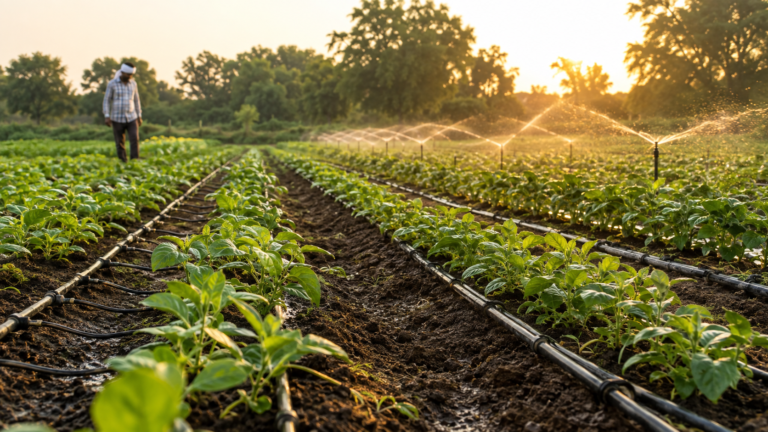
Drip irrigation delivers water slowly and directly near the root zone of plants. It uses components such as drip lines, emitters, filters, pressure regulators, valves, and mainline pipes.
Drip irrigation is particularly useful for crops planted in rows or at defined spacing. It can be used for vegetables, fruits, flowers, greenhouse crops, and many other agricultural applications.
A typical drip irrigation system includes:
- Water source
- Pump, where required
- Hydrocyclone or pre-filtration equipment
- Disc or screen filter
- Mainline pipe
- Control valves
- Pressure regulator
- Sub-main and lateral pipes
- Drip lines
- Emitters or drippers
Proper filtration is especially important because suspended particles can clog small drip emitters. Farmers should select filtration equipment according to their water source and irrigation system requirements.
Sprinkler Irrigation Systems in Kenya
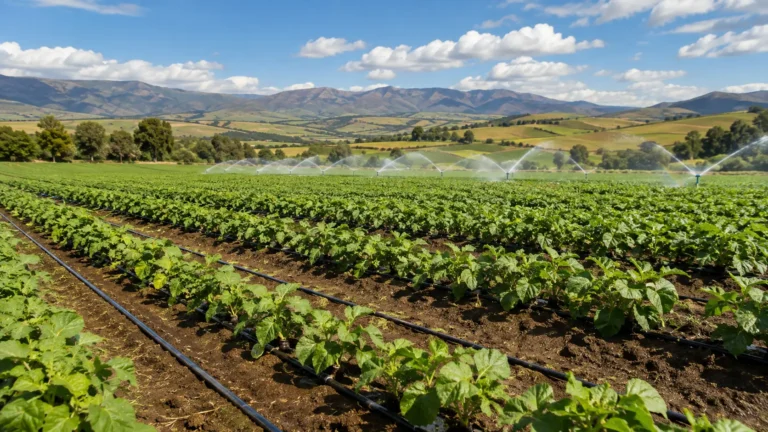
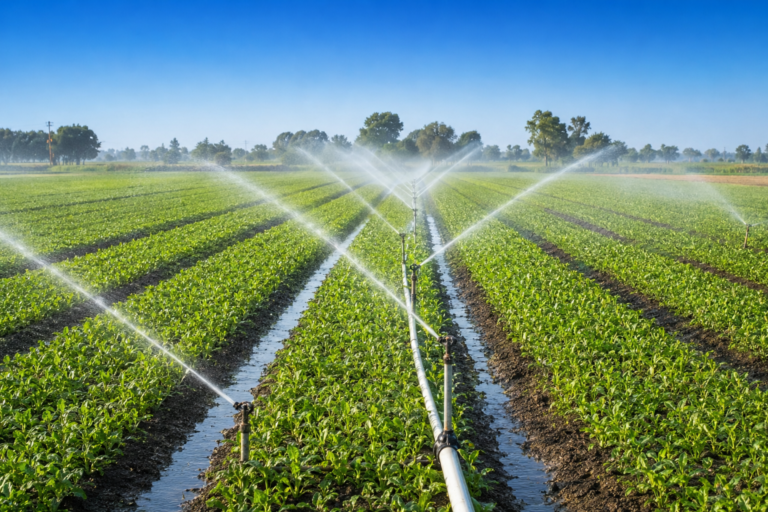
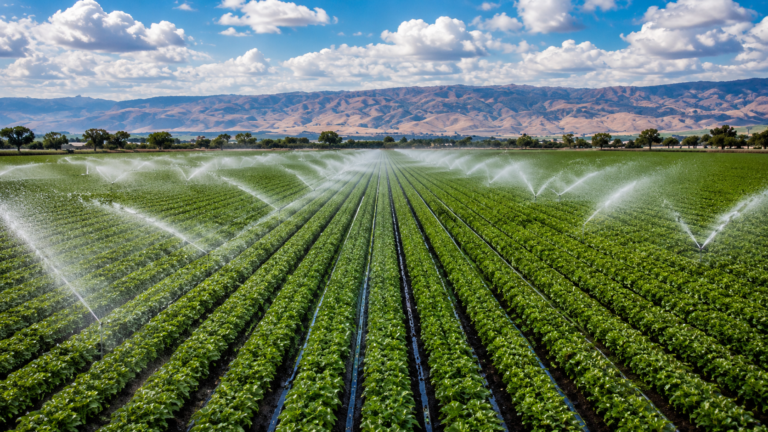
Sprinkler irrigation systems distribute water through sprinkler heads that spray water over an agricultural area. They can provide relatively uniform water distribution when the system is properly designed and operated.
Sprinkler irrigation can be suitable for vegetables, field crops, nurseries, lawns, pastures, and other agricultural applications.
A sprinkler irrigation system commonly includes:
- Water pump
- Mainline pipes
- Sub-main pipes
- Control valves
- Pressure regulators
- Sprinkler heads
- Filters
- Pipe fittings
- Connectors and accessories
The correct sprinkler depends on factors such as operating pressure, flow rate, irrigation area, crop requirements, and spacing between sprinkler heads.
Drip Irrigation vs. Sprinkler Irrigation
Farmers often ask whether drip or sprinkler irrigation is better for agriculture in Kenya. The answer depends on the crop, soil, water source, farm layout, and irrigation objective.
| Feature | Drip Irrigation | Sprinkler Irrigation |
|---|---|---|
| Water delivery | Directly near the root zone | Sprayed over the crop area |
| Suitable crops | Row crops, vegetables, fruits, greenhouse crops | Field crops, vegetables, nurseries, pastures |
| Water control | Highly targeted | Area-based distribution |
| Filtration need | High | Depends on sprinkler type |
| Installation | Requires lateral lines and emitters | Requires sprinkler network |
| Automation | Highly suitable | Highly suitable |
| Best application | Precise root-zone irrigation | Wider-area irrigation |
The best system should be selected after evaluating the farm’s water source, crop type, soil, topography, and required irrigation coverage.
Irrigation Filters for Agricultural Applications
Filtration is an important part of modern irrigation systems. Irrigation water may contain sand, soil particles, algae, organic matter, or other suspended materials.
Common irrigation filtration products include hydrocyclone sand separators, screen filters, and disc filters.
Hydrocyclone Sand Separator
A hydrocyclone separator removes heavier sand particles from irrigation water before the water reaches finer filtration equipment. It can be useful when groundwater or other sources contain significant amounts of sand.
Screen Filter
Screen filters use a mesh screen to capture suspended particles. They are commonly used in irrigation systems where the water contains relatively low to moderate levels of suspended solids.
Disc Filter
Disc filters use stacked grooved discs to provide filtration. They can offer effective filtration for irrigation applications and are commonly used in drip irrigation systems.
Selecting the correct filtration level helps protect emitters, sprinklers, valves, and other irrigation components.
Irrigation Pipes, Valves and Fittings
Pipes create the distribution network that carries water from the source to different areas of the farm. Common irrigation systems use HDPE, PVC, polyethylene, or other suitable piping materials depending on the application.
Irrigation valves control water flow between different zones. Farmers can use manual or automated valves depending on the system design.
Irrigation fittings connect pipes, filters, valves, drip lines, and other components. Reliable fittings help reduce leakage and maintain proper system performance.
Irrigation Pumps for Kenyan Farms
A pump may be required when the available water source cannot provide sufficient pressure or flow for the irrigation system.
Pump selection should consider:
- Required flow rate
- Required operating pressure
- Water source
- Total pumping head
- Pipe length
- Irrigated area
- Elevation difference
- Irrigation method
Choosing a pump based only on horsepower can lead to poor system performance. Farmers should evaluate the complete hydraulic requirements before selecting a pump.
Fertigation Systems for Modern Agriculture
Fertigation combines irrigation and fertilizer application. A fertigation system introduces soluble nutrients into irrigation water so that plants receive water and nutrients through the irrigation network.
Fertigation can work with drip and sprinkler systems when the equipment is properly designed and operated.
Farmers should use suitable fertilizers, filtration, injection equipment, and operating procedures to maintain system performance.
How to Choose Irrigation Products in Kenya
Before purchasing agricultural irrigation products, consider these important factors:
1. Identify the Crop
Different crops have different water requirements. Vegetables, fruits, flowers, cereals, and greenhouse crops may require different irrigation methods.
2. Analyze the Water Source
Check whether the water comes from a borehole, river, reservoir, tank, or another source. Water quality can influence filtration requirements.
3. Determine Farm Size
A small farm may require a relatively simple irrigation network, while a large commercial farm may need multiple irrigation zones and automated controls.
4. Check Pressure and Flow
The irrigation system should receive adequate flow and pressure for proper operation.
5. Select Appropriate Filtration
Choose filtration equipment according to the amount and type of contaminants present in the irrigation water.
6. Consider Automation
Automatic valves, timers, controllers, and sensors can help simplify irrigation management and improve consistency.
What Irrigation Products Are Best for Small Farms in Kenya?
For small farms, a basic irrigation system may include a suitable water source, pump where necessary, filter, mainline pipe, control valve, drip lines or sprinklers, and appropriate fittings.
Drip irrigation can be a practical option where farmers want targeted water delivery around individual plants or crop rows. Sprinklers can be useful when farmers need broader coverage.
The ideal solution depends on crop type, water availability, farm size, and budget.
What Irrigation Products Are Best for Commercial Farms?
Commercial farms often require larger and more sophisticated irrigation systems. These systems may include high-capacity pumps, primary and secondary filtration, HDPE pipelines, automatic valves, pressure regulators, fertigation equipment, drip irrigation networks, sprinkler systems, and irrigation controllers.
Large farms can also divide their fields into irrigation zones. Zoning allows farmers to manage different crop areas according to their individual water requirements.
Why Choose a Complete Irrigation Solution?
Purchasing individual components without considering the complete hydraulic design can create compatibility and performance problems. A complete irrigation solution considers the water source, filtration, pumping, pressure, pipe sizing, irrigation method, and crop requirements together.
A properly designed system can help improve water distribution, reduce unnecessary water losses, protect irrigation components, and simplify farm management.
Frequently Asked Questions About Agricultural Irrigation in Kenya
What are the main agricultural irrigation products in Kenya?
The main agricultural irrigation products include drip irrigation systems, sprinkler systems, irrigation pipes, filters, pumps, valves, pressure regulators, fittings, sprinklers, drippers, fertigation equipment, and irrigation controllers.
Which is better for farming in Kenya, drip or sprinkler irrigation?
Neither system is universally better. Drip irrigation provides targeted water delivery near plant roots, while sprinkler irrigation distributes water over a wider area. Crop type, soil, water availability, farm size, and system design determine the most suitable option.
Is filtration necessary for drip irrigation?
Yes, proper filtration is generally important for drip irrigation because small emitters can become blocked by suspended particles. The required filter type depends on the quality and characteristics of the irrigation water.
Can irrigation systems work with borehole water?
Yes. Borehole water can be used for irrigation when the pumping, filtration, pressure, flow, and water-quality requirements are properly evaluated.
Can irrigation systems be automated?
Yes. Irrigation systems can incorporate automatic valves, timers, controllers, sensors, and other control equipment to automate irrigation schedules and water distribution.
How do I select an irrigation system for my farm in Kenya?
Start by evaluating your crop, farm size, water source, water quality, soil type, field layout, elevation, required flow, and available pressure. Then select the appropriate irrigation method and supporting equipment.
Conclusion
Reliable agricultural irrigation products in Kenya can help farmers manage water more efficiently and maintain consistent irrigation across their farms. Drip irrigation provides targeted root-zone water delivery, while sprinkler systems offer wider-area coverage. Filters, pumps, pipes, valves, fittings, pressure regulators, and fertigation equipment complete the irrigation network.
For the best results, farmers should select irrigation equipment based on their specific crop, water source, field conditions, and hydraulic requirements. A properly designed irrigation system can provide reliable water distribution and support more efficient modern agriculture in Kenya.