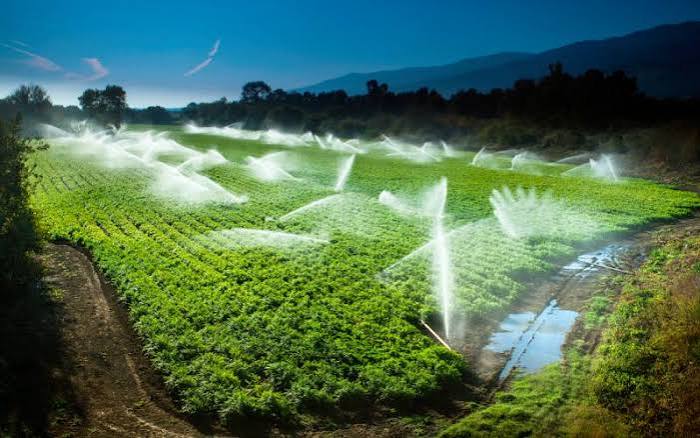
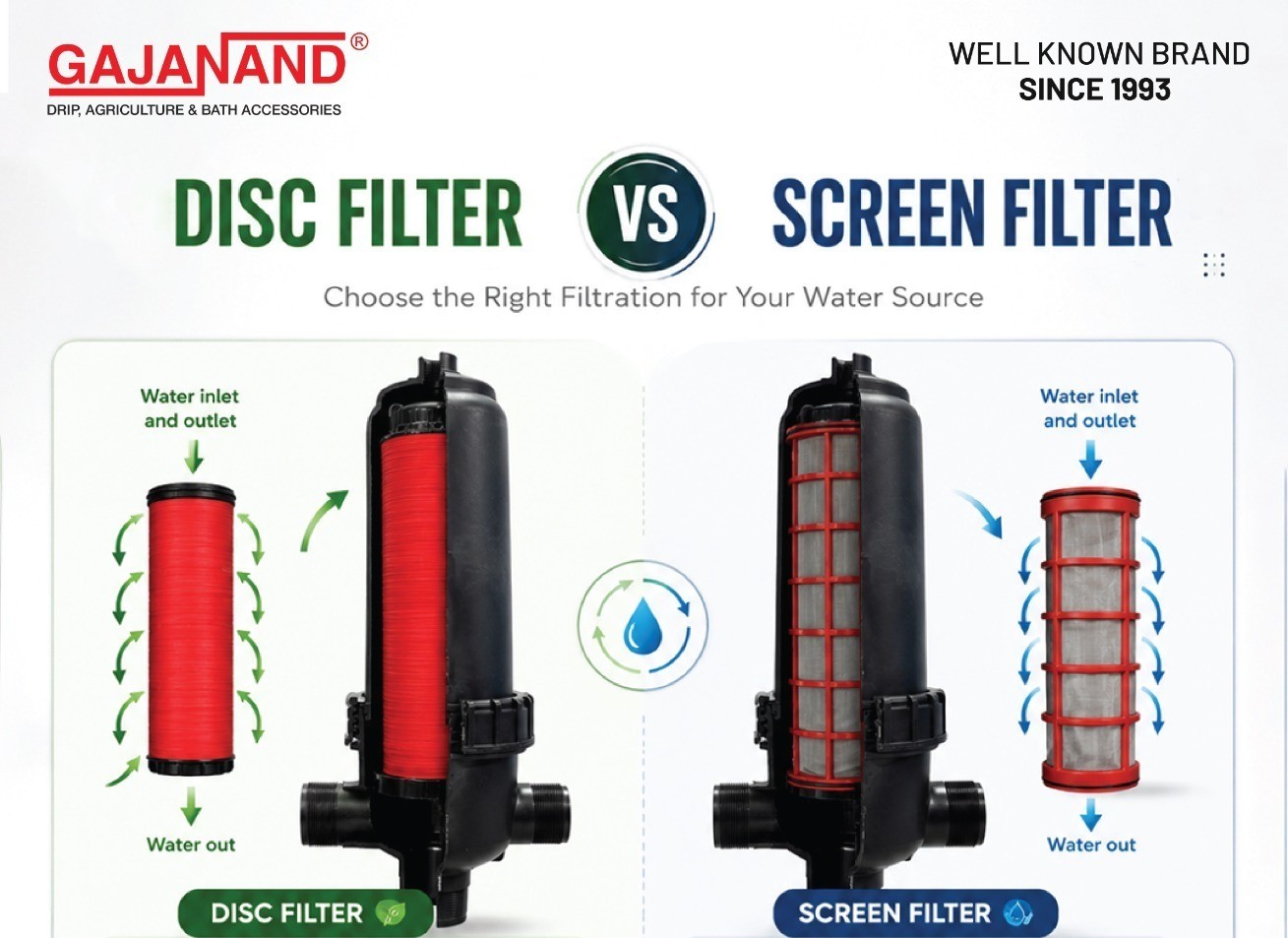
Choosing the right irrigation filter is essential for maintaining efficient water flow, protecting irrigation equipment, and preventing clogging in drip and sprinkler systems. Two of the most commonly used filtration options are disc filters and screen filters. While both are designed to remove unwanted particles from irrigation water, their filtration mechanism, cleaning requirements, and suitability for different water sources can vary.
So, which is better: a disc filter or a screen filter? The answer depends mainly on your water source, the type of contaminants present, the required filtration level, and the irrigation system you are using.
This guide explains the difference between disc filter and screen filter, their advantages, applications, maintenance requirements, and how to choose the right irrigation filter for agricultural and gardening applications.
What Is an Irrigation Filter?
An irrigation filter is a filtration device installed in an irrigation system to remove suspended particles and contaminants from water before the water reaches pipes, valves, drip emitters, sprinklers, and other components.
Water from sources such as borewells, open wells, ponds, rivers, reservoirs, and storage tanks can contain sand, silt, algae, organic matter, and other particles. If these contaminants enter an irrigation system, they can cause emitter clogging, pressure problems, reduced water distribution, and increased maintenance.
A suitable irrigation filter helps improve system reliability and supports consistent water delivery.
What Is a Disc Filter?
A disc filter uses a stack of specially grooved discs placed inside a filter housing. When the discs are compressed together, the grooves form a three-dimensional filtration structure that captures suspended particles as water passes through the filter.
Disc filtration is particularly useful when irrigation water contains a mixture of fine and relatively coarse suspended particles.
Key Benefits of Disc Filters
- Effective filtration of suspended particles
- Three-dimensional filtration structure
- Suitable for drip irrigation systems
- Good dirt-holding capacity
- Available in different filtration grades
- Can be cleaned and reused
- Suitable for many agricultural water sources
- Helps protect sensitive irrigation components
One of the major advantages of a disc filter is its ability to capture particles throughout the depth of the disc stack rather than relying only on a single surface.
What Is a Screen Filter?
A screen filter uses a cylindrical mesh screen installed inside a filter housing. As water passes through the screen, particles larger than the screen openings are retained on the mesh surface.
Screen filters are commonly used for removing relatively larger suspended particles from irrigation water.
Key Benefits of Screen Filters
- Simple filtration design
- Easy to inspect
- Easy to clean
- Suitable for relatively clean water
- Available in different mesh sizes
- Useful for drip and sprinkler irrigation
- Cost-effective for many applications
- Suitable for pre-filtration in irrigation systems
Screen filters can be an excellent choice when the irrigation water contains mainly larger particles and has a relatively low concentration of fine suspended material.
Disc Filter vs Screen Filter: Key Difference
The main difference between a disc filter and a screen filter is the filtration mechanism.
A screen filter primarily filters water through a mesh surface. A disc filter uses multiple grooved discs that create a deeper filtration structure.
| Feature | Disc Filter | Screen Filter |
|---|---|---|
| Filtration method | Grooved disc stack | Mesh screen |
| Particle removal | Fine and suspended particles | Mainly surface particles |
| Dirt-holding capacity | Generally higher | Generally lower |
| Cleaning | Manual or automatic options | Manual or automatic options |
| Maintenance | Requires periodic cleaning | Requires regular screen cleaning |
| Best suited for | Water with varied suspended particles | Relatively cleaner water |
| Drip irrigation | Excellent | Good |
| Sprinkler irrigation | Excellent | Good |
| Filtration flexibility | High | High |
| Initial cost | Often higher | Often lower |
Actual performance depends on the filter design, filtration rating, water quality, flow rate, and irrigation application.
Which Irrigation Filter Is Better?
There is no single filter that is best for every irrigation application.
A disc filter may be a better choice when the water contains a significant amount of fine suspended particles, silt, or mixed contaminants. Its disc-stack design can provide effective filtration and higher dirt-holding capacity in many applications.
A screen filter may be preferable when the irrigation water is relatively clean and the primary concern is removing larger suspended particles.
For this reason, choosing a filter based only on price is not recommended. Water quality and system requirements should be considered first.
Disc Filter for Drip Irrigation
Drip irrigation systems use small passages and emitters that can be sensitive to suspended particles. Even relatively small contaminants can contribute to clogging.
A properly selected disc filter can provide effective protection for drip irrigation systems, particularly when the water contains fine suspended solids.
Disc filters are commonly considered for:
- Agricultural drip irrigation
- Vegetable farms
- Fruit orchards
- Greenhouses
- Nurseries
- Landscape irrigation
- Fertigation systems
The correct filtration rating should always be selected according to the emitter manufacturer’s recommendations and the actual water quality.
Screen Filter for Irrigation
Screen filters are useful when water contains larger suspended particles that can be removed through a mesh screen.
They can be used in:
- Drip irrigation
- Sprinkler irrigation
- Garden irrigation
- Greenhouse systems
- Nursery irrigation
- Agricultural water lines
A screen filter can also be used as part of a multi-stage filtration system where different filters are used to address different types of contaminants.
Choosing the Right Filter Based on Water Source
Your water source is one of the most important factors when selecting an irrigation filter.
Borewell Water
Borewell water may contain sand and other suspended particles depending on the well and pumping conditions. A suitable filtration system should be selected after evaluating the water quality.
Open Well Water
Open well water may contain silt, organic matter, and other contaminants. Filtration requirements can therefore be higher than for relatively clean groundwater.
Pond and Reservoir Water
Pond and reservoir water can contain algae, organic debris, silt, and other suspended materials. In such situations, filtration may require more than one stage.
River Water
River water quality can vary considerably depending on location, season, rainfall, and surrounding activities. A water-quality assessment can help determine the appropriate filtration configuration.
Tank or Stored Water
Stored water may accumulate sediment or organic material over time. Installing suitable filtration before the irrigation network can help protect downstream components.
Disc Filter vs Screen Filter for Agriculture
For agricultural applications, the best filtration solution depends on crop type, irrigation method, water quality, flow rate, and the sensitivity of the irrigation components.
For drip irrigation, filtration is particularly important because emitters can be susceptible to clogging.
For sprinkler irrigation, the required filtration level depends on sprinkler nozzle size and water quality.
Large farms may also benefit from combining different filtration technologies to create a multi-stage filtration system.
How to Maintain an Irrigation Filter
Regular maintenance is essential for maintaining filtration performance.
1. Monitor Pressure
Monitor pressure before and after the filter. A significant pressure difference can indicate that the filter is becoming clogged.
2. Clean the Filter Regularly
Remove accumulated particles according to the manufacturer’s cleaning instructions. Cleaning frequency should depend on water quality and operating conditions.
3. Inspect the Filter Element
Check discs or screen mesh for damage, wear, or blockage.
4. Check Connections
Inspect filter connections, valves, seals, and fittings for leaks.
5. Follow Manufacturer Recommendations
Always follow the manufacturer’s instructions for installation, cleaning, operating pressure, and replacement parts.
Proper maintenance can extend filter life and help maintain consistent irrigation performance.
Can You Use Both Disc and Screen Filters?
Yes. In some irrigation systems, using both a screen filter and a disc filter can provide a multi-stage filtration approach.
For example, a screen filter may be used for preliminary removal of larger particles, while a disc filter provides additional filtration before water enters sensitive irrigation components.
However, the correct configuration depends on the water source, flow rate, contamination level, required filtration, and system design. Professional evaluation is recommended for larger agricultural installations.
Frequently Asked Questions
Which is better, a disc filter or a screen filter?
Neither is universally better. Disc filters are often suitable for water containing fine and mixed suspended particles, while screen filters are useful for relatively clean water and larger particles. The correct choice depends on water quality and irrigation requirements.
Is a disc filter good for drip irrigation?
Yes. Disc filters are widely used in drip irrigation because their filtration structure can effectively remove suspended particles that may contribute to emitter clogging.
Is a screen filter suitable for drip irrigation?
Yes. Screen filters can be suitable for drip irrigation when the water quality and filtration rating match the requirements of the system.
How often should an irrigation filter be cleaned?
There is no universal cleaning interval. Cleaning frequency depends on water quality, suspended solids, irrigation hours, and filter capacity. Monitoring pressure difference is one useful way to determine when cleaning is required.
Which filter is best for borewell water?
It depends on the contaminants present in the borewell water. A water-quality assessment should be performed before selecting the filtration system.
Which filter is best for pond water?
Pond water can contain silt, algae, organic matter, and other suspended contaminants. A disc filter, screen filter, or multi-stage filtration system may be appropriate depending on water quality and irrigation requirements.
Conclusion
The choice between a disc filter and a screen filter should be based on more than simply comparing prices. Water source, particle size, contamination level, irrigation method, flow rate, filtration requirement, and maintenance needs all play an important role.
A disc filter can be an excellent option for applications requiring effective filtration of fine and mixed suspended particles, particularly in drip irrigation systems. A screen filter can be a practical and economical solution for relatively clean water where larger suspended particles are the primary concern.
Before purchasing an irrigation filter, evaluate your water source and irrigation system requirements. Selecting the correct filtration solution can help reduce clogging, protect irrigation equipment, improve water distribution, and support more reliable agricultural irrigation.
In short: choose the filter according to your water—not simply according to the filter’s name.