Introduction
Cost-Benefit Analysis of Drip Irrigation for Cotton helps farmers understand whether investing in a modern irrigation system can provide measurable financial and operational benefits over time. Cotton requires timely and well-managed irrigation, particularly during important growth and boll-development stages. When water is applied inefficiently, farmers may face higher water, labour, energy, and fertilizer costs.
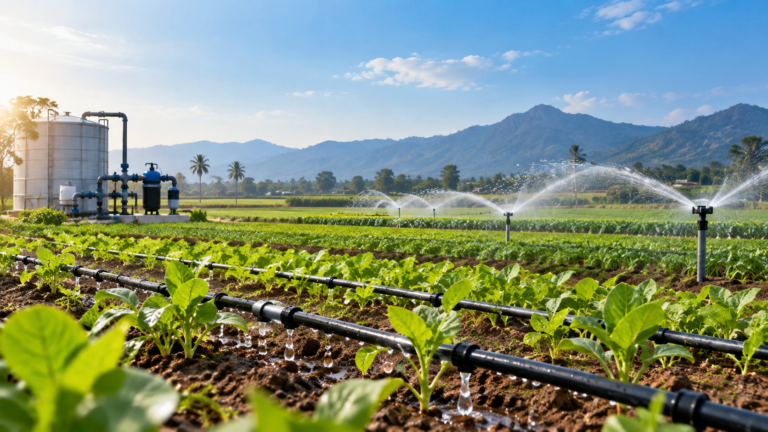
Drip irrigation delivers water closer to the crop root zone through a controlled network of pipes, fittings and emitters. This allows irrigation to be managed more precisely than conventional field flooding. Gajanand Irrigation provides irrigation products and components including filters, fittings, valves, fertigation assemblies and related agricultural irrigation solutions. The company has been operating from Ahmedabad, India, since 1993.
The economic value of drip irrigation depends on several factors, including farm size, water availability, crop spacing, soil type, irrigation frequency, equipment cost, energy consumption, labour requirements and cotton yield. Therefore, farmers should evaluate the complete system cost instead of considering only the initial purchase price.
This detailed guide explains the cost-benefit analysis of drip irrigation for cotton, the major investment areas, possible savings, productivity considerations and the factors farmers should evaluate before installing a cotton irrigation system.
What Is Drip Irrigation for Cotton?
Drip irrigation is a method of applying water directly or near the active root zone of plants through a network of irrigation pipes and controlled outlets. Instead of applying a large quantity of water across the entire field at one time, water is distributed gradually and more precisely.
For cotton farming, this approach can help maintain more consistent soil moisture around the crop root zone. Better irrigation management can be particularly useful where water availability is limited or where farmers need greater control over irrigation timing.
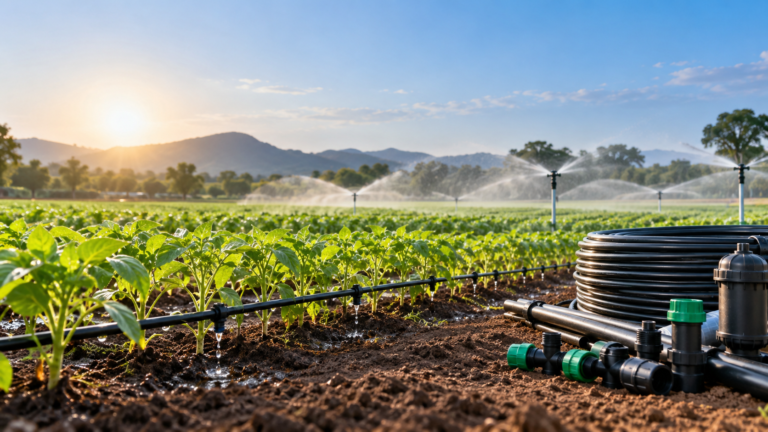
A complete drip irrigation setup can include:
- Main irrigation pipelines
- Sub-main pipelines
- Laterals
- Drippers or emitters
- Filters
- Valves
- Fertigation equipment
- Fittings
- Pressure-control components
- Flush arrangements
- Water-source connections
Gajanand Irrigation’s product range includes irrigation filters, hydrocyclone filters, poly fittings, Venturi systems, air-release valves, push fittings, ball valves, irrigation fittings and fertigation assemblies.
The exact configuration should be selected according to the farm layout, water source, pressure, soil conditions, crop spacing and irrigation requirement.
Why Cotton Farmers Should Evaluate the Economics of Drip Irrigation
Installing drip irrigation is an investment. Therefore, farmers should not evaluate the technology only by asking, “How much does the system cost?”
A better question is:
How much additional value can the irrigation system generate or how much cost can it reduce over its useful operating period?
The economic calculation can include:
- Initial installation cost
- Water savings
- Electricity or fuel savings
- Labour savings
- Fertilizer-use efficiency
- Crop-yield response
- Maintenance expenses
- Replacement costs
- System lifespan
- Government assistance or subsidy, where applicable
The cost-benefit analysis of drip irrigation for cotton becomes more meaningful when all these factors are considered together.
For example, a farmer may initially spend more on a properly designed drip system than on a simple irrigation arrangement. However, if the system reduces irrigation labour, improves water management and supports better crop performance, the total economics can change considerably.
Initial Cost of Drip Irrigation for Cotton
The initial investment varies significantly from one farm to another. There is no single installation price that applies to every cotton field.
The cost can depend on:
- Total cultivated area
- Row-to-row spacing
- Plant spacing
- Water-source location
- Mainline length
- Pipeline diameter
- Number of irrigation zones
- Filter requirements
- Fertigation requirements
- Land topography
- Pumping requirements
- Quality and specifications of components
A small cotton farm with a nearby water source may require a different system design from a large farm with a distant borewell or storage tank.
Major Components That Influence Cost
1. Filtration System
Filtration is an important part of drip irrigation because suspended particles can contribute to emitter clogging.
Gajanand Irrigation offers disc filters designed for drip and sprinkler irrigation applications. Its disc filters are designed to remove sand, silt, algae and organic impurities, with filtration specifications depending on the model.
The correct filter should be selected according to water quality, flow rate and the irrigation system’s requirements.
2. Pipelines and Fittings
Pipes transport water from the source to different parts of the farm. Fittings connect different sections of the irrigation network.
Poorly selected or improperly installed components can cause leakage and uneven water distribution. Therefore, component quality should be included in the economic evaluation.
3. Fertigation Equipment
Fertigation allows soluble fertilizers to be introduced into irrigation water so nutrients can be delivered closer to the crop root zone.
Gajanand Irrigation includes Venturi and fertigation assembly products in its irrigation range.
4. Valves
Valves help control different irrigation sections. Proper zone control can make irrigation management more convenient, particularly on larger farms.
5. Drip Laterals and Emitters
These components are directly involved in delivering water along crop rows. Their specifications should match the crop layout and hydraulic design.
Water-Saving Potential and Economic Value
One of the most important benefits considered in a cost-benefit analysis of drip irrigation for cotton is water management.
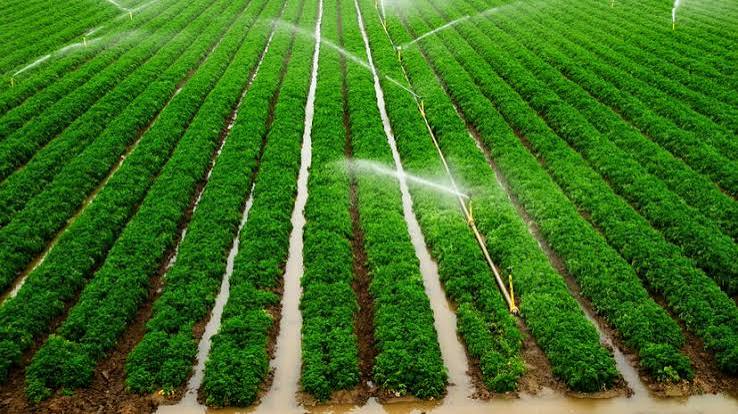
Traditional irrigation methods may apply water over a larger soil surface than is necessary for the crop at a particular time. Drip irrigation allows water to be delivered in a more targeted manner.
However, farmers should avoid assuming that every cotton farm will achieve the same percentage of water savings. Actual savings depend on:
- Previous irrigation method
- Soil type
- Climate
- Field size
- Irrigation scheduling
- System design
- Water pressure
- Maintenance
- Farmer management practices
Research published through ICAR has reported positive results for drip irrigation in cotton. One study involving cotton in saline vertisols reported improved crop performance under drip irrigation and net irrigation-water savings compared with corresponding furrow treatments.
This demonstrates why water should be treated as an economic resource rather than simply as an irrigation input.
If a farmer has limited groundwater, improving water-use efficiency may allow available water to be used more strategically across the farm.
Labour Cost Reduction
Labour is another important component of the cost-benefit analysis of drip irrigation for cotton.
Traditional irrigation can require workers to:
- Move water between field sections
- Open and close field channels
- Monitor irrigation flow
- Redirect water
- Manage pumps manually
- Inspect flooded areas
A properly designed drip system can simplify several of these tasks.
The level of labour reduction depends on the farm’s previous irrigation method and system design. Automated or well-zoned systems can potentially reduce the time required for routine irrigation management.
For cotton farmers facing labour shortages or increasing labour expenses, this operational advantage can become an important part of the investment calculation.
Fertigation and Fertilizer Economics
Fertigation is one of the important factors when evaluating drip irrigation economics.
Instead of applying all fertilizer separately across the field, soluble nutrients can be introduced through the irrigation system when the system is designed for fertigation.
Potential advantages include:
- More targeted nutrient delivery
- Better timing of nutrient application
- Reduced fertilizer losses
- Convenient application
- Better synchronization between irrigation and nutrient management
Gajanand Irrigation provides fertigation assemblies and Venturi products as part of its irrigation product range.
However, fertigation should be managed according to crop requirements, fertilizer compatibility, water quality and agronomic recommendations. More fertilizer does not automatically mean higher cotton production.
How Filtration Affects the Cost-Benefit Analysis
Filtration should not be treated simply as an additional expense.
It can be considered a form of system protection.
Cotton drip irrigation systems contain small water passages that can be affected by suspended particles. If clogging develops, water distribution can become uneven.
Gajanand Irrigation’s disc filters are designed for agricultural drip irrigation and can filter suspended materials such as sand, silt and organic impurities. The company states that its disc-filter design supports consistent water flow and helps protect drip irrigation systems from clogging.
For farms using borewell or other water sources containing sand and heavy particles, pre-filtration can be particularly important. Gajanand also provides hydrocyclone filters designed for sand separation in irrigation applications.
Therefore, filtration cost should be evaluated against possible maintenance, clogging and performance problems.
Cotton Yield and Drip Irrigation Economics
Yield is usually one of the most important variables in a farm investment calculation.
The objective is not simply to increase water application. The objective is to provide the crop with appropriate water at appropriate growth stages.
Cotton yield can be influenced by:
- Variety
- Soil fertility
- Weather
- Pest management
- Plant population
- Irrigation scheduling
- Fertilizer management
- Weed management
- Crop health
- Harvest management
Therefore, drip irrigation should not be presented as a guarantee of a specific yield increase.
Research can provide useful evidence about potential results under particular conditions. For example, an ICAR-published study from southwest Punjab reported higher average cotton yield and water savings under drip irrigation compared with flooding in the studied conditions, along with a higher benefit-cost ratio.
These figures should be treated as research results from specific locations and conditions, rather than as guaranteed results for every cotton farm.
A Simple Cost-Benefit Calculation for Cotton Farmers
Farmers can use a simple calculation to understand their investment.
Total Annual Benefit
Annual Benefit = Water Savings + Labour Savings + Energy Savings + Fertilizer Savings + Additional Crop Value
Annual Net Benefit
Annual Net Benefit = Total Annual Benefit − Annual Operating and Maintenance Cost
Simple Payback Period
Payback Period = Initial Drip System Investment ÷ Annual Net Benefit
For example, suppose a farmer estimates:
- Initial system investment: ₹1,00,000
- Annual water and energy savings: ₹20,000
- Labour savings: ₹15,000
- Additional fertilizer efficiency value: ₹10,000
- Additional crop value: ₹25,000
- Annual maintenance and operating cost: ₹10,000
Then:
Total annual benefit = ₹70,000
Annual net benefit = ₹60,000
Simple payback period = ₹1,00,000 ÷ ₹60,000 = approximately 1.67 years
This is only an illustrative calculation, not a quotation or guaranteed return. Actual economics should be calculated using the farmer’s real system cost, crop data and local conditions.
Factors That Can Improve the Return on Drip Irrigation
Several factors can make the investment more economically attractive.
Efficient Water Scheduling
Even a good irrigation system can perform poorly if water is applied at the wrong time or in excessive quantities.
Farmers should develop irrigation schedules based on crop stage, soil conditions, weather and available water.
Proper System Design
Correct hydraulic design helps maintain suitable pressure and flow across the field.
An improperly designed system can create uneven irrigation, reducing the expected benefits.
Good Filtration
Proper filtration reduces the risk of clogging and helps maintain consistent system operation.
Regular Maintenance
Maintenance can include:
- Checking filters
- Cleaning filtration units
- Inspecting laterals
- Checking connections
- Monitoring pressure
- Flushing pipelines
- Inspecting valves
- Checking for leakage
Correct Fertigation Management
Fertilizers should be compatible with the irrigation system and applied according to crop requirements.
Maintenance Cost of Cotton Drip Irrigation
Maintenance should be included in every cost-benefit analysis of drip irrigation for cotton.
Important maintenance activities include:
Filter Cleaning
Filters accumulate particles and therefore need periodic cleaning.
Pipeline Inspection
Leaks can reduce system efficiency and increase water losses.
Dripper Inspection
Uneven discharge can indicate clogging, pressure problems or other system issues.
Flushing
Flushing helps remove accumulated materials from irrigation lines.
Valve Inspection
Valves should be checked to ensure proper opening, closing and flow control.
The maintenance frequency depends on water quality, system design and operating conditions.
Why Water Quality Matters
Water quality can strongly influence drip irrigation performance.
Water may contain:
- Sand
- Silt
- Clay particles
- Organic matter
- Algae
- Dissolved minerals
The appropriate filtration approach depends on the specific water source and contamination profile.
Gajanand Irrigation provides different filtration solutions, including screen filters, disc filters and hydrocyclone filters. Its product range is intended for different irrigation applications and water-management requirements.
Before selecting equipment, farmers should understand their water quality and hydraulic requirements.
Cost-Benefit Analysis for Small Cotton Farms
For smaller farms, the main question is whether the expected savings and crop benefits justify the installation cost.
A small farmer should calculate:
- Current irrigation cost
- Current labour cost
- Current electricity or fuel cost
- Current fertilizer cost
- Current cotton yield
- Expected system investment
- Estimated maintenance cost
- Expected operating life
- Available financial assistance
- Expected annual benefit
The farmer should avoid selecting equipment only because it has a lower purchase price.
A lower initial cost may not always provide the desired hydraulic performance or durability.
Instead, the farmer should evaluate total ownership cost.
Cost-Benefit Analysis for Large Cotton Farms
Large farms can benefit from zoning.
Instead of operating the entire farm as one irrigation unit, the field can be divided into manageable sections based on hydraulic design.
Potential advantages include:
- Better irrigation control
- Easier maintenance
- Better water management
- More manageable fertigation
- Reduced pressure variation
- Easier identification of problems
The economics of a large farm may also improve because the fixed costs of certain components can be distributed across a larger cultivated area.
Role of Gajanand Irrigation in Cotton Irrigation Systems
Gajanand Irrigation is based in Ahmedabad, Gujarat, and states that it has operated since 1993. Its product range includes components used in agricultural irrigation systems, including filters, valves, fittings, fertigation equipment and related products.
The company’s catalog lists products such as screen filters, disc filters, fertigation assemblies and mini sprinklers.
Its disc-filter range is designed for applications including drip irrigation, sprinkler irrigation, borewell and open-well irrigation, high-density crop cultivation and fertigation.
For farmers evaluating a cotton irrigation project, the relevant components should be selected according to:
- Cotton field size
- Water source
- Water quality
- Required flow rate
- Pressure
- Crop spacing
- Field layout
- Fertigation requirements
- Maintenance requirements
Gajanand Irrigation’s website provides its product information and contact details for farmers and irrigation professionals who require further specifications or quotations.
Geographic Considerations for Cotton Drip Irrigation in India
The economics of drip irrigation can vary across India because farming conditions are not identical.
For example, farmers in Gujarat may face different soil, rainfall and groundwater conditions compared with farmers in Punjab, Maharashtra, Telangana or Tamil Nadu.
Therefore, a cotton irrigation investment should be evaluated locally.
Important geographic factors include:
- Annual rainfall
- Irrigation-water availability
- Groundwater depth
- Soil type
- Local temperature
- Cotton variety
- Electricity availability
- Farm size
- Labour availability
This is especially important for cost-benefit analysis of drip irrigation for cotton in India, because a system that performs economically under one set of conditions may produce different results under another.
How to Calculate ROI on Cotton Drip Irrigation
ROI can be calculated using:
ROI (%) = (Annual Net Benefit ÷ Initial Investment) × 100
For example, if the annual net benefit is ₹60,000 and the initial investment is ₹1,00,000:
ROI = (₹60,000 ÷ ₹1,00,000) × 100 = 60%
Again, this is an illustrative calculation.
Farmers should replace these figures with actual quotations and farm-level measurements.
A complete economic assessment should also consider the useful life of the equipment and possible replacement of components.
Hidden Benefits of Drip Irrigation for Cotton
Some benefits may not immediately appear in a simple purchase-price comparison.
Better Irrigation Control
Farmers can manage irrigation more systematically.
Reduced Water Wastage
Targeted water application can reduce unnecessary water application when compared with less controlled methods.
Better Field Management
A properly designed irrigation network can make irrigation scheduling easier.
Fertigation Opportunities
Nutrients can be delivered through irrigation where the system is designed for fertigation.
Reduced Manual Irrigation Work
Farmers may spend less time moving water between field sections.
Better Resource Planning
Water, labour, fertilizer and energy can be managed more systematically.
These factors should be included when calculating the overall economic value.
Potential Challenges of Drip Irrigation for Cotton
A balanced cost-benefit analysis should also consider limitations.
Higher Initial Investment
The initial installation cost can be significant.
Maintenance Is Necessary
Filters, pipelines and emitters require regular inspection.
Clogging Risk
Poor filtration or poor water management can lead to clogging.
Technical Design Is Important
Incorrect pressure, flow or pipe sizing can reduce performance.
Farmer Training
Operators need to understand basic system operation and maintenance.
Component Replacement
Some components may eventually need replacement.
These challenges do not mean drip irrigation is unsuitable. They mean that farmers should evaluate the entire system before making an investment decision.
How to Improve the Economics of Cotton Drip Irrigation
Farmers can improve the financial performance of the system by following a structured approach.
Step 1: Analyse the Water Source
Test water quality and determine available flow.
Step 2: Measure the Farm
Accurate field measurements help determine pipeline and lateral requirements.
Step 3: Understand Cotton Spacing
The irrigation layout should correspond with crop geometry.
Step 4: Select Suitable Filtration
Choose filtration based on actual water quality.
Step 5: Divide the Farm into Zones
Zoning can help manage water pressure and irrigation timing.
Step 6: Plan Fertigation
If fertigation is required, include suitable equipment from the beginning.
Step 7: Estimate Annual Benefits
Calculate realistic water, labour, energy and fertilizer savings.
Step 8: Calculate Payback
Compare the investment with expected annual net benefits.
Step 9: Plan Maintenance
Include maintenance in the annual operating budget.
Step 10: Review Performance
Track water use, irrigation hours, crop development and cotton yield.
Drip Irrigation vs Conventional Irrigation: Economic Perspective
The economic difference between irrigation methods should not be based only on the initial cost.
| Factor | Conventional Irrigation | Drip Irrigation |
|---|---|---|
| Initial investment | Generally lower | Generally higher |
| Water control | Lower | Higher |
| Root-zone application | Less targeted | More targeted |
| Labour requirement | Can be higher | Can be lower |
| Fertigation | Limited | Suitable when properly designed |
| Filtration | Usually less critical | Very important |
| Maintenance | Varies | Required regularly |
| Water-use efficiency | Depends on method | Potentially higher |
| Field management | More manual | More controlled |
The actual financial result depends on local conditions and management practices.
ICAR research has documented cases where drip irrigation in cotton improved water-use efficiency and produced favourable economic results under the studied conditions.
Is Drip Irrigation Economically Suitable for Cotton?
The answer depends on the farm.
Drip irrigation may become economically attractive when:
- Water is limited
- Irrigation labour is expensive
- Energy costs are significant
- The farm requires precise irrigation
- Fertigation is desired
- The farmer manages a larger cultivated area
- The irrigation system is correctly designed
- The farmer maintains the system regularly
However, every farm should complete its own cost-benefit analysis of drip irrigation for cotton using actual installation costs and expected benefits.
Farmers should not use a general internet estimate as a substitute for farm-specific calculations.
Frequently Asked Questions
1. What is the cost-benefit analysis of drip irrigation for cotton?
The cost-benefit analysis of drip irrigation for cotton compares the initial and recurring costs of the system with potential benefits such as water savings, labour savings, energy savings, fertilizer-use efficiency and changes in crop value. The actual payback depends on farm-specific conditions.
2. Does drip irrigation save water in cotton farming?
Drip irrigation can improve water-use efficiency by delivering water in a more controlled manner near the crop root zone. Actual water savings vary according to the previous irrigation method, soil, climate, system design and irrigation management. ICAR research has reported water savings in cotton under specific experimental and field conditions.
3. Can drip irrigation be used for cotton fertigation?
Yes. A properly designed drip irrigation system can be used for fertigation. Gajanand Irrigation offers fertigation assemblies and Venturi products as part of its agricultural irrigation product range.
4. Why are filters important in cotton drip irrigation?
Filters help remove suspended materials that could contribute to clogging. Gajanand Irrigation’s disc filters are designed for drip irrigation applications and are intended to remove particles such as sand, silt, algae and organic impurities.
5. How can I calculate the payback period of cotton drip irrigation?
Use the basic formula:
Payback Period = Initial Investment ÷ Annual Net Benefit
Annual net benefit can include estimated water, labour, energy, fertilizer and crop-value benefits minus annual maintenance and operating costs.
6. Does Gajanand Irrigation provide agricultural irrigation components?
Yes. Gajanand Irrigation’s product range includes filters, valves, fittings, fertigation assemblies, Venturi products, hydrocyclone filters and other irrigation components. The company is based in Ahmedabad, Gujarat.
Conclusion
A detailed Cost-Benefit Analysis of Drip Irrigation for Cotton should look beyond the initial installation price. Water management, labour, energy, fertilizer application, filtration, maintenance and crop performance all influence the final economics of the investment.
Drip irrigation can provide more controlled water delivery and can support fertigation and efficient irrigation management when the system is properly designed and maintained. Research from ICAR has documented positive water-use and economic outcomes for drip-irrigated cotton under specific field conditions, while the results for an individual farm will depend on its own environment and management practices.
For cotton farmers, the best approach is to calculate the expected annual benefits using real farm data, compare them with the complete system investment and then estimate the payback period.
Gajanand Irrigation offers a range of agricultural irrigation components, including filtration systems, fittings, valves and fertigation equipment. Its official website states that the company has been serving the irrigation sector from Ahmedabad since 1993.